What Should Office Staff Lockers Be Big Enough to Hold?
April 7, 2026
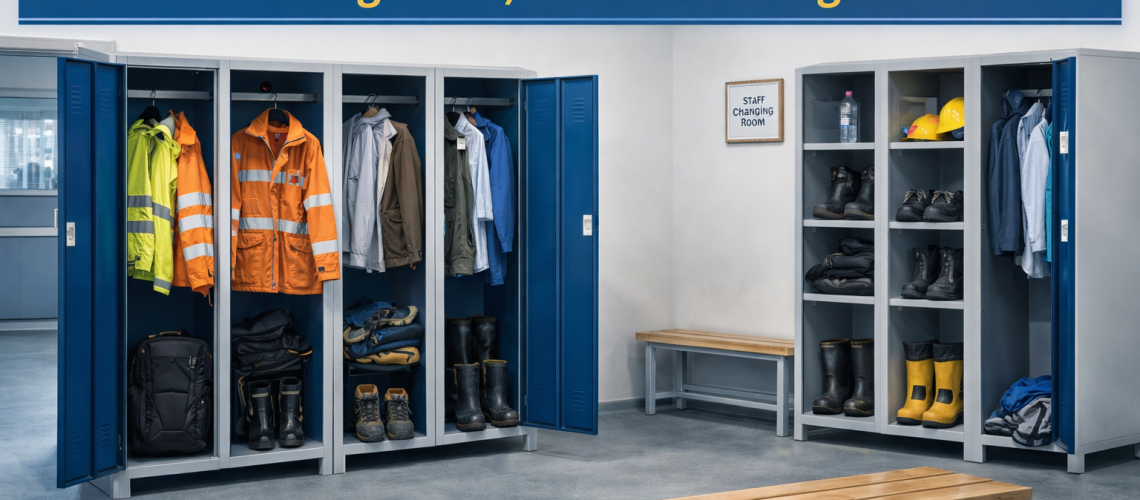
Choosing office staff lockers is not only about style, finish or where the units will sit within the fit-out. Size matters just as much. A locker that is too small quickly becomes frustrating, while one that is too large can waste valuable floor space. The best result comes from matching the compartment size to the way staff actually use the office.
In many workplaces, office lockers are expected to hold far more than a handbag or coat. Staff may arrive with a laptop bag, chargers, lunch, headphones, outerwear, gym gear or commuting items. In hybrid offices, that mix can be even more varied because employees move between home and office rather than leaving daily essentials at a fixed desk.
This guide explains what office staff lockers should be big enough to hold and how to think about locker sizing in a practical way. For the main workplace lockers guide, visit the hub page. For wider planning, see how to choose workplace lockers for a new office fit-out. If you are comparing shared-use models, visit day-use office lockers. When you are ready to compare products, see our workplace lockers page for staff lockers and commercial staff storage.
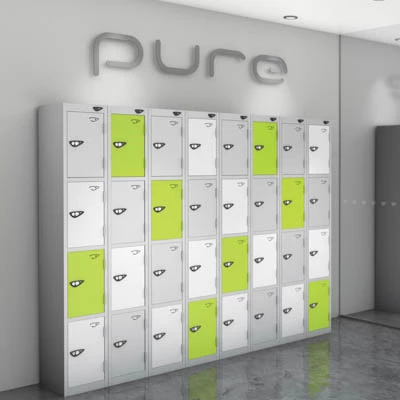
Why locker size matters in offices
Locker size affects whether staff actually use the storage as intended. If the compartment is too tight for a coat and a bag, people may leave items on chairs or drape them over desks instead. If there is no room for a laptop case, the locker stops solving one of the main storage problems it was meant to address.
At the same time, oversized office lockers are not always a better answer. Bigger compartments reduce the number of lockers that can fit into the available space. That can make the office less efficient, especially where shared day-use storage is meant to support a hybrid attendance model.
The right size is therefore the one that fits real office belongings without overcommitting valuable floor area.
Start with what staff actually bring in
The best starting point is not the locker brochure. It is the user pattern. Before choosing dimensions, it helps to list the items staff are most likely to store during the day.
- coats and jackets
- laptop bags or backpacks
- handbags and personal items
- chargers and accessories
- headphones
- lunch bags or containers
- gym or commuting items
- water bottles and daily essentials
Some offices will find that staff mainly need room for a coat and a bag. Others may discover that commuting patterns, flexible working and longer office days create a broader storage need. Once that list is clear, locker sizing becomes much more grounded in reality.
What a locker needs to hold in a typical office day
For many office workers, the locker has to do several jobs at once. It may need to hold outerwear, a laptop bag, a few personal items and possibly lunch or commuting accessories. That means the compartment must offer enough internal space to handle both bulk and shape, not just one small object at a time.
A coat on its own is one thing. A coat alongside a structured laptop backpack is another. Add in headphones, a bottle, a pouch of chargers or a pair of shoes for the journey home and the storage requirement changes again. This is why compact office lockers should still be tested against realistic daily use rather than against a minimal checklist.
If the locker cannot comfortably hold the items staff carry most often, it will not feel like a proper solution.
Should office lockers hold coats properly?
In many offices, yes. Coats are one of the most common items people want to get out of the way during the working day. If lockers are too short or too shallow for outerwear, staff may still end up using coat stands, chair backs or spare corners instead.
Not every office locker has to provide full hanging height, especially if the workplace is using compact day-use storage. However, the office should still decide whether coats are meant to go inside the locker or be handled somewhere else. If the answer is inside the locker, the sizing needs to reflect that.
This is one of the clearest examples of why locker size should follow the office routine rather than a generic template.
Laptop bags often define the real minimum size
In many modern offices, the laptop bag is the item that sets the practical baseline. Staff may bring a backpack, messenger bag or work tote containing a laptop, charger, notebook and personal accessories. If that bag does not fit comfortably, the locker is unlikely to be seen as useful.
This matters even more in hybrid workplaces. Staff are more likely to carry their technology in and out each day because they do not leave it permanently at a desk. That makes the bag, rather than the coat, the main storage test in many offices.
A strong office locker brief should therefore ask a simple question: can a typical employee place their work bag inside without awkward forcing, folding or leaving part of the contents elsewhere?
What about lunch, gym gear and commuting items?
These smaller extras are often what make a locker feel genuinely useful. A workplace may assume that a coat and bag are enough, but staff may also arrive with lunch, trainers, cycling gear, toiletries or other commuting-related items. Even if those extras are not carried every day, they often appear often enough to shape how the storage is judged.
This does not always mean every locker must be much larger. It does mean the office should think realistically about whether those items are part of the working pattern. In some workplaces, a slightly more generous compartment provides much better long-term value than a very tight one that only works on the simplest days.
Day-use office lockers still need enough room
One common mistake is assuming that shared day-use lockers can be smaller than assigned lockers simply because they are temporary. In reality, staff often bring exactly the same items whether the locker is shared or assigned. The difference is how long the locker is used, not necessarily what it needs to hold.
That means day-use office lockers still need to be sized for realistic daily storage. If they are too small, the shared model will not feel convenient no matter how efficient it looks in the layout plan.
The right question is not whether the use is temporary. It is whether the locker suits the belongings staff carry on the days they attend.
Should every office user have the same locker size?
Not always. Some offices benefit from one consistent locker format because it simplifies planning and keeps the fit-out visually tidy. Others may find that different user groups have slightly different storage needs. Regular office-based teams, hybrid users, visitors or staff who commute longer distances may not all need the same compartment type.
In some cases, a mixed offer can work well. A core bank of standard day-use lockers may support most staff, while a smaller number of larger lockers can help those who carry more equipment or need more dependable personal storage. The choice depends on how varied the user pattern really is.
For the wider question of storage models, see assigned vs shared staff lockers.
How locker size connects to office layout
Bigger compartments take up more space, so sizing decisions have a direct effect on the fit-out. A more generous locker may improve usability, but it can also reduce the total number of units that fit into the planned area. That is why locker size should be considered alongside capacity and placement rather than in isolation.
In open plan offices, the visual weight of the locker bank matters too. Larger doors and deeper units can change how the storage feels in the room. In a separate storage zone, that may be less important. The office therefore needs to balance user comfort with the wider design and space strategy.
For more on that side of the decision, visit should staff lockers be in open plan areas or separate storage zones.
Common mistakes when sizing office lockers
- planning around the smallest possible item rather than real daily use
- assuming a coat hook alone solves outerwear storage
- forgetting that laptop bags often set the true minimum size
- making day-use lockers too compact to be useful
- using one format for every user without checking whether needs differ
- focusing on locker count without thinking about what the lockers must actually hold
- treating size as separate from layout and capacity
Most of these issues come from designing around a floor plan before thinking properly about the user.
How to choose the right office locker size
The best method is to start with real office belongings, then test the locker against those items rather than against assumptions. Define whether the workplace expects staff to store coats, laptop bags, lunch items, gym gear or commuting extras. Once that list is clear, choose the smallest size that still handles those belongings comfortably.
That approach usually produces a better long-term result than choosing the tightest possible compartment to maximise locker numbers. A locker only adds value when staff feel it solves a problem they actually have.
When the planning stage is complete and you are ready to compare products, visit our workplace lockers page for office and staff storage options.
Conclusion
Office staff lockers should be big enough to hold the belongings employees really bring into the workplace, not just the smallest version of a bag or coat. In many offices, that means planning for outerwear, laptop bags, chargers, lunch items and at least some commuting or personal extras.
The right size balances usability with space efficiency. For the wider cluster, return to the workplace lockers guide. Office-wide planning is covered in how to choose workplace lockers for a new office fit-out. Product-led next steps can be found on our commercial staff storage page.
Frequently asked questions
What should office staff lockers hold?
They should usually hold a coat, a laptop bag or backpack, small personal items and other daily belongings such as lunch or commuting accessories where relevant.
Do office lockers need to fit laptop bags?
In most modern offices, yes. Laptop bags often set the practical minimum size because they are one of the most common items staff bring in each day.
Should day-use lockers be the same size as assigned lockers?
Often they need similar internal capacity because staff usually carry the same belongings whether the locker is shared for the day or assigned longer term.
Do all office staff need the same locker size?
Not always. Some workplaces do well with one standard format, while others benefit from a small mix of sizes for different user needs.
What is the biggest mistake in office locker sizing?
A common mistake is choosing a locker that is technically compact and efficient but too small for the bag, coat and daily essentials staff actually bring to work.
“`
## Image alt text
**Featured image alt text:** Office staff lockers sized for coats, laptop bags and daily belongings in a modern workplace storage area
**Secondary image alt text:** Office locker size guide showing staff storage for coats, bags, laptops and personal items
**Secondary image alt text:** Modern office locker area with compartments designed for laptop bags, outerwear and daily workplace essentials
The next sensible expansion after this would be **Should Office Lockers Include Charging Points or Just Secure Storage?**
Discover more from Blog Total Locker Service
Subscribe to get the latest posts sent to your email.