How to Label and Number Office Lockers Properly
April 7, 2026
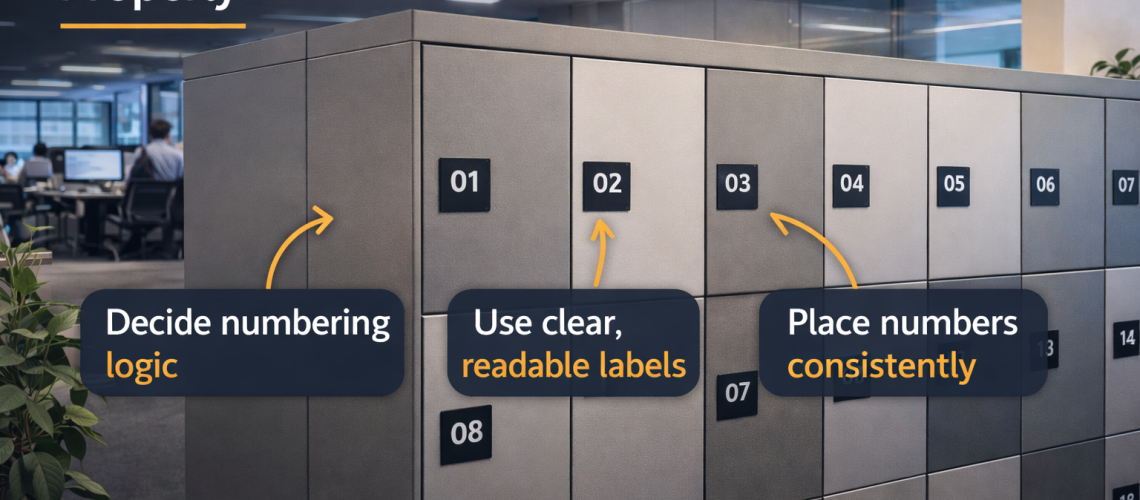
Office lockers are easier to use when the numbering and labelling system is clear from the start. Staff should be able to find the right locker quickly, facilities teams should be able to identify units without confusion and the storage area should feel organised rather than improvised. If labels are inconsistent, too small, badly placed or hard to understand, even a well-designed locker bank can become more awkward than it needs to be.
That is why locker numbering should be treated as part of the workplace plan rather than as a last-minute add-on. A good system improves day-to-day use, supports cleaner administration and makes shared storage easier to manage. In hybrid offices, where lockers may be assigned, shared, bookable or zoned by user type, that clarity matters even more.
This guide explains how to label and number office lockers properly, including placement, naming logic, wayfinding and common mistakes to avoid. For the main workplace lockers guide, visit the hub page. For office-wide planning, see how to choose workplace lockers for a new office fit-out. If your office uses shared storage, visit day-use office lockers. When you are ready to compare products, see our workplace lockers page for staff lockers and commercial staff storage.
Why locker numbering matters
A locker number is a small detail, but it affects how easily the whole storage area works. Staff use it to find their compartment. Managers use it when allocating lockers, resolving problems or checking availability. Facilities teams use it when recording faults, replacements or maintenance. If the numbering system is weak, every one of those jobs becomes less efficient.
In simple terms, clear numbering reduces friction. It stops staff opening the wrong locker, helps shared storage feel more structured and makes communication easier when a specific unit needs attention. That is especially useful in larger offices or hybrid environments where lockers are not always used by the same people every day.
A well-labelled locker bank feels intentional. A badly labelled one feels temporary, even when the storage itself is high quality.
Start with a numbering logic, not just individual numbers
The strongest locker systems are planned as a sequence rather than labelled one door at a time. Before any numbers are applied, it helps to decide how the office will identify rows, columns, banks or zones. That creates a clearer structure and makes future management easier.
For example, a workplace might number lockers left to right within each bank, or it might combine a bank reference with a locker number. In a larger office, the numbering may also reflect floors, departments or storage zones. The main point is consistency. Staff should be able to understand the logic quickly instead of guessing which numbering pattern is being used.
A random sequence may seem fine at installation stage, but it usually becomes harder to manage later.
Keep the system simple enough to read quickly
Good locker numbering should be easy to recognise at a glance. Most offices do not need an overcomplicated code. The clearer the system, the easier it is for staff to follow and the less likely it is that the wrong locker will be opened by mistake.
In many workplaces, a clean numeric sequence is enough. In others, especially where multiple locker banks exist, a simple combination of zone and number can work better. What matters most is that the office chooses a pattern that people can use quickly under normal daily conditions.
If staff need to stop and decode the label every time, the system is doing too much.
Where should locker numbers be placed?
Placement affects readability as much as the numbering format itself. In most cases, the number should sit where it can be seen easily when the locker is closed and where it is not hidden by the handle, lock body or door edge. It should also stay visible when someone is standing naturally in front of the locker bank rather than having to crouch, lean or step to one side.
The most practical position is usually on the upper part of the door or close to the lock area, provided it stays visually clear. The office should avoid locations where labels are obscured by reflections, hardware or frequent wear. Consistent placement across the whole bank matters as much as the placement choice itself.
A numbering system works best when staff can scan the doors quickly and identify the right locker without effort.
Size and contrast matter more than people expect
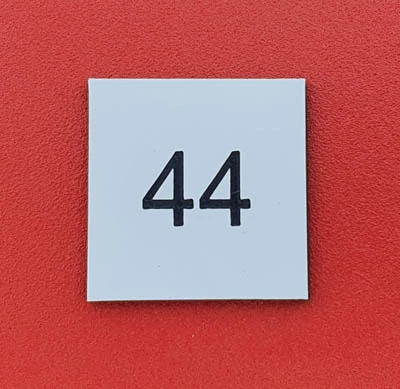
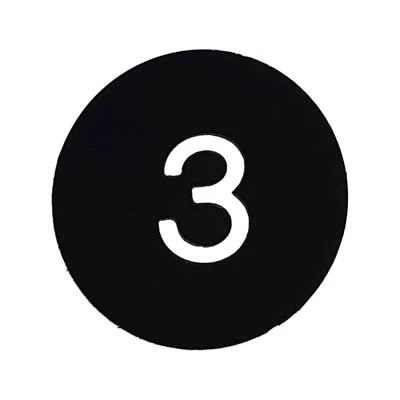
A locker number is only useful if people can actually read it. Numbers that are too small, low-contrast or poorly printed often create unnecessary hesitation. This becomes more obvious in longer locker runs, shared storage areas or busy arrival zones where people want to find the right compartment quickly.
Clear contrast between the number and the background usually matters more than decorative styling. A simple, legible number is usually better than a stylish but harder-to-read label. In offices, the numbering should also fit the wider visual tone of the space, but usability should come first.
If the office wants the locker bank to look refined, the answer is usually clean design, not reduced legibility.
Should office lockers use names, numbers or both?
For most workplaces, numbers are the better primary system because they stay stable even when staff change, teams move or lockers are reassigned. A numbered locker can be reallocated easily without redesigning the whole bank. Names may still be useful in some settings, particularly for assigned lockers, but they are usually better treated as a secondary or temporary layer rather than the main identification system.
Shared and hybrid offices especially benefit from numbered storage because the system remains flexible. If the office wants to identify an assigned user, that can often be handled in the allocation record or through a removable label rather than by replacing the core locker identity.
This is one of the simplest ways to keep the storage bank adaptable over time.
Zoned offices may need more than one layer of identification
Where an office uses separate locker zones for teams, visitors or contractors, a single run of plain numbers may not be enough on its own. In that case, it often helps to combine a simple zone reference with the locker number. That makes it easier to identify both the right area and the right compartment within it.
This does not need to become complicated. A straightforward zone marker combined with a clear locker number is often enough. The purpose is to make navigation easier, not to create a coding puzzle. In mixed-user environments, that extra layer can make the storage offer much clearer for everyone using it.
For that part of the cluster, see hybrid office locker zones for teams, visitors and contractors.
Shared lockers need especially clear numbering
Assigned lockers can tolerate a slightly more personal management style because staff become familiar with their own compartment over time. Shared lockers do not have that advantage. Different users may rely on the same locker bank day after day, so the numbering system needs to be immediately understandable to anyone approaching it.
This is one reason why day-use and bookable locker systems benefit from stronger numbering discipline. If a locker can be reserved, released, checked or reported within a shared-use model, every unit needs a clear identity that matches the way the system is administered.
For those models, see day-use office lockers and bookable or first come, first served lockers.
Numbering should support maintenance and reporting
A good locker number is not only for the user. It also helps with maintenance. If a lock sticks, a door is damaged or a compartment needs checking, the office should be able to identify the exact unit quickly and without confusion. That becomes much easier when the numbering system is consistent and visible.
This is why facilities teams often benefit from numbering that matches the physical logic of the locker bank. A clear sequence makes inspection, fault logging and repair tracking more straightforward. Poor numbering turns simple maintenance into guesswork, especially in larger offices.
For the upkeep side, see locker maintenance and cleaning in offices.
Wayfinding matters in larger locker areas
In a small office with one short locker bank, numbering alone may be enough. In a larger storage area, additional wayfinding can help. That might mean identifying banks clearly, using simple section markers or making the route to the right locker zone easier to understand from a distance.
The aim is to help users find the correct area before they start checking individual locker numbers. This is especially useful where multiple banks sit along an arrival route, in an open plan office edge zone or across different user groups. Wayfinding and numbering work best together rather than as separate ideas.
Good office storage should feel easy to navigate without needing staff to stop and ask for help.
Temporary and removable labels can be useful
Some offices need a stable core numbering system alongside flexible short-term naming. This is common where certain lockers are assigned temporarily, held for projects or reserved for visiting teams. In those cases, removable labels can be useful as a secondary layer, provided the permanent locker number remains clear.
The important point is that the temporary label should not replace the main identity of the locker. If it does, the office risks creating confusion between who is using the locker and what the locker is actually called. The core reference should stay permanent even when the user changes.
This helps keep the storage system flexible without making it unstable.
Common mistakes in locker labelling
- numbering lockers without a wider sequence or bank logic
- using labels that are too small or low-contrast to read easily
- placing numbers where handles or locks obscure them
- mixing names and numbers without clear hierarchy
- changing locker identities when users change
- failing to support numbered lockers with basic wayfinding in larger areas
- treating labelling as a last-minute decorative task instead of a usability decision
Most of these mistakes come from underestimating how often staff rely on quick visual clarity when using shared storage.
How to create a numbering system that works
The best approach is usually to start with the physical layout of the locker bank. Decide how the office will identify zones, banks or sequences. Then apply clear, legible numbers in a consistent position across all doors. After that, add any temporary naming or user assignment only as a secondary layer where needed.
Once the numbering logic is clear, the storage area becomes easier to manage, easier to maintain and easier to use. That small planning step often has a bigger effect on daily usability than people expect.
When the planning stage is complete and you are ready to review products, visit our workplace lockers page for office and staff storage options.
Conclusion
Office locker numbering works best when it is clear, consistent and designed around the way people actually use the storage. A strong system makes lockers easier to find, easier to manage and easier to maintain. A weak one creates small but repeated friction throughout the workplace.
The best results usually come from a simple logic, readable labels and a stable numbering identity that stays useful even as users and storage patterns change. For the wider cluster, return to the workplace lockers guide. Office-wide planning is covered in how to choose workplace lockers for a new office fit-out. Product-led next steps can be found on our commercial staff storage page.
Frequently asked questions
Should office lockers be numbered?
Yes. Clear numbering helps staff find the right locker quickly and makes allocation, reporting and maintenance much easier.
Are names or numbers better for office lockers?
Numbers are usually better as the main system because they stay consistent even when users or teams change.
Where should locker numbers go?
They should be placed where they are easy to see when the locker is closed and where handles, locks or door edges do not block them.
Do shared lockers need a different numbering system?
They need especially clear numbering because different users rely on the same lockers over time, so fast recognition becomes more important.
What is the biggest mistake in locker labelling?
A common mistake is applying numbers without any wider logic, which makes the locker bank harder to navigate and harder to manage later.
Discover more from Blog Total Locker Service
Subscribe to get the latest posts sent to your email.