Day-Use Office Lockers: How to Run Shared Staff Storage in Hybrid Workplaces
April 7, 2026
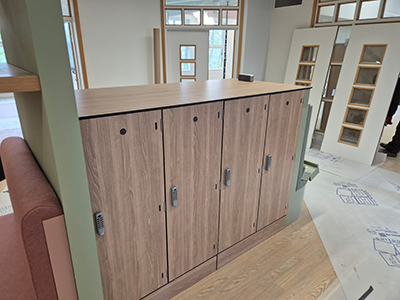
Day-use office lockers can be one of the most effective storage solutions for hybrid workplaces. They allow staff to store coats, bags, laptops and personal items securely during the day without forcing the business into a one-locker-per-person model. When shared storage is planned properly, it supports flexible working, reduces clutter and uses office space more efficiently.
However, day-use storage only works well when the rules are clear and the system matches real attendance patterns. If locker turnover is poorly managed, staff can arrive to find compartments still occupied, belongings left behind or uncertainty over which lockers are actually available. The result is frustration rather than flexibility.
This guide explains how to run day-use office lockers successfully in hybrid workplaces, including capacity planning, storage rules and day-to-day management. For the main workplace lockers guide, visit the hub page. If you are comparing storage models, see assigned vs shared staff lockers. For office-wide planning, visit how to choose workplace lockers for a new office fit-out. When you are ready to compare products, see our workplace lockers page for staff lockers and commercial staff storage.
What are day-use office lockers?
Day-use office lockers are shared lockers intended for temporary use rather than permanent allocation. A member of staff uses a locker during the working day, removes their belongings when they leave and then frees the compartment for someone else to use later. In most cases, these lockers are not tied to one named employee over the long term.
This model fits naturally with hybrid working because not everyone attends the office every day. Instead of assigning a dedicated locker to every employee, the office can provide a well-managed shared bank based on peak attendance and real demand.
That makes day-use storage more efficient than traditional assigned models in many flexible workplaces. It also means the management process matters much more.
Why day-use lockers suit hybrid workplaces
Hybrid offices often have variable attendance patterns, shared desks and more fluid use of space. Staff may only need storage on the days they are physically in the office, and even then the need is usually for personal day-use items rather than long-term on-site storage.
Day-use lockers match that behaviour well. They give staff secure storage without forcing the business to dedicate permanent floor space to users who may only attend once or twice a week. That can improve space efficiency while still giving employees a practical arrival routine.
In many hybrid offices, the locker becomes part of the daily transition into work. Staff arrive, store coats, bags and devices, then move into the shared workspace with less clutter around desks and breakout areas.
What staff usually store in day-use office lockers
Most shared office lockers are used for short-term personal storage rather than for bulky operational items. Common contents include:
- coats and jackets
- bags and backpacks
- laptops and chargers
- headphones and accessories
- lunch items
- gym or commuting items
- personal belongings that do not need to stay on site overnight
That list matters because it helps define the right locker size. If the office expects users to store a coat, a laptop bag and a few personal items, the compartments need to support that comfortably. A locker that is too small may technically exist, but it will not work well in practice.
For more on storage size and layout, visit workplace locker sizes and layouts.
Shared storage needs clear rules
The biggest difference between day-use lockers and assigned lockers is that shared storage depends on turnover. The system only works if each user understands that the locker must be cleared properly at the end of the day or at the end of the permitted use period.
That means the office needs clear rules, not just a bank of lockers. Staff should know when the storage can be used, when it must be emptied and what happens if belongings are left behind. Without those rules, shared lockers quickly drift into semi-permanent use, which defeats the point of the model.
A practical day-use system normally works best when the expectations are simple, visible and consistent across the office.
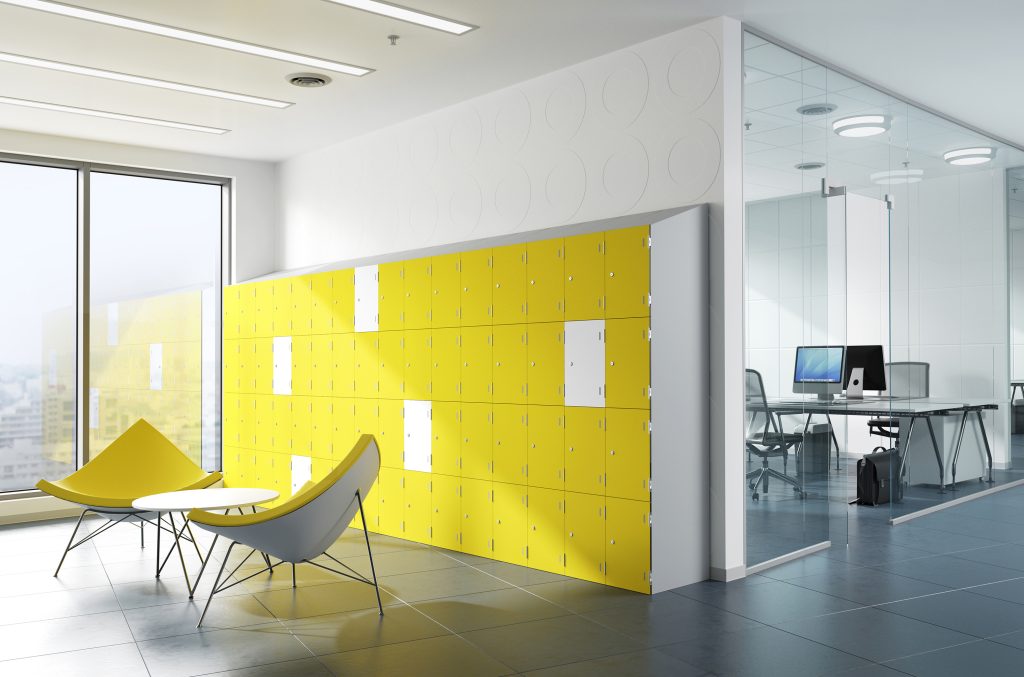
What should a day-use locker rule set include?
The exact wording will vary from one business to another, but most hybrid offices need a clear process covering the basics.
- who can use the lockers
- whether use is first come, first served or managed in another way
- what can and cannot be stored
- when the locker must be emptied
- what happens to unclaimed items
- who can override access if a locker is left occupied
- how problems or damaged locks are reported
The goal is not to make the process heavy. The goal is to stop uncertainty. A simple rule set makes shared storage easier to run and easier for staff to trust.
Capacity planning is still essential
Day-use lockers save space, but only if the number of lockers reflects actual demand. If the office underestimates peak attendance, staff may arrive on the busiest days and find that no compartments are available. Once that happens repeatedly, confidence in the system drops quickly.
That is why shared storage should be planned around the busiest realistic day rather than average attendance. The office also needs to think about which teams attend together, whether certain days are consistently busier and whether some staff need more reliable access than others.
For the wider capacity question, visit how many workplace lockers do you need.
Day-use works best when storage is near the arrival route
Placement has a big effect on whether shared storage becomes part of the daily routine. In many hybrid offices, day-use lockers work best near the arrival sequence, at the edge of the main floor or in a defined storage zone that staff pass naturally when they enter.
If the lockers are too hidden or awkward to reach, people are less likely to use them properly. Bags and coats may end up back at desks, which weakens the whole logic of the storage system. Good placement reinforces good behaviour.
For more on location strategy, see should staff lockers be in open plan areas or separate storage zones.
Which lock options suit day-use lockers?
Because day-use lockers are shared by different people, the access method needs to support quick turnover. In many offices, combination, digital or temporary-use smart systems are a better fit than traditional assigned key locks. They can reduce the admin burden and make it easier to return the locker to general availability after each use.
That does not mean every office needs a complex smart system. A simple mechanical solution may still work very well if the workplace pattern is straightforward. The key is to choose an access method that supports short-term use rather than one designed mainly for long-term personal assignment.
For the wider comparison, visit best lock options for workplace lockers and smart lockers for hybrid workplaces.
What happens when staff leave items overnight?
This is one of the most common operational problems in shared locker systems. A workplace may intend the lockers to be day-use only, yet some users will eventually leave items behind. If the business does not have a clear process for handling that, the shared bank gradually becomes less available and harder to manage.
A practical rule usually states when lockers must be emptied and what happens if they are not. That may involve a reminder process, an authorised override and a short record of recovered items. The more clearly that is explained from the start, the less friction it creates later.
For the policy side, see staff locker policies for UK workplaces.
Do some teams still need assigned storage?
Yes, sometimes. A hybrid office is rarely uniform in how people use it. Some teams may attend more frequently, carry more equipment or need a more dependable storage base than others. In that case, a fully shared model may not fit everyone equally well.
This is where a mixed arrangement can be effective. Day-use lockers can serve the wider office, while a smaller number of assigned lockers supports teams with stronger regular needs. That often gives the business a better balance between efficient use of space and practical support for real users.
For that comparison, see assigned vs shared staff lockers.
Common mistakes with day-use locker systems
- assuming shared storage will manage itself
- providing too few lockers for peak attendance
- making the lockers too small for real daily belongings
- placing them away from the natural arrival route
- using unclear rules about end-of-day emptying
- keeping no process for items left behind
- choosing an access method that does not suit quick turnover
Most of these problems come from treating day-use lockers as a furniture purchase rather than as a live workplace system.
How to decide if day-use storage is right for your office
The best starting point is to look at the daily office pattern. Are staff attending on variable days? Do they mainly need short-term storage rather than a permanent base? Is desk clutter a problem? Does the office need to use space more efficiently than a one-locker-per-person model would allow?
If the answer to those questions is yes, day-use office lockers are often a strong fit. If teams attend regularly, leave more items on site or expect consistent personal storage, assigned or mixed models may be better. Good planning comes from matching the storage model to the actual workplace routine rather than following one fixed rule.
When the planning stage is complete and you are ready to compare products, visit our workplace lockers page for office and staff storage options.
Conclusion
Day-use office lockers can work extremely well in hybrid workplaces when the storage need is temporary, the capacity is planned properly and the rules are clear. They support flexible attendance, keep desks tidier and help the office use space more efficiently than a fully assigned model in many cases.
The best systems are simple, visible and grounded in how staff actually work. For the wider cluster, return to the workplace lockers guide. If you are comparing storage models, visit assigned vs shared staff lockers. Product-led next steps can be found on our commercial staff storage page.
Frequently asked questions
What are day-use office lockers?
They are shared lockers used for temporary daily storage rather than being permanently assigned to one employee.
Do day-use lockers work well in hybrid offices?
Yes, often very well, especially where staff attend on variable days and mainly need short-term personal storage.
What happens if staff leave items in a shared locker?
The workplace should have a clear process covering end-of-day emptying, authorised access and how unclaimed items are handled.
Are day-use lockers better than assigned lockers?
Not always. They are usually better where storage needs are temporary and attendance varies, but assigned lockers can still suit teams with more regular or equipment-heavy routines.
Where should day-use office lockers be placed?
They often work best near the arrival route, at the edge of the main floor or in a clearly defined storage zone that staff pass naturally at the start and end of the day.
Discover more from Blog Total Locker Service
Subscribe to get the latest posts sent to your email.