Best Lock Types for Medical Cabinets in Care Homes and Clinics
March 24, 2026
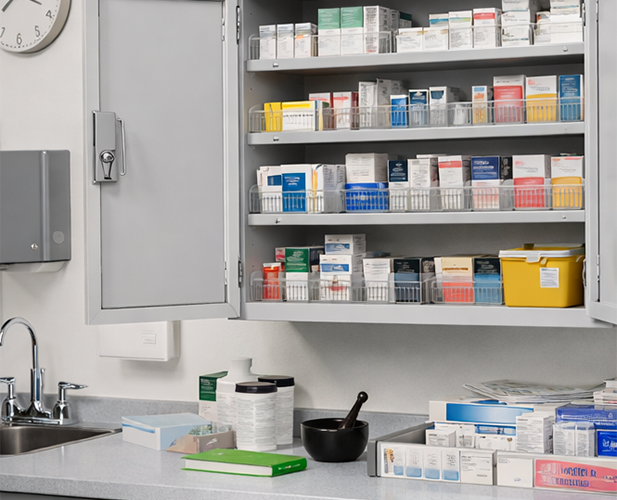
Choosing a medical cabinet is only part of the decision. The lock matters just as much. In care homes and clinics, medicines need to be stored securely, but they also need to be accessible to the right people at the right time. A poor lock choice can slow staff down, weaken accountability, increase key-handling problems or make self-administration harder than it needs to be.
That is why the best lock type is not always the most basic one and not always the most advanced one. The right answer depends on who needs access, what medicines are being stored, how often the cabinet is opened, whether audit trails are important and whether the cabinet is in a treatment room, nurses’ station, clinic room or resident’s bedroom.
In this guide, we explain the main lock types used on medical cabinets, where each one works best and what care homes and clinics should think about before placing an order. For the broader picture, see our comprehensive guide to medical cabinets. You may also want to read How to Carry Out a Medicines Storage Risk Assessment in a Care Home and Self-Administration of Medicines in Care Homes: Choosing the Right Storage Setup.
Why the Lock Type Matters
When people think about medicine security, they often focus on the cabinet body, the door thickness or whether the unit looks substantial. Those points do matter, but the lock is what controls day-to-day access. If the lock is awkward, too many people end up sharing keys. If it is too basic, there may be no clear record of who opened the cabinet. If it is too complicated, staff may be tempted to work around the system.
In a care home, the lock may need to support several different models of access. A central medicines cupboard may be staff-only. A room-based cabinet may be used for self-administration. A hybrid setup may require staff to access some compartments while residents use others. In a clinic, the lock may need to support faster staff access, tighter stock control or clearer access records in treatment areas.
The lock choice therefore affects more than security. It affects workflow, accountability, training, key management, incident response and the everyday practicality of storing medicines properly.
Start With the Risk Assessment, Not the Catalogue
The most reliable way to choose a medical cabinet lock is to begin with the risk assessment. Who needs access? How often will access be needed? Is the cabinet storing central stock, patients’ own medicines or self-administered items? Is there a need to identify exactly who opened the cabinet and when? Would delayed access create operational problems? Is the cabinet in a room already restricted to authorised staff, or is it in a more open environment?
These questions matter because the same lock can be excellent in one setting and poor in another. A basic keyed lock may be perfectly suitable on a low-frequency cupboard in a small clinic room used by a limited number of authorised staff. The same lock may be far less suitable on a busy medicines cabinet opened many times a day by rotating teams across long shifts.
Likewise, an electronic access system may be ideal for a treatment area where audit trails are important, but unnecessary on a small room-based cupboard used by one resident under a specific self-administration plan. Good specification starts with use, not with features.
The Main Lock Types Used on Medical Cabinets
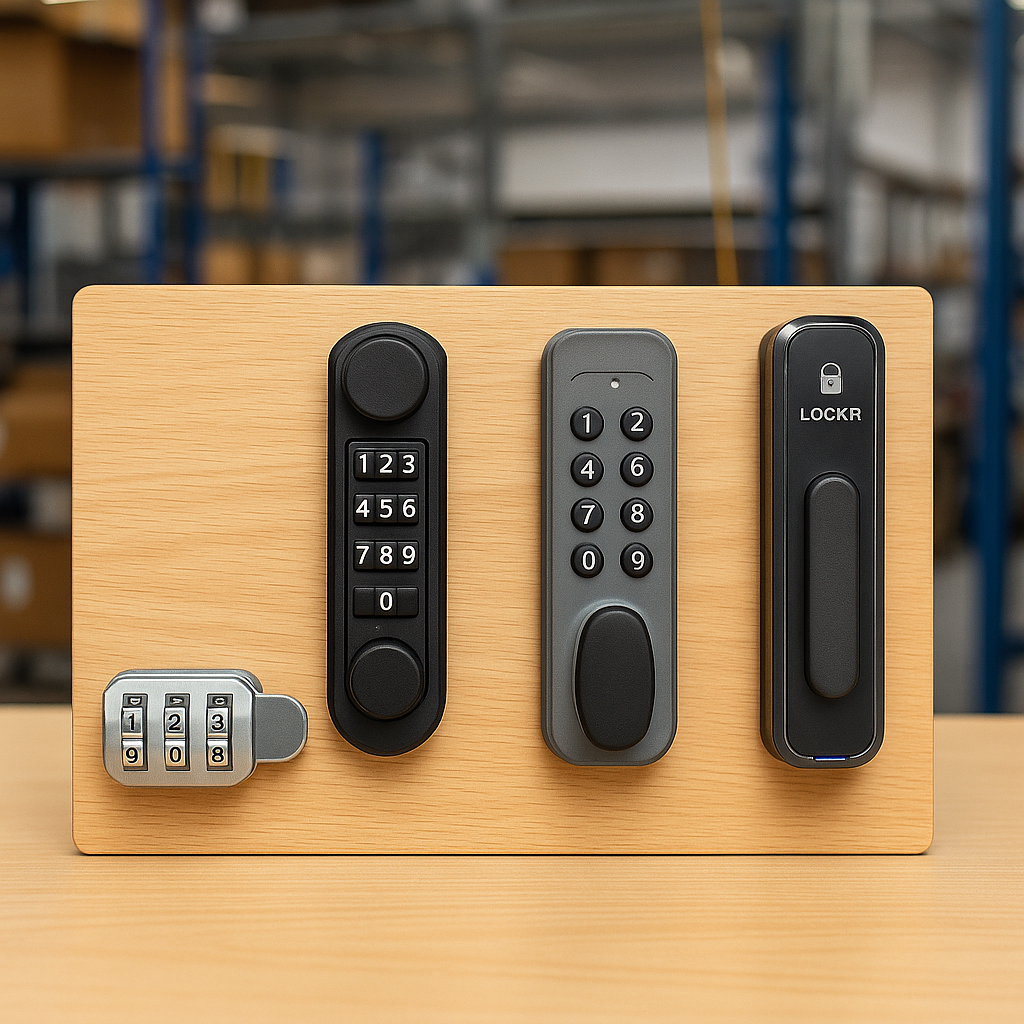
Most medical cabinets in care homes and clinics fall into a small number of lock categories. Each has strengths and weaknesses. Understanding the differences makes it much easier to choose the right setup for each area.
1. Standard Key Locks
A standard key lock is the most familiar option. It is simple, reliable and widely available. For many smaller medical cabinets, this is still a perfectly practical choice. Staff understand how it works, there is little training involved and the cost is usually lower than electronic alternatives.
Keyed locks can work well in low- to medium-frequency settings where authorised access is limited and where a clear local process exists for holding, issuing and returning keys. They are often suitable for smaller clinic rooms, treatment cupboards and some central medicines storage areas, especially where the cabinet is within a locked room and the access group is small.
The weakness is key control. Physical keys can be shared informally, copied without authorisation if controls are weak, left in doors, misplaced during busy shifts or become difficult to track when staff change. Once too many copies are in circulation, the cabinet may still be locked but control has effectively been lost. A basic key lock can therefore be strong in mechanical terms but weak in management terms.
Standard key locks are often best where the cabinet is not opened constantly, the access group is tightly controlled and a sensible key policy is actually followed in practice.
2. Keyed Alike and Mastered Lock Suites
Where several medical cabinets are used in the same care home or clinic, a keyed suite may be a more practical version of a traditional lock. In a keyed alike system, several cupboards open with the same authorised key. In a mastered system, each cabinet may have its own key but a master key can open multiple cabinets for authorised senior staff.
This approach can reduce the everyday burden of carrying large numbers of keys and can make staff workflows much smoother in larger treatment areas. It can also support maintenance and supervision by allowing controlled master access where needed.
However, there is a trade-off. The more cabinets a single key can open, the more important key control becomes. If the wrong person gains access to a mastered key, the problem is wider than with a single isolated lock. This is why keyed suites should be used with a clear access policy rather than as a shortcut for convenience alone.
For many busy healthcare environments, keyed suites are a workable middle ground between simple mechanical locks and fully electronic access control.
3. Digital Keypad Locks
Digital keypad locks replace the physical key with a code. This can remove some of the usual key-handling problems. Staff do not need to carry as many keys, and managers do not need to chase missing keys around the building. Codes can also be changed more quickly than locks can be replaced.
Keypad locks are often appealing in care and healthcare settings because they are straightforward to use and can speed up access for authorised staff. They can work well on staff-only cabinets in central medicines areas, treatment rooms and clinic spaces where there is a stable group of trained users.
The main risk is code sharing. A keypad is only as secure as the code discipline around it. If the code is written on a nearby wall, stored in an obvious place, passed too widely between shifts or not updated after staffing changes, security weakens quickly. There is also the practical issue that some basic keypad locks offer little or no meaningful audit trail.
Keypad locks are strongest when the code is treated as controlled access information, changed promptly when needed and issued on a genuine need-to-know basis. They are less suitable where many temporary staff rotate through or where access tracking is a high priority but the lock itself offers no event log.
4. Electronic Key Locks
Electronic key systems use programmed keys rather than standard cut keys. These are often more secure than basic mechanical key arrangements because access can be controlled and changed more easily. In some systems, lost electronic keys can be cancelled and replaced without changing the whole lock body.
Electronic key locks are a strong option where managers want the familiarity of a physical access device but with better control than a standard key system usually offers. They can work particularly well in treatment rooms, medication preparation areas and larger clinics where several authorised staff need access but tighter oversight is still important.
Depending on the system, electronic keys may also support access logging. That makes them more useful where accountability matters but a full swipe-card or networked electronic cabinet system is not required.
The main considerations are cost, administration and user discipline. As with any managed system, someone must keep access rights up to date and respond quickly when staff leave, change role or lose an access device.
5. Swipe Card, Proximity Card and RFID Locks
Card-based or RFID access systems are well suited to environments that already use staff ID badges or electronic access control. They can be very effective in larger care settings, community clinics, GP environments and treatment spaces where authorised staff access needs to be quick, controlled and easier to audit.
One of the biggest advantages is administration. Access permissions can often be changed without replacing the hardware. If a card is lost or a member of staff leaves, the credential can usually be removed from the authorised list. This can be far more practical than chasing physical keys.
Card-based locks also fit well where cabinet access needs to align with wider building access arrangements. In some settings, using one managed credential across doors, rooms and cabinets can simplify training and reduce access confusion.
The main question is whether the system gives enough resilience. Cabinets that rely on battery-powered or electronic access should still be backed by a sensible maintenance and emergency-access plan. The aim is controlled access, not operational disruption.
6. Electronic Locks With Audit Trail
For many buyers, this is the most attractive option when accountability matters. An audit-trail lock records access events, helping managers see who opened the cabinet and when. In busy care homes or clinics, this can be a major advantage. It supports investigation after incidents, helps reinforce good practice and can reduce uncertainty where several people share responsibility for medicines storage.
Audit-trail locks are especially useful where the cabinet is part of a controlled medicine workflow rather than a simple storage box. They make sense in central medicines rooms, high-traffic clinic areas, treatment spaces with rotating staff and any area where access monitoring is more important than lowest-cost hardware.
They also suit environments where managers want clearer visibility without creating extra paperwork. Instead of relying only on sign-out sheets or memory, the access record is built into the system.
These locks do cost more, and they need proper setup and maintenance. However, in many regulated environments the stronger control and clearer record of access can justify that extra investment.
7. Biometric Locks
Biometric locks use fingerprint or other biometric recognition to allow access. They can look appealing because they remove keys and codes entirely from the user’s point of view. In theory, they also reduce the risk of access being casually shared.
In practice, they are usually a more specialist choice. They may suit selected healthcare environments where the user group is tightly controlled and where the wider access system already uses biometric authentication. For many care homes and general clinics, though, they are not always the most practical first choice.
Biometric systems can be sensitive to maintenance, user enrolment, glove use, skin condition and fallback procedures. They also raise practical governance questions about how the access system is administered. For most ordinary medical cabinet applications, electronic keys or card-based locks often provide a cleaner balance between usability and control.
Which Lock Types Usually Work Best in Care Homes?
Care homes often need more than one lock type across the building. A single answer rarely works everywhere. The right mix depends on whether the home is storing central stock, supporting self-administration, managing treatment-room medicines or handling a hybrid setup.
For staff-only central medicine cupboards, many homes do well with either controlled key systems or electronic access systems, depending on the size of the service and the number of authorised users. If access accountability is important, audit-trail locks become much more attractive.
For residents’ own medicines stored as part of a self-administration plan, the decision is slightly different. The focus is not only on staff control but on balancing security with appropriate resident access. In these cases, a simpler lockable cupboard or drawer may be suitable where the individual risk assessment supports it.
For larger homes with several staff teams, electronic keys, card access or audit-trail locks can reduce the weaknesses that often appear with shared physical keys over time. In smaller homes with stable staffing and clear key control, traditional keyed systems may still work well.
Which Lock Types Usually Work Best in Clinics?
Clinics tend to have faster workflows and more repeated access during the day. Cabinets may be opened frequently for stock medicines, treatment items or patient-specific supplies. In these settings, convenience without loss of control becomes especially important.
For that reason, electronic locks often make strong sense in clinic environments. Keypads, electronic keys, swipe-card systems and audit-trail locks can all work well, depending on the scale of the clinic and the level of access control needed. Where several members of staff use the same cabinet across shifts, the ability to manage access quickly becomes a major advantage.
Traditional key locks can still be suitable in smaller or lower-frequency clinic areas, but the more often a cupboard is opened, the more the weaknesses of ordinary key handling tend to show. That is why growing clinics often move towards managed electronic access as their medicine workflows become more demanding.
What About Controlled Drugs?
Controlled drugs should not be treated as just another cabinet specification issue. Storage for controlled drugs sits within a separate legal and governance framework and usually requires more than choosing a convenient lock option from a product list. Where controlled drugs are stored, the cabinet and locking arrangement need to align with the relevant legal, professional and local policy requirements.
In practical terms, that means buyers should avoid assuming that any ordinary lockable medical cabinet is automatically suitable for controlled drugs. Standard medicine cupboards, bedside units and self-administration cupboards are different use cases. If controlled drugs are involved, the specification should be checked separately and matched to the applicable requirements for that setting.
This is also why many providers separate general medicines storage decisions from controlled drug storage decisions during procurement. It keeps the specification cleaner and reduces the risk of using the wrong product for the wrong purpose.
Important Questions to Ask Before Choosing a Lock
A lock should be chosen by function, not by habit. Before buying, it helps to ask a short list of practical questions.
- Who needs access to the cabinet?
- How many authorised users will there be?
- How often will the cabinet be opened each day?
- Does access need to be attributable to named individuals?
- Is the cabinet in a staff-only room or in a more open area?
- Is the cabinet for central stock, resident medicines or self-administration?
- Would shared physical keys become difficult to control?
- How quickly must access rights be changed if staff leave?
- Does the service need an audit trail?
- What is the fallback plan if the lock fails, batteries expire or a credential is lost?
These questions usually make the right lock type much clearer. They also stop buyers from overspending on features they do not need or underspecifying a cabinet that will soon create operational problems.
Common Locking Mistakes to Avoid
Medical cabinet security often becomes weaker through management shortcuts rather than product failure. A good cabinet can still perform badly if the lock system is used carelessly. Some common mistakes appear again and again.
- Too many duplicate keys in circulation.
- Keys left in doors or nearby drawers.
- Shared keypad codes that are rarely changed.
- Choosing a lock with no audit capability where traceability is needed.
- Fitting an advanced lock but failing to maintain batteries or credentials.
- Using the same access arrangement for every cabinet regardless of risk.
- Buying a self-administration cupboard with a lock that is impractical for the resident to use safely.
- Treating controlled drug storage as the same as general medicines storage.
Most of these mistakes are avoidable. The best way to prevent them is to link the lock specification to a documented storage policy and a clear access process rather than viewing the lock as a stand-alone hardware detail.
Mechanical vs Electronic Locks: Which Is Better?
There is no universal winner. Mechanical locks are simple, familiar and often cost-effective. They can be highly suitable where access is limited and key control is strong. Electronic locks are easier to manage at scale, better suited to access changes and often stronger where audit trails matter.
As a general rule, the more people who need access, the more frequently the cabinet is opened and the more important accountability becomes, the stronger the case for electronic access. The smaller and more stable the user group, the stronger the case for a well-managed keyed system.
The better question is not whether electronic is automatically better than mechanical. The better question is which one creates the most secure and workable routine in the real environment where the cabinet will be used.
Choosing the Right Lock for Different Cabinet Roles
It often helps to match the lock type to the cabinet role rather than trying to standardise every unit. For example:
- A room-based self-administration cupboard may suit a simple lockable arrangement identified through risk assessment.
- A central medicines cabinet in a medium-sized care home may suit a controlled key suite or an electronic key system.
- A busy treatment-room cabinet may suit swipe-card or keypad access if staff turnover is moderate and well managed.
- A high-accountability medicines cabinet may justify an electronic audit-trail lock.
- A specialist controlled drug cupboard should be specified separately against the relevant requirements for that use.
This role-based approach tends to produce better outcomes than trying to force the same lock type across every medicines storage point in the building.
Maintenance and Access Review Matter Too
Even the best lock type needs ongoing review. A lock that worked perfectly when the cabinet was installed may become a weak point later if staffing patterns change, access lists are not updated or batteries are ignored. Medical cabinet security is a living system, not a one-off purchase.
For keyed systems, that means checking who holds keys, how many copies exist and whether master access is still appropriate. For keypad systems, it means changing codes when staff leave or after incidents. For card and electronic systems, it means keeping credentials current and ensuring emergency access arrangements remain secure but workable.
Routine review is particularly important in care settings where staffing structures, agency usage or resident needs can change over time. A lock that once matched the service may no longer be the right one six months later.
Final Thoughts
The best lock type for a medical cabinet depends on how that cabinet will actually be used. In care homes and clinics, security and access have to work together. A lock that is strong but impractical creates workarounds. A lock that is convenient but poorly controlled weakens medicines management.
For smaller or simpler settings, a well-managed key lock may still be the right answer. For busier environments, electronic keys, card access, keypad systems or audit-trail locks often provide stronger day-to-day control. Where self-administration is involved, the lock should support safe resident access as identified by risk assessment. Where controlled drugs are involved, the cupboard should be specified separately and carefully.
If you are choosing new storage for a care home, clinic or healthcare setting, start with the use case, not just the cabinet size. The right lock will make your medicines storage safer, easier to manage and better aligned with the way staff and residents actually work. For product options, visit our Medical Cabinet Security page or return to our comprehensive guide to medical cabinets for wider planning advice.
Discover more from Blog Total Locker Service
Subscribe to get the latest posts sent to your email.