School Locker Safety Requirements UK: Compliance Guide for 2026
February 26, 2026
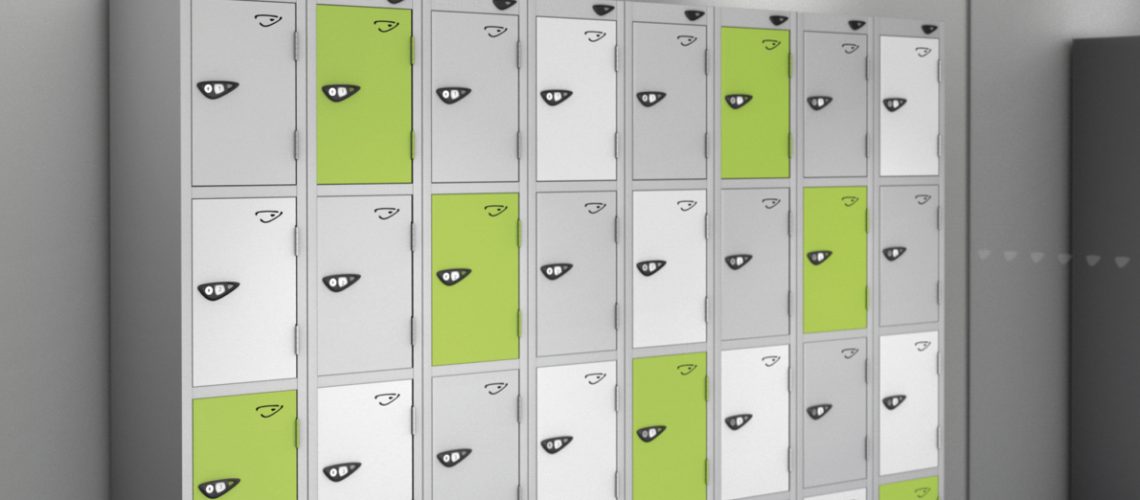
School locker safety requirements UK-wide are shaped by fire safety legislation, safeguarding policies, durability expectations and risk assessments. Education environments present unique challenges. Storage systems must be secure, safe, hygienic and resistant to vandalism.
This guide explains education locker compliance in 2026 and how schools, academies and local authorities can specify lockers that meet regulatory and safeguarding expectations.
For broader regulatory context, see our UK Secure Storage Compliance Guide 2026.
Are There Legal Requirements for School Lockers?
Are There Legal Requirements for School Lockers?
UK legislation does not prescribe a specific locker model. However, several regulations affect locker specification:
- Regulatory Reform (Fire Safety) Order 2005
- Health and Safety at Work Act 1974
- Safeguarding guidance for schools
- Building Regulations (fire escape routes)
Lockers must not compromise fire escape routes or create safety hazards.
Fire Safety Considerations
Fire Safety & Corridor Placement
School lockers are often positioned in corridors. Estates managers must ensure:
- Minimum escape widths are maintained
- Lockers do not obstruct fire exits
- Materials meet acceptable fire performance standards
- Units are securely fixed to prevent tipping
Anti-Tip & Fixing Requirements
Anti-Tip & Structural Fixing
Freestanding lockers must be fixed to walls where required to prevent tipping. This is particularly important in secondary schools where misuse risk is higher.
- Secure wall anchoring
- Level installation
- Grouped bay configurations
Material Selection: Steel vs Plastic
Steel vs Plastic Lockers in Schools
Material choice affects durability, hygiene and long-term cost.
- Steel lockers – robust, secure, widely used
- Plastic lockers – moisture-resistant, suitable for wet areas
- Laminate options – aesthetic and scratch resistant
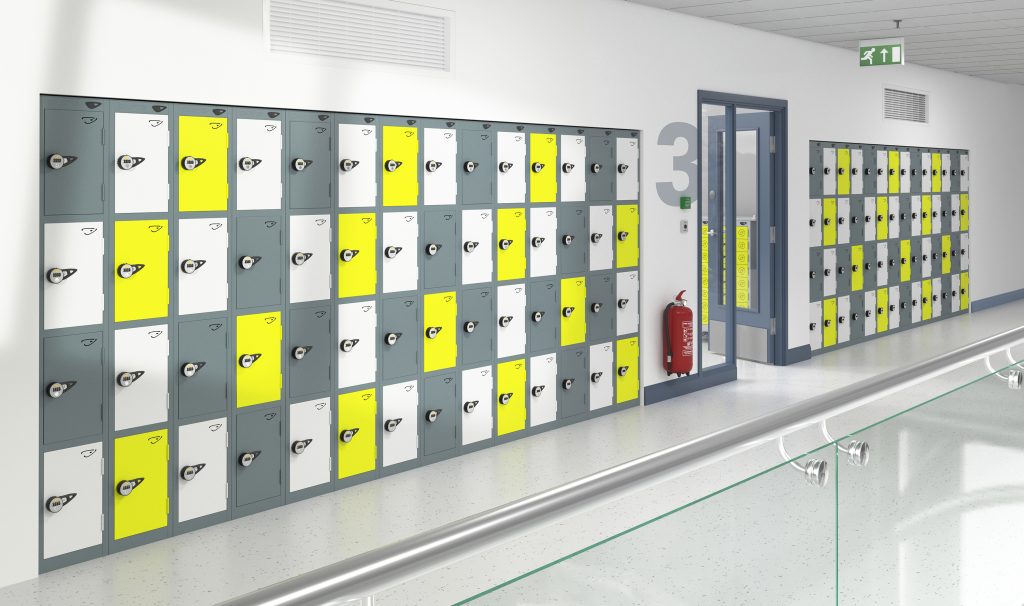
Explore durable Steel Lockers for education environments.
Locking Systems & Safeguarding
Locking Systems & Safeguarding Considerations
Safeguarding policies require controlled access and appropriate supervision. Common school locking systems include:
- Cam locks with master override
- Hasp & staple (padlock use policies vary)
- Digital combination locks
- Coin return locks (in leisure education facilities)
Ventilation & Hygiene
Ventilation & Hygiene Requirements
Ventilated locker doors reduce odour build-up and moisture accumulation. Powder-coated finishes improve cleanability and longevity.
Anti-Vandal & Durability Standards
Anti-Vandal Design & Durability
- Reinforced doors
- Concealed hinges
- Thicker gauge steel
- Scratch-resistant coatings
Capacity & Layout Planning
Locker Capacity & Layout Planning
When planning new installations, schools should consider:
- Number of pupils
- Year group allocation
- Corridor width
- Future expansion
- Accessibility compliance
Common Compliance Mistakes
Common School Locker Compliance Mistakes
- Blocking fire escape routes
- Using non-durable domestic lockers
- Failing to secure units to walls
- Ignoring safeguarding review
- Overcrowding narrow corridors
Choosing the Right School Locker System
How to Choose the Right School Locker System
- Review fire safety assessment
- Consult safeguarding lead
- Confirm installation compliance
- Select durable materials
- Plan phased expansion if required
Frequently Asked Questions
Frequently Asked Questions
Are lockers allowed in school corridors?
Yes, provided fire escape routes remain compliant with building regulations.
Do school lockers need to be bolted down?
Where there is risk of tipping or misuse, secure fixing is recommended.
Discover more from Blog Total Locker Service
Subscribe to get the latest posts sent to your email.