How to Report a Medicines Error or Near Miss in a Care Home
March 30, 2026
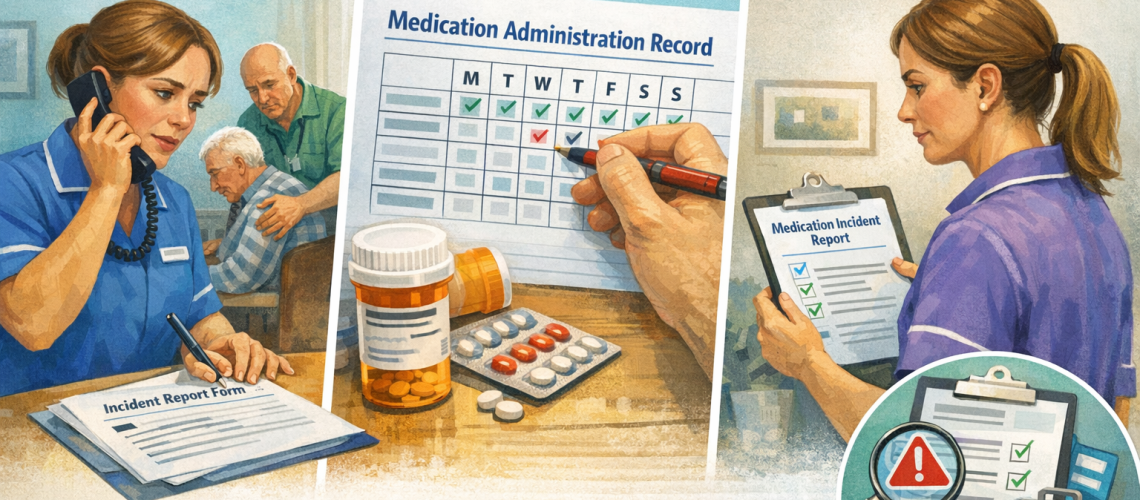
Reporting a medicines error or near miss in a care home is not just an administrative task. It is one of the clearest ways to protect residents, support staff and improve the safety of the service. When reporting is handled properly, the home gains a fuller picture of what happened, how serious the risk was and what needs to change. When reporting is weak, important warning signs can be missed.
This matters because medicines issues are not always obvious at first. A missed dose may look small until a pattern appears. A MAR entry error may seem like paperwork until it creates uncertainty about whether a medicine was actually given. A near miss may cause no harm at all, yet still reveal a serious weakness in storage, checking or communication. Good reporting makes those risks visible.
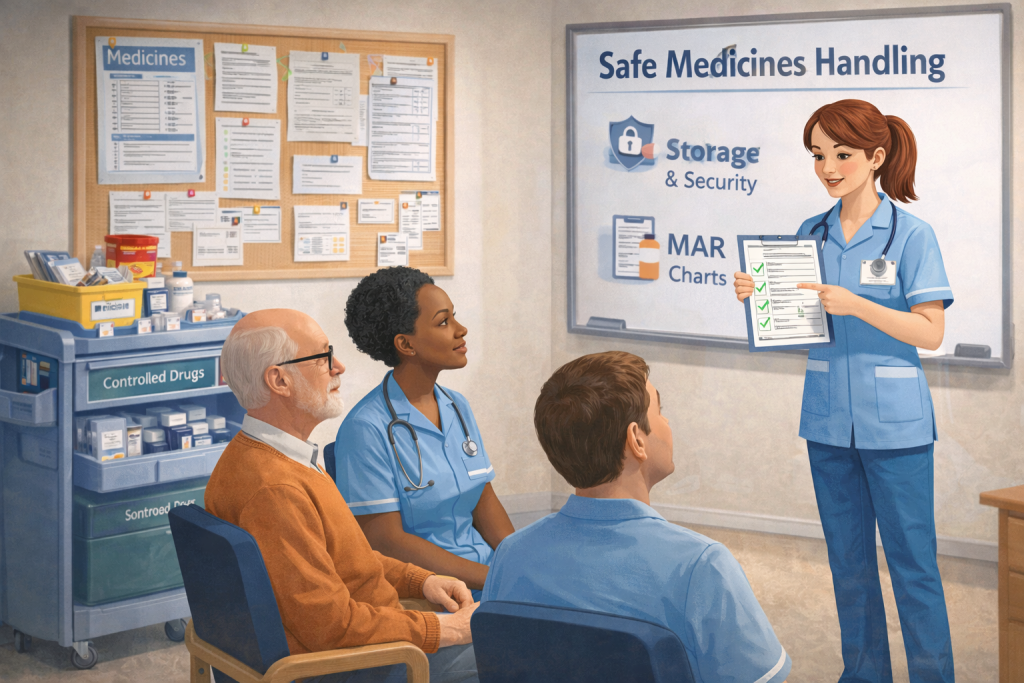
A strong reporting process also helps create a safer culture. Staff are more likely to raise concerns promptly when they know the purpose is learning and protection, not blame for every honest mistake. That openness matters in care homes, where medicines work depends on routines, handovers, communication and consistent checking across the whole team.
Why reporting matters
A care home cannot improve medicines safety if incidents stay hidden or are recorded poorly. Reporting creates the evidence needed to review what happened, respond to immediate risk and stop the same problem happening again.
Proper reporting helps the home to:
- protect the resident quickly
- record the event accurately
- decide whether urgent clinical advice is needed
- identify patterns over time
- support investigation and follow-up
- strengthen training and supervision
- improve storage, administration and record-keeping systems
Without reporting, managers may only see the most serious incidents. Smaller problems, repeated near misses and early warning signs can remain invisible until a more serious event occurs.
Understand the difference between an error and a near miss
Clear reporting starts with clear definitions. Staff need to understand that a medicines error and a near miss are not exactly the same, but both matter.
A medicines error is a mistake in the medicines process that has happened. That could include the wrong dose, wrong time, wrong medicine, a missed dose, poor storage, a documentation mistake or a controlled drugs discrepancy.
A near miss is a problem that was identified before it reached the resident or before harm occurred. For example, a staff member may notice that the wrong medicine has been picked up before it is given. A stock count may reveal a discrepancy in time for it to be checked. A MAR mismatch may be spotted before administration takes place.
Near misses should still be reported. They show where the system almost failed, which often makes them just as useful for learning.
Put resident safety first
Before a report is completed, the home must deal with any immediate risk to the resident. Reporting is important, but safety comes first.
That may mean:
- checking the resident’s condition
- seeking clinical advice
- informing a senior colleague or manager
- monitoring for side effects or deterioration
- clarifying what medicine was or was not given
- making the area or stock safe if storage is involved
The reporting process should reflect what happened, but it should not delay urgent action.
Report the issue as soon as possible
Medicines errors and near misses should be reported promptly. Delay makes details harder to confirm and increases the risk that records become unclear or incomplete.
A prompt report helps preserve:
- the timing of the event
- the sequence of what happened
- who was involved
- what was discovered
- what immediate action was taken
- what records or stock were affected
Fast reporting also allows managers to decide quickly whether further checks are needed for other residents, other stock or other members of staff on the same shift.
Record facts clearly and avoid guesswork
A good report should be factual. It should explain what happened clearly without turning into opinion, blame or speculation.
Useful facts usually include:
- the resident involved
- the medicine involved
- the date and time
- where the issue happened
- what was found
- how the issue was discovered
- immediate action taken
- who was informed
- whether harm occurred or might have occurred
At this stage, avoid filling gaps with assumption. If something is uncertain, record it as uncertain. A clear factual report supports a much better investigation later.
Include the right level of detail
A weak incident report often fails because it is too vague. A strong report gives enough detail to understand the issue properly.
For example, “Medication error on morning round” is not enough. A better report would explain:
- which medicine was involved
- whether it was omitted, given late, given incorrectly or documented wrongly
- whether the MAR matched the label
- whether the resident received the medicine
- whether the resident was affected
- what was done next
Detail matters because different medicines issues create different risks and require different follow-up.
Make MAR and record checks part of the process
Many medicines issues involve documentation in some way. Even where the main concern is administration or stock, the report should consider whether the records reflect events accurately.
That may mean checking:
- the MAR chart
- stock records
- controlled drugs register
- fridge temperature log
- handover notes
- care plan instructions
- disposal records if relevant
The purpose is not only to document the incident, but also to confirm whether the written record is consistent with what staff believe happened.
Report near misses with the same seriousness
Near misses are sometimes under-reported because no harm occurred. That is a mistake. A near miss can expose a weakness that could easily lead to harm next time.
Examples might include:
- the wrong medicine selected but not given
- the wrong resident’s MAR opened before administration
- an omission spotted just before the end of the round
- a controlled drugs count mismatch found and corrected
- a fridge problem noticed before medicines were used
Reporting these events helps the home understand where its controls are working and where they are too dependent on luck or individual vigilance.
Make it easy for staff to report concerns
Staff are more likely to report medicines issues properly when the process is simple and clear. If reporting feels confusing, time-consuming or punitive, some events may go unreported or be reported with too little detail.
Care homes can improve reporting by making sure staff know:
- what must be reported
- who to tell first
- where to record the event
- what details to include
- when urgent escalation is needed
- how near misses should be logged
- how follow-up will be handled
The easier the process is to follow, the more useful the reporting system becomes.
Support a no-blame but accountable culture
Staff need to feel able to report honest mistakes and near misses without fearing automatic humiliation or unfair treatment. At the same time, reporting should not become so casual that standards disappear. The balance is important.
A strong culture says:
- report concerns early
- be honest about what happened
- focus on resident safety first
- learn from the event
- investigate fairly
- take action where standards or behaviour need to improve
This kind of culture tends to produce better reporting, earlier escalation and more reliable learning across the service.
Escalate serious incidents appropriately
Some medicines issues carry a higher level of risk and need immediate senior oversight. Staff should know when a report also needs urgent escalation beyond the normal local process.
That may include incidents involving:
- the wrong medicine given
- the wrong dose given
- omission of a critical medicine
- repeated refusal with signs of deterioration
- controlled drugs discrepancies
- fridge failure affecting temperature-sensitive medicines
- potential harm, actual harm or urgent clinical concern
- repeated issues suggesting a wider systems failure
A local report form alone is not enough in these situations. The right clinical and managerial response must happen alongside the documentation.
Use reports to spot patterns
One incident report is useful. A series of reports becomes much more powerful. Reviewing incident and near-miss data over time helps managers see where the real pressure points are.
Patterns may emerge around:
- a particular shift
- a particular medicines round
- MAR documentation
- stock control
- controlled drugs procedures
- fridge monitoring
- training gaps
- new or temporary staff
- communication after prescription changes
This is one of the biggest reasons why consistent reporting matters. It allows the home to move from reacting to single events towards improving the system as a whole.
Link reporting to investigation and learning
A medicines error report should not be the end of the process. It should lead into the right level of review, investigation and action.
That may include:
- clarifying facts
- checking related records
- reviewing staff practice
- identifying contributing factors
- putting immediate safeguards in place
- planning longer-term improvement
- sharing learning with the team
A report without follow-up is little more than a file. A report that leads to change becomes part of medicines safety governance.
Common reasons why staff do not report properly
Understanding barriers helps managers strengthen the process. Staff may fail to report, or report poorly, for several reasons:
- fear of blame
- uncertainty about what counts as a reportable issue
- assumption that no harm means no need to report
- lack of time during a busy shift
- unclear forms or procedures
- belief that nothing changes after reports are submitted
- embarrassment about making a mistake
These barriers are common, but they can be reduced with better culture, clearer systems and visible follow-up.
What a strong medicines report should achieve
By the end of the reporting process, the home should be able to answer a few core questions:
- What happened?
- Who was affected?
- What immediate action was taken?
- Was the resident safe?
- Was this an error, a near miss or both?
- What level of follow-up is required?
- Does this reveal a wider pattern or risk?
If the report cannot answer those questions, it may need more detail or better follow-up.
Common reporting mistakes to avoid
Some errors in reporting can weaken the whole process. Common examples include:
- reporting too late
- writing vague descriptions
- leaving out immediate actions taken
- failing to check the MAR or stock records
- not reporting near misses
- confusing fact with opinion
- assuming someone else has already reported it
- closing the issue without follow-up
Avoiding these mistakes makes the reporting system more useful and more trustworthy.
Final thoughts
Reporting a medicines error or near miss in a care home is one of the most practical ways to improve safety. It protects residents, supports staff and gives the home better evidence about where its systems are strong and where they need attention. The best reporting processes are prompt, factual, clear and easy to follow. They also treat near misses as valuable information rather than unimportant events.
When a care home reports medicines issues well, it becomes much easier to investigate incidents fairly, spot patterns early and strengthen the service over time. That is how reporting moves from paperwork to real safety improvement.
“`
Discover more from Blog Total Locker Service
Subscribe to get the latest posts sent to your email.