Receiving Medicines Deliveries in a Care Home: Checking, Booking In and Secure Storage
March 26, 2026
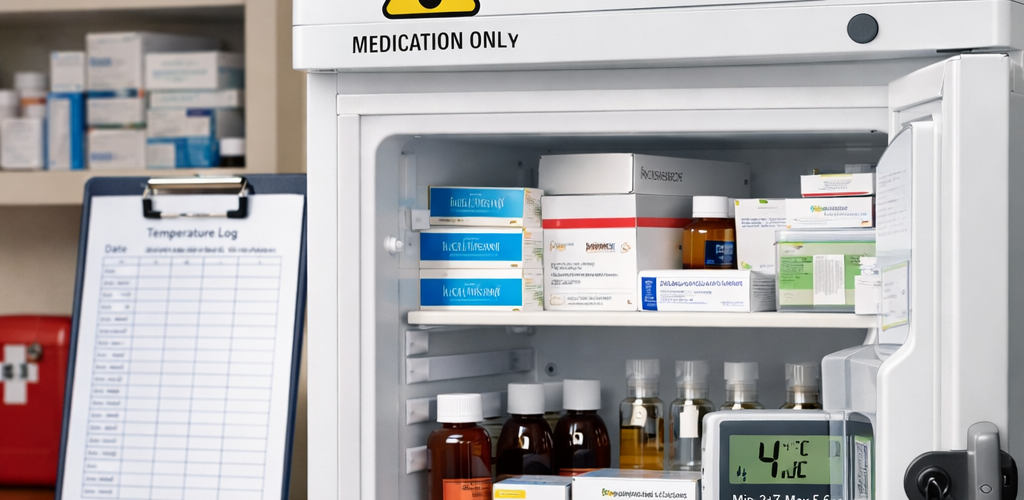
Medicines do not become safe simply because they arrive from a pharmacy in sealed packaging. The point at which medicines are delivered into a care home is one of the most important control stages in the whole medicines process. If items are accepted without checks, left unsecured, stored incorrectly or recorded poorly, the risk carries forward into every later stage.
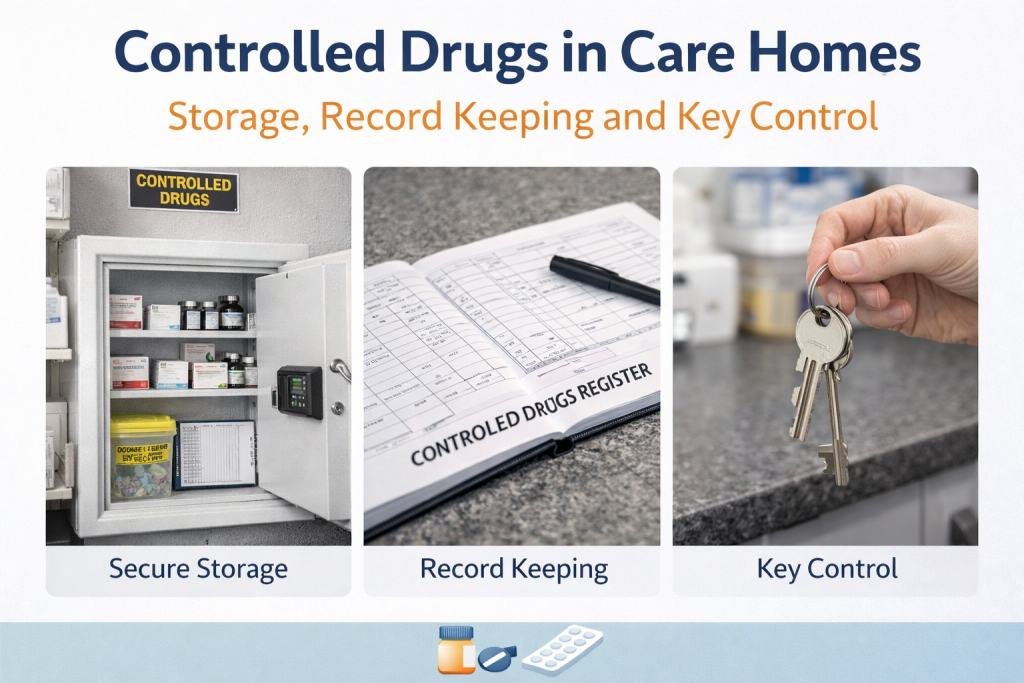
A reliable deliveries process helps staff confirm that the right medicines have arrived for the right resident, in the right quantity, in suitable condition and with the correct storage requirements. It also helps prevent missed doses, stock discrepancies, temperature failures and avoidable waste.
This guide explains how care homes can manage medicines deliveries safely, with a focus on checking, booking in and secure storage.
Why medicines deliveries matter
The delivery stage forms the link between prescribing, dispensing and administration. It is the point where responsibility begins to move from the supplying pharmacy or dispensing source into the care home’s own storage and medicines management system.
If the handover is not controlled properly, a home can quickly run into problems such as:
- missing medicines
- incorrect resident labels
- damaged items
- expired or short-dated stock
- cold-chain failures
- wrong quantities
- items left unsecured
- delays in updating records
- stock being placed in the wrong storage area
A good process reduces those risks and gives the home a clear audit trail from the moment the medicines arrive.
What a safe medicines delivery process should achieve
A care home’s delivery process should do more than confirm that a box has been dropped off. It should help staff answer a set of practical questions:
- Who has delivered the medicines?
- What exactly has arrived?
- Are the items correct for the resident and prescription?
- Are all labels accurate and legible?
- Are there any controlled drugs or refrigerated items?
- Do any items need immediate action?
- Has the stock been recorded and stored securely without delay?
That is why medicines deliveries should be handled by authorised staff who understand the home’s procedures and know what to look for.
Who should receive medicines deliveries
Medicines should not be accepted casually by whoever happens to be nearest the door. The home should have a defined process for who can receive deliveries and what they are expected to do next.
In most care settings, medicines should be received by a trained and authorised member of staff. That person does not necessarily need to administer medicines themselves in every case, but they should understand the home’s medicines policy and be able to follow the checking procedure properly.
The person receiving the delivery should know:
- where medicines are to be taken immediately after delivery
- how to identify urgent or time-sensitive items
- how to handle refrigerated products
- when to escalate discrepancies
- how the booking-in process works
- how to maintain security throughout
The main point is consistency. The home should be able to show that medicines are received in a controlled way rather than informally.
Checking the delivery at the point of handover
The first stage is the initial handover check. This should happen as soon as the medicines arrive, before items are left unattended or mixed into stock.
At this point, staff should usually confirm:
- that the delivery is intended for the home
- that any outer packaging appears intact
- that the number of boxes or bags matches the delivery note where one is provided
- that refrigerated items are identified straight away
- that controlled drugs or special items are recognised and handled under the correct procedure
- that there are no obvious signs of damage, leakage or tampering
Where possible, any obvious discrepancy should be identified immediately rather than discovered later. If a container is visibly damaged, wet, open or incomplete, that should be escalated without delay.
Why deliveries should not be left unattended
Medicines should not be left in reception areas, corridors, office floors or general workspaces waiting to be dealt with later. Even a short delay can create avoidable risk, especially where there are temperature-sensitive items, controlled drugs or medicines that need prompt access.
Unattended deliveries can lead to:
- loss of stock
- unauthorised access
- items being misplaced
- delayed refrigeration
- confusion over who has accepted responsibility
- incomplete audit trails
Once the medicines enter the home, they should move promptly into the medicines checking and storage process.
Checking resident details and labels
Each dispensed item should be checked carefully before it is accepted into active stock. One of the most important steps is confirming that the label matches the intended resident and contains the correct information.
Staff should usually check:
- resident name
- medicine name
- strength
- form, such as tablets, liquid, cream or inhaler
- directions for use
- quantity supplied
- date of dispensing where relevant
- any special instructions
- expiry date where visible and applicable
Labels should be legible and complete. If anything is unclear or inconsistent, the home should not simply guess what was meant. The supplying pharmacy or prescriber may need to be contacted for clarification.
Checking that the right medicines have arrived
The delivery should be compared against the order, repeat request, MAR cycle or other expected supply documentation used by the home. The aim is to confirm that what has arrived matches what was expected.
This includes checking for:
- omitted items
- unexpected substitutions
- duplicate supplies
- discontinued medicines supplied in error
- wrong formulation, such as liquid instead of tablet
- wrong strength
- short quantities
Sometimes a delivery issue is not obvious until staff compare it properly against the expected list. A neatly labelled box can still contain the wrong thing for that resident or the wrong version of the medicine.
Shortages, omissions and part supplies
Not every delivery arrives complete. Some medicines may be owed, unavailable or supplied in part quantities. That is not unusual in practice, but it must be identified and recorded clearly.
If an item is missing or only partly supplied, staff should establish:
- whether it is marked as owing
- whether it has been substituted
- whether a prescriber or pharmacy has already been in contact
- whether there is enough current stock to cover the gap
- whether the resident is at risk of a missed dose
- what follow-up is needed and who is responsible
A missing item should never be silently absorbed into the system. If the next shift does not know an item is owed, the result may be delayed administration or confusion during medicines rounds.
Refrigerated medicines need immediate attention
Some medicines need cold storage and should be identified straight away when the delivery is opened. These items should not be left sitting in a room-temperature area while other stock is checked at leisure.
Refrigerated medicines should be:
- recognised at once
- checked promptly
- placed into the medication fridge without delay if accepted
- recorded according to the home’s process
If there is any doubt about whether the cold chain has been maintained, that should be escalated. A temperature-sensitive medicine cannot simply be assumed safe because it arrived in a pharmacy tote or insulated packaging.
This is one of the strongest links between the deliveries process and the home’s wider medicine fridge procedures.
Controlled drugs at delivery stage
Controlled drugs need particular care during receipt. The home’s controlled drugs procedure should set out how these deliveries are checked, recorded and stored.
At delivery stage, staff may need to confirm:
- the medicine name and strength
- quantity supplied
- resident details
- condition of packaging
- correct record entry
- prompt transfer to the controlled drugs cabinet
The important point is that controlled drugs should not sit mixed in with general stock waiting to be sorted later. The checking and secure storage process should happen promptly and in line with the home’s higher-security requirements.
Condition of medicines and packaging
Staff should also look at the physical condition of what has arrived. A medicine can be the right item on paper and still be unsuitable if the packaging is damaged or the contents appear compromised.
Look out for:
- torn boxes
- broken seals
- cracked bottles
- leaking liquids
- crushed blister packs
- missing labels
- evidence of damp or contamination
- short-dated stock where that creates a practical problem
If something does not look right, it should be separated and reviewed rather than placed into active use automatically.
Booking medicines in properly
Once the delivery has been checked, the next stage is booking the medicines into the home’s system. The exact paperwork or electronic process will vary by home, but the principle stays the same: there should be a clear record that the medicines were received, checked and taken into controlled storage.
A booking-in process may include:
- date and time received
- resident name
- medicine details
- quantity received
- any part supply or owing note
- any discrepancy identified
- initials or name of the staff member checking
- where the stock was stored
This creates accountability and makes it easier to resolve later questions about stock balances or missing items.
Why booking in should happen without delay
The longer medicines sit between delivery and recording, the greater the chance of confusion. Delayed booking-in can create uncertainty about:
- whether the item arrived at all
- whether it was checked
- whether it was placed into storage
- whether it has already been added to stock
- whether another member of staff has seen the same item and assumed it was processed
Prompt recording reduces duplication and prevents the awkward situation where medicines are physically present but not yet reflected in the home’s records.
Updating MARs and related records
Depending on the home’s system, medicines deliveries may also require updates to MAR charts, stock sheets, fridge logs, controlled drugs records or handover notes.
This matters especially when:
- a new medicine has been started
- a medicine has been changed
- an item is supplied mid-cycle
- there is an owing balance
- the home is transitioning from one MAR period to another
- a discontinued item has accidentally been supplied
Staff should know which records need updating and who is responsible for doing so. A medicine that has arrived but is not reflected properly in administration records can still cause errors later.
Secure storage after booking in
Once checked and recorded, medicines should be moved promptly into the correct secure storage location. This is the point where the delivery process becomes part of the home’s day-to-day medicines storage system.
That may include:
- the locked medicines cupboard
- the medication fridge
- a controlled drugs cabinet
- separate external medicines storage for creams and ointments where used
- a clearly designated area for non-active stock awaiting clarification, where policy allows
Items should not be placed into the wrong location simply because it is convenient at the time. Secure storage must match the product type and the home’s procedures.
Segregating medicines that need review
Sometimes an item arrives that should not go straight into routine stock. There may be a query over the label, packaging, quantity, resident status or current prescription. In those cases, it helps to have a defined way to segregate medicines safely while the issue is resolved.
Examples include:
- a medicine supplied after it has been discontinued
- a product with unclear instructions
- damaged packaging
- unconfirmed part supply
- stock for a resident who has been discharged or transferred
- an item delivered in error
These items should be held securely and clearly separated from active stock so they are not accidentally administered.
Communication between shifts
A medicines delivery does not end with the person who accepted it. Other staff may need to know that new stock has arrived, that an item is still owed, that a fridge medicine has been received, or that there is a discrepancy awaiting resolution.
Important information should be handed over clearly, particularly where:
- there is an urgent medicine
- a medicine is missing
- a part supply is expected later
- a new medicine needs attention
- storage arrangements have changed
- pharmacy follow-up is needed
Weak handover is one of the simplest ways for a delivery issue to carry forward into missed doses or duplicated enquiries.
Common medicines delivery mistakes in care homes
Several weaknesses appear repeatedly in medicines delivery systems. Most are avoidable.
Common problems include:
- accepting deliveries without proper checks
- leaving medicines unattended
- failing to identify cold-chain items quickly
- not spotting omitted items
- not recording part supplies clearly
- placing medicines into storage before booking them in
- mixing uncertain items into active stock
- weak communication between shifts
- no clear responsibility for follow-up
- poor separation between general deliveries and medicines deliveries
These issues may seem small individually, but together they weaken the whole medicines management chain.
Auditing the deliveries process
A care home should periodically review how medicines are received, checked and booked in. This can form part of wider medicines audits and often reveals practical issues that staff have adapted to without formally addressing.
Useful audit questions include:
- Are medicines deliveries accepted only by authorised staff?
- Are deliveries checked promptly on arrival?
- Are refrigerated items identified and stored immediately?
- Are discrepancies recorded and followed up?
- Are medicines booked in consistently?
- Are records complete and legible?
- Are items placed into secure storage without delay?
- Are part supplies and owed items tracked clearly?
- Are controlled drugs handled according to policy?
- Is handover information passed on effectively?
Staff training and procedural clarity
A good medicines delivery process depends on staff knowing exactly what to do. Training should cover practical handling, not just general principles.
Staff should understand:
- who can accept medicines
- what checks must be made
- how to handle fridge items
- how to deal with missing or damaged stock
- how booking-in works
- where medicines go after receipt
- how to escalate concerns
- what must be handed over to the next shift
A short written procedure can make this far more consistent, especially in homes where several staff may receive deliveries across different shifts.
Why the physical storage setup matters
The delivery process works best when the medicines room or storage area is organised properly. Staff need a secure and logical route from handover to checking to storage.
Helpful features include:
- a defined medicines receiving area within the secure room
- easy access to the correct records
- nearby medicine cupboard and medication fridge
- enough space to separate checked stock from queried items
- good lighting for reading labels
- lockable storage for immediate placement
- clear workflow that reduces clutter and interruption
If the storage space is awkward, overcrowded or poorly arranged, even good staff can find it harder to handle deliveries safely.
Final thoughts
Receiving medicines deliveries in a care home is a critical safety step, not a routine background task. It is where the home confirms what has arrived, checks it is correct, records it properly and moves it into secure storage.
A strong system should make sure that medicines are:
- checked promptly
- matched to the right resident
- recorded clearly
- stored securely
- escalated where problems arise
- communicated properly across shifts
When that happens, the rest of the medicines process becomes more reliable. Stock control improves, storage is safer, missed doses are less likely and the home is in a stronger position to demonstrate good medicines management.
For care homes reviewing their systems, the deliveries process is often one of the best places to improve consistency. A well-designed checking and booking-in routine creates a solid foundation for everything that follows.
“`
Discover more from Blog Total Locker Service
Subscribe to get the latest posts sent to your email.