Locker Installation Regulations UK: Fixing & Compliance Guide (2026)
February 26, 2026
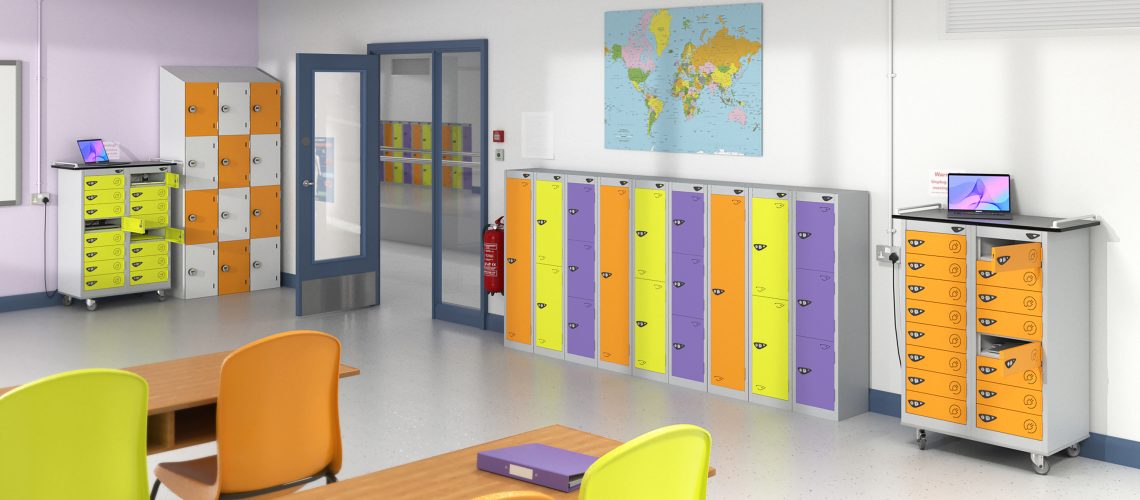
Understanding locker installation regulations UK-wide is essential for schools, hospitals, leisure centres and commercial workplaces. While no single regulation specifies locker models, multiple safety frameworks require secure installation, structural stability and fire-compliant positioning.
This guide explains when lockers must be bolted down, how to comply with fire safety rules, and what facilities managers should consider during installation in 2026.
For wider compliance context, see our UK Secure Storage Compliance Guide 2026.
Are Lockers Required to Be Bolted Down?
Do Lockers Need to Be Bolted Down in the UK?
There is no blanket law stating all lockers must be bolted down. However, under the Health and Safety at Work Act 1974, employers must ensure equipment is stable and does not present a foreseeable risk.
In practice, lockers should be fixed where:
- There is a tipping risk
- Units exceed safe freestanding height
- Installed in schools or high-traffic areas
- Grouped in corridor banks
- Located in seismic-sensitive or uneven floor environments
Fire Safety & Corridor Placement
Fire Safety & Escape Route Compliance
Under the Regulatory Reform (Fire Safety) Order 2005, escape routes must remain clear and unobstructed. Lockers installed in corridors must not reduce required minimum widths.
- Maintain statutory corridor widths
- Avoid obstruction of fire exits
- Secure lockers to prevent movement during evacuation
Wall Fixing vs Floor Fixing
Wall Fixing vs Floor Fixing
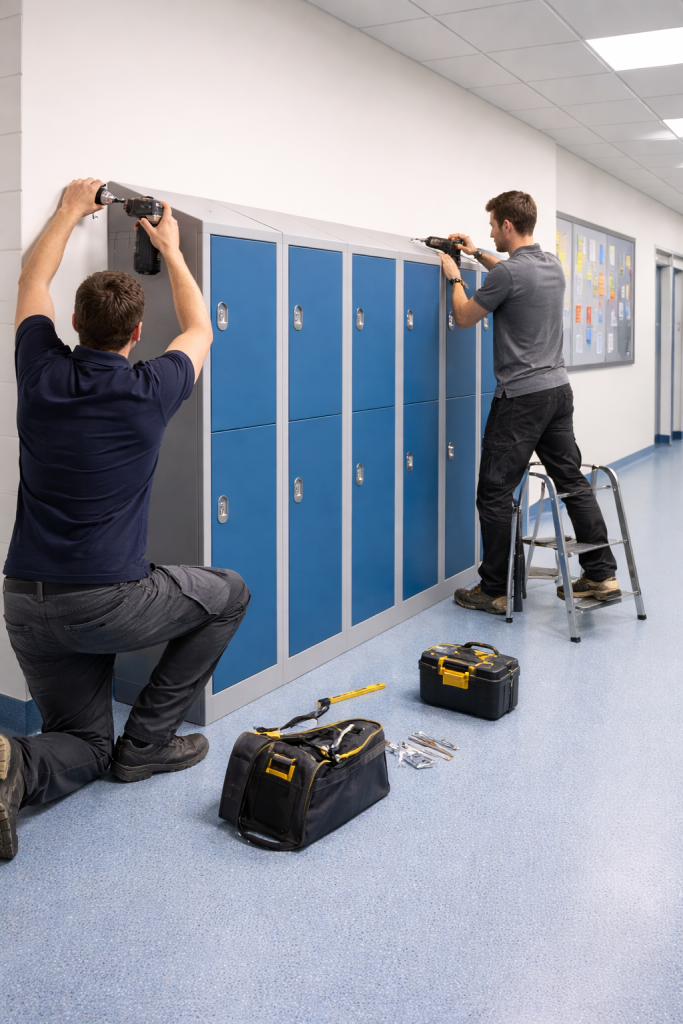
Most locker installations in the UK use wall fixing into solid masonry. Floor fixing may be used where wall structure is unsuitable.
- Use appropriate anchor bolts
- Fix into structural substrate (not plasterboard)
- Follow manufacturer fixing guidance
- Use tamper-resistant fixings where required
Installation in Schools
Locker Installation in Schools
In education environments, secure fixing is strongly recommended to reduce tipping risk and misuse. Lockers should also align with safeguarding policies.
Installation in Healthcare & Mental Health Settings
Locker Installation in Healthcare Settings
Healthcare environments require additional considerations:
- Maintain infection control access for cleaning
- Avoid ligature risks in mental health wards
- Ensure stable fixing without exposed anchor points
Grouping & Linking Lockers
Linking & Grouping Multiple Lockers
When installing banks of lockers, units should be securely linked together to improve stability and alignment.
- Use manufacturer linking kits
- Level units before fixing
- Ensure even load distribution
Floor Load Considerations
Floor Load & Structural Considerations
In most standard installations, lockers do not require structural floor reinforcement. However, high-density installations should consider:
- Combined weight of filled lockers
- Upper floor load limits
- Uneven surfaces
Common Installation Mistakes
Common Locker Installation Mistakes
- Fixing into weak substrates
- Failing to level units
- Ignoring corridor width compliance
- Using incorrect anchor types
- Not linking grouped lockers
Choosing the Right Locker for Compliant Installation
Choosing the Right Locker for Compliant Installation
Select lockers appropriate for the environment:
- Steel Lockers for durability
- Plastic Lockers for wet areas
- Anti Ligature Lockers for mental health settings
Frequently Asked Questions
Frequently Asked Questions
Do lockers legally have to be bolted down?
There is no universal requirement, but risk assessments often make secure fixing necessary.
Can lockers be installed in corridors?
Yes, provided fire escape routes remain compliant.
Discover more from Blog Total Locker Service
Subscribe to get the latest posts sent to your email.