Expired Medicines in Care Homes: Checks, Segregation and Safe Removal
March 26, 2026
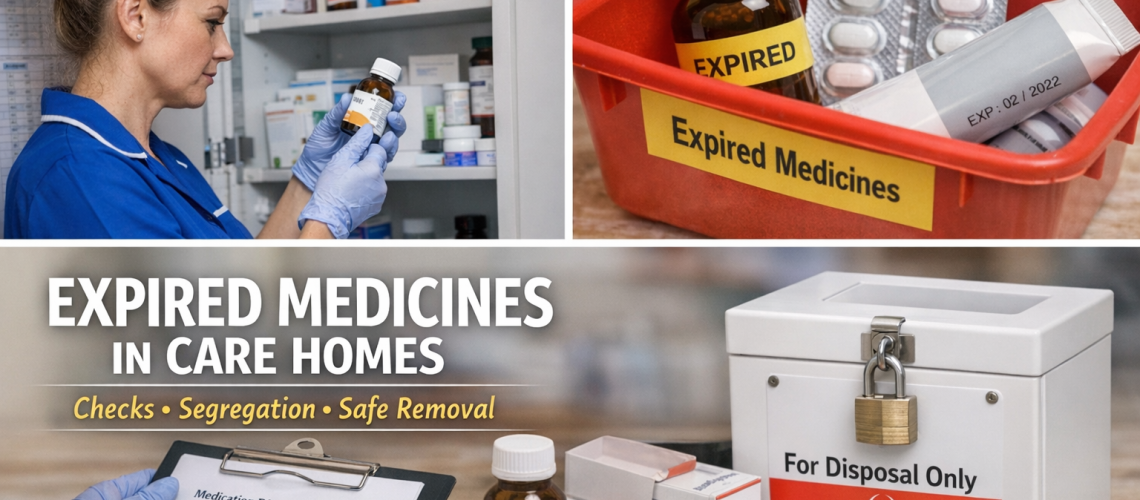
Expired medicines can create risk even when they remain sealed, labelled and apparently untouched. In a care home, it is not enough to assume that an item is safe simply because it is still sitting in the medicines cupboard or fridge. Once a medicine passes its expiry date, or reaches its in-use limit after opening where that applies, it should no longer remain mixed in with active stock.
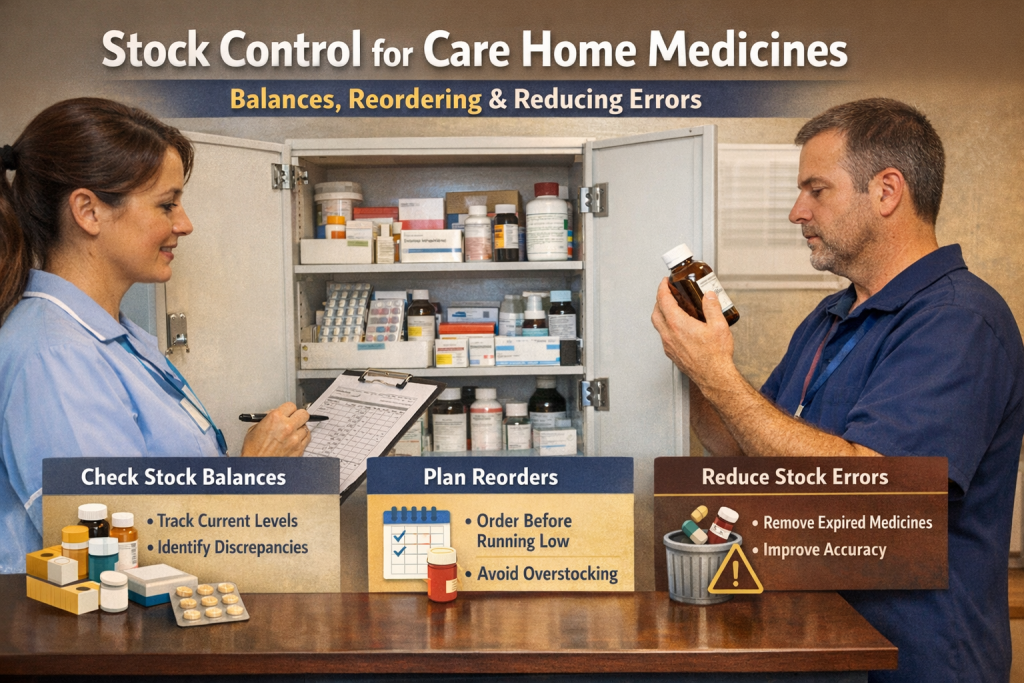
A strong expiry-checking process helps care homes protect residents, reduce administration errors, improve stock control and keep medicines storage organised. It also supports safer audits, cleaner handovers and better day-to-day decision making.
This guide explains how care homes can manage expired medicines safely, with a focus on checks, segregation and safe removal.
Why expired medicines matter
A medicine expiry date is there for a reason. It shows the period during which the manufacturer can support the product’s quality and stability when stored correctly. After that point, the medicine may no longer meet the expected standard.
In practice, expired medicines create several risks in care homes:
- a resident may receive a medicine that should no longer be used
- staff may assume old stock is still active because it remains in the cupboard
- expired items may confuse stock counts and reordering decisions
- medicines rounds may be slowed by cluttered storage
- the home may struggle to show safe medicines management during audit or inspection
Even if an expired medicine is never administered, leaving it in active storage still weakens the system.
Expiry dates are not the only limit
Some medicines become unsuitable before the printed expiry date if they have been opened or prepared. This is especially relevant for products such as:
- eye drops
- liquid medicines
- creams and ointments
- inhalers in certain circumstances
- insulin and some refrigerated items once in use
- reconstituted products
- medicines supplied with specific in-use instructions
That means staff need to think about two possible limits:
- the manufacturer’s expiry date on the pack
- the shorter in-use period after opening, mixing or first use
A medicine can be within its printed expiry date and still be unsuitable if its in-use period has passed.
Why expiry checks should be routine
Expiry checking should not be left until a cupboard becomes obviously full or an audit is due. By that point, the home may already have a mixture of active, discontinued and expired stock sitting together.
Routine expiry checks help staff:
- identify stock that should no longer remain in use
- reduce the chance of expired medicines reaching a resident
- keep storage areas clearer
- support better stock rotation
- improve reordering decisions
- reduce waste caused by overlooked items
- make audits easier and more reliable
A small regular check is often more effective than an occasional large clear-out.
Where expired medicines may be found
Expired medicines are not confined to one place. In a care home they may be found in:
- locked medicines cupboards
- medicine trolleys
- medication fridges
- controlled drugs storage, where relevant
- external medicines storage areas
- resident-specific trays or baskets
- PRN medicine sections
- temporary holding areas where older stock has not been removed properly
That is why expiry checking should cover the whole medicines storage system, not just the main cupboard.
How expired medicines remain in active stock
Expired medicines often remain in use areas for practical reasons rather than deliberate neglect. Common causes include:
- newer stock placed in front of older stock
- items not checked when deliveries arrive
- discontinued medicines never separated clearly
- part-used items with no opening date recorded
- slow-moving PRN medicines overlooked for months
- fridge stock reviewed less often than cupboard stock
- staff assuming someone else has already checked
- weak stock rotation
- unclear responsibility between shifts
These are system problems more than individual failings. A better process usually solves them.
Checking expiry dates properly
Expiry checks should be carried out in a calm, organised way. Rushing increases the chance that dates will be misread or that unsuitable items will be left behind.
Good checking practice includes:
- reading the date on each item carefully
- checking both outer box and inner container where needed
- looking for opening dates on medicines with an in-use limit
- separating items as soon as a query arises
- checking one section at a time
- avoiding interruption where possible
- recording or escalating findings according to policy
Where dates are unclear, smudged or missing, staff should not guess. The item should be treated as needing review.
First-expiring stock should be visible
One of the simplest ways to reduce expiry problems is to organise storage so that stock with the earliest suitable date is used first. This supports rotation and makes expiry risk easier to spot.
This works best when staff:
- avoid overfilling shelves
- keep similar products grouped clearly
- place newer stock behind older suitable stock where appropriate
- remove obsolete items promptly
- keep resident-specific supplies clearly identified
- avoid mixing current stock with queried or returned items
If staff cannot see what is on the shelf, they are much more likely to miss what is nearing expiry.
PRN medicines are often overlooked
PRN medicines can sit untouched for long periods, especially if they are only needed occasionally. That makes them one of the more common sources of expired stock.
Examples include:
- occasional pain relief
- indigestion remedies
- laxatives
- creams
- allergy medicines
- sleep-related medicines where prescribed
- products held in case symptoms recur
Because these items may not be used every day, they should still be included in regular expiry checks. A medicine being used infrequently does not make its date less important.
Refrigerated medicines need expiry checks too
Medication fridges can create a false sense of order because the contents are physically separated and often neatly arranged. That does not mean the stock inside has been reviewed properly.
Expiry checks for refrigerated medicines should confirm:
- printed expiry dates
- in-use dates where relevant
- resident details
- whether the fridge stock record still matches the actual contents
- whether discontinued or no-longer-needed items remain inside
Refrigerated stock that is expired should not remain sitting in the fridge simply because it is out of the way.
Opened medicines need special attention
Some of the most important expiry checks involve items that have already been opened. Once a bottle, tube or drop container has been used, staff may need to work from the opening date rather than the printed expiry alone.
Good practice often includes:
- writing the date of opening where required by policy or product instructions
- checking whether the product has a stated period after opening
- removing items that have passed their in-use limit
- making sure part-used products do not remain in circulation indefinitely
Without an opening date, staff may have no reliable way to know whether a product is still suitable. That creates avoidable uncertainty.
What to do when expired stock is found
When an expired medicine is identified, it should not remain in active stock while someone decides what to do later. The safe response is to remove it from routine use promptly.
This usually means:
- stopping it from being available for administration
- separating it from current stock
- labelling or identifying it according to local procedure
- recording it where required
- storing it securely until return or disposal arrangements are followed
The main point is clear separation. An expired medicine should not remain mixed with in-date medicines.
Why segregation matters
Segregation is the step that prevents expired medicines from drifting back into use. If unsuitable stock is merely placed on a different shelf in the same active area without clear separation, staff may still select it by mistake.
Proper segregation helps:
- prevent accidental administration
- keep balance checks more accurate
- show that the home has recognised the item as unsuitable
- make returns and waste handling easier
- reduce confusion during handover or audit
A defined holding area for medicines awaiting return or disposal can make this much safer, provided it is secure and clearly distinguished from active stock.
Safe removal from active use
Safe removal means more than taking the item off the shelf. The home should know:
- what was removed
- why it was removed
- where it has been placed pending return or disposal
- whether any records need adjusting
- whether the item had been included in recent stock balances
- whether follow-up is needed
For example, if an expired medicine is removed from a resident’s active stock, staff may need to check whether a replacement is required, whether the medicine is still prescribed, or whether it should simply be returned.
Expired medicines and stock control
Expired stock can distort medicine balances and reordering decisions. If old items remain mixed in with current stock, staff may believe there is more usable medicine available than there really is.
That can lead to:
- late reordering
- administration delays
- incorrect stock counts
- confusion over what is actually available
- unnecessary searching during rounds
- wasted time investigating apparent shortages
Removing expired medicines promptly makes stock control more accurate and more useful.
Expired medicines and discontinued medicines are not the same
A medicine may be expired, discontinued, or both. These are related but separate issues.
- Expired means it is beyond its date or in-use limit.
- Discontinued means it is no longer current for that resident.
A discontinued medicine may still be in date, but it should still be removed from active use. An expired medicine may technically still appear on a record, but it should not be used. Homes need to recognise both situations clearly.
Handover between staff is important
If expired stock has been found, removed or set aside for return, the next shift may need to know. This is especially important where:
- the removed item was part of a current regimen
- a replacement is needed
- the stock balance has changed
- the medicine was held in the fridge
- the item is awaiting pharmacy collection or formal disposal
- there is a query over whether the medicine is still required
Clear handover prevents the same item being searched for repeatedly or reintroduced into active use by mistake.
Common expiry-management mistakes
Several weaknesses appear repeatedly in care home medicines systems:
- only checking dates when a problem is noticed
- assuming sealed stock is automatically fine
- failing to record opening dates where needed
- leaving expired stock in the cupboard until convenient to deal with
- mixing expired items with returned or discontinued stock without clear identification
- forgetting fridge stock
- overlooking PRN medicines
- not adjusting stock records after removal
- poor communication between staff
- no clear area for segregated medicines awaiting return
These are practical process issues. Most can be reduced with clearer routines and more organised storage.
Auditing expiry checks
A simple expiry audit can reveal a great deal about how well the medicines system is functioning. Useful audit questions include:
- Are expiry dates being checked routinely?
- Are opened medicines dated where needed?
- Are expired medicines removed promptly from active stock?
- Is there a secure, clearly segregated holding area?
- Are fridge medicines included in checks?
- Are PRN medicines being reviewed?
- Are stock records adjusted where appropriate?
- Are staff following a consistent method?
- Is storage organised well enough to support rotation?
- Are repeated expiry problems occurring in the same area?
Staff training and clear procedures
Staff involved in medicines management should understand:
- how often expiry checks take place
- who is responsible for carrying them out
- what to do with expired or queried stock
- how in-use dates work for opened products
- where segregated medicines should be placed
- when stock records need updating
- how to communicate follow-up actions
A short, practical procedure usually helps more than broad policy wording alone. Staff need a method they can apply during ordinary shifts.
Why storage layout affects expiry control
The physical layout of the medicines room matters. Expiry management is easier when staff can see stock clearly and separate different categories safely.
Helpful features include:
- labelled shelves or resident sections
- enough space to avoid hidden packs
- nearby secure storage for medicines awaiting return
- clear fridge organisation
- separate areas for internal and external medicines where used
- easy access to stock records
- good lighting for reading labels and dates
Poor layout makes expiry control harder even when staff are trying to do the right thing.
Why this matters for resident safety
Expired medicines are not just a housekeeping issue. They can affect residents directly if they remain available for administration or if their presence distorts stock decisions. A home that manages expiry well is less likely to:
- administer unsuitable medicines
- miss reordering because unusable stock was counted as available
- waste time during medicines rounds
- leave staff uncertain about what can be used
- accumulate clutter that increases error risk
In that sense, expiry management supports both safety and confidence.
Final thoughts
Expired medicines in care homes should be identified promptly, removed from active use, segregated clearly and handled through the home’s return or disposal process. Leaving them mixed in with current stock creates avoidable risk and weakens the whole medicines system.
The essentials are straightforward:
- check expiry dates routinely
- remember in-use limits as well as printed dates
- include PRN and fridge stock in reviews
- remove expired items from active use without delay
- segregate them securely and clearly
- keep stock records accurate
- communicate actions between shifts
When those steps are in place, medicines storage becomes clearer, stock control improves and the risk of avoidable administration errors is reduced.
“`
Discover more from Blog Total Locker Service
Subscribe to get the latest posts sent to your email.