April 29, 2026
Workplace locker layout planning helps staff store belongings, uniforms, PPE and work equipment safely without causing congestion. The best layouts support staff flow, shift changes, access control and daily workplace routines.
Blog storage solutions
April 29, 2026
Workplace locker layout planning helps staff store belongings, uniforms, PPE and work equipment safely without causing congestion. The best layouts support staff flow, shift changes, access control and daily workplace routines.
Changing room layout planning depends on whether the space is wet, dry or mixed use. Wet areas need more care around drainage, slip risk, cleaning access and circulation, while dry areas often focus more on lockers, benches, access routes and storage capacity.
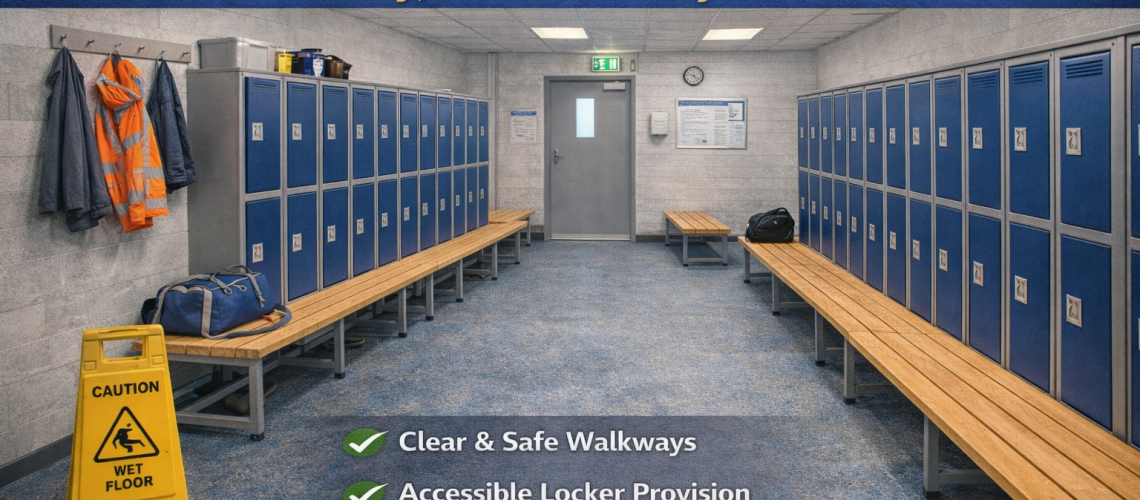
Locker room layout planning turns measurements into a practical working space. A good layout balances lockers, benches, circulation routes, door clearance and user movement so the room works safely during normal daily use.
Locker row spacing is the planned space between locker runs, walls, benches and walkways. Good row spacing allows users to open doors, stand, pass, sit and move safely without creating congestion.
Bench spacing in locker rooms is the distance between benches, lockers and walkways needed to allow people to sit, change, move and pass safely. Correct spacing improves comfort, reduces congestion and ensures the layout works under real usage conditions.
Locker depth is the front-to-back size of a locker. Locker projection is the total space the locker occupies once door swing, handles, locks, plinths, benches and user clearance are considered. Planning both measurements helps create safer, easier and more practical locker rooms.
Locker aisle width is the clear space between locker runs, benches, walls or other fixed features. Good aisle width gives users room to walk, open locker doors, stand safely and access belongings without causing congestion.
Locker door clearance is the space needed for a locker door to open safely without blocking walkways, hitting benches, clashing with nearby lockers or restricting user access. Good door clearance improves comfort, reduces congestion and helps the whole locker area work properly.
Locker placement is the process of deciding exactly where lockers, benches and access routes should sit within a changing room, workplace or shared storage area. Good placement improves flow, reduces congestion and makes the space easier to use from day one.
April 22, 2026
Wet area lockers are designed for environments where moisture, humidity and frequent cleaning make standard locker choices less suitable. They are commonly used in gyms, pools, spas, leisure centres and changing rooms where lockers need to stay practical, secure and durable in damp conditions.