Workplace Lockers for Offices, Factories and Warehouses: What Changes?
March 31, 2026
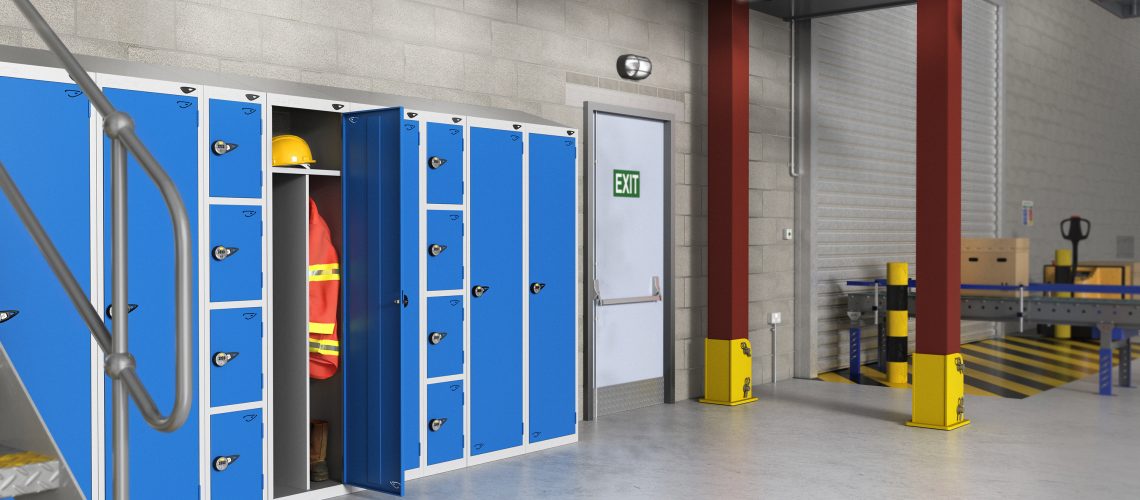
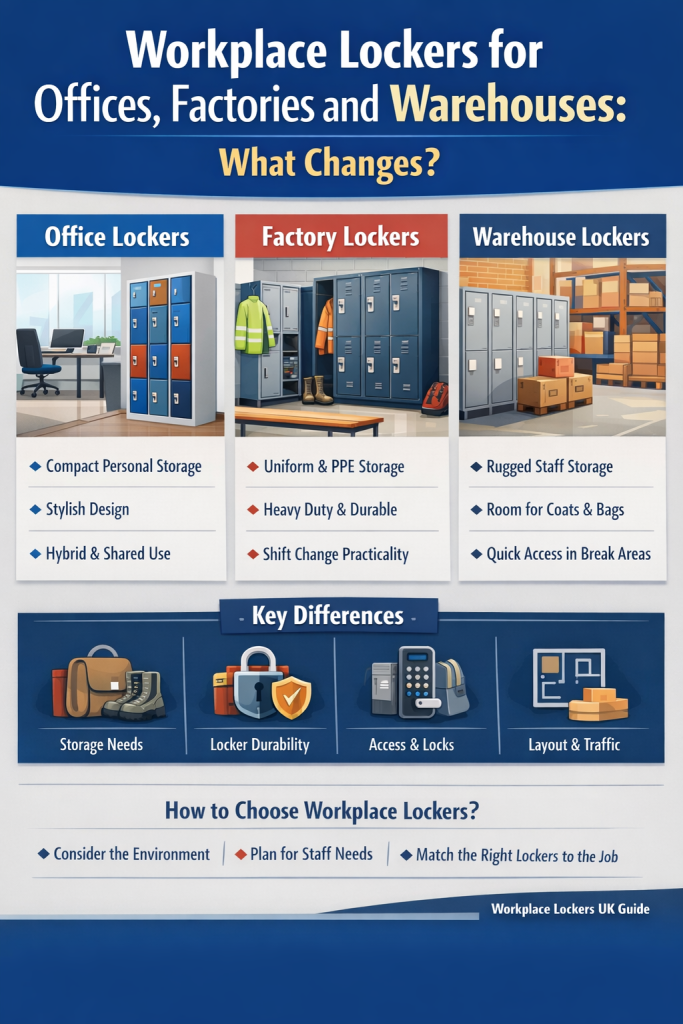
Workplace lockers are used across many sectors, but the right solution can look very different from one site to another. An office may need compact, tidy personal storage for hybrid staff. A factory may need stronger locker banks with room for uniforms, boots or protective clothing. A warehouse may need robust staff storage that stands up to daily use in busy welfare areas.
That is why businesses should not treat all workplace lockers as the same product. The environment changes what staff need to store, how often they use the lockers, what lock options make sense and how the layout should work. If those factors are ignored, the result is often a poor fit that creates daily frustration, wasted space or unnecessary management problems.
This guide explains what changes between offices, factories and warehouses, and how those differences shape locker choice. For the broader workplace lockers guide, see our main hub. If you are already comparing products and specifications, visit our workplace lockers page for dedicated staff lockers and commercial staff storage.
Why the workplace environment matters
A locker is not used in isolation. It is part of a wider workplace system that includes staff routines, movement through the building, clothing changes, personal storage, security and cleaning. In one environment, a narrow locker for a laptop bag and coat may be enough. In another, the same format would fail because users need space for workwear, PPE, boots and food containers.
The environment affects more than storage capacity. It also changes the daily pattern of use. Office staff may open a locker once or twice during the day. Factory staff may use lockers at the start and end of every shift, and sometimes during breaks as well. Warehouse teams may need fast access in a welfare area where many people arrive together. These practical differences should shape the locker specification from the start.
That is why a good staff locker planning guide starts with the workplace itself rather than with a standard product list.
Office workplace lockers: what matters most?
Office lockers are often used in flexible workplaces where staff do not all have permanent desks. They provide secure personal storage for coats, bags, laptops, lunch items and everyday belongings. In many offices, they also help keep the main work area clear, which supports a tidier and more professional environment.
Because offices are usually more visible to visitors and colleagues, appearance tends to matter more than it does in a back-of-house welfare room. Businesses often want lockers that fit reception spaces, open-plan areas or breakout zones without looking too industrial. The finish, colour choice and overall proportions may therefore carry more weight in the decision.
Typical office locker priorities
- Compact storage for personal items
- A tidy finish that suits the office interior
- Locker banks that work with hybrid occupancy
- Simple access for staff who may not be on site every day
- Layouts that do not interrupt circulation or shared work areas
Office users are also less likely to need deep compartments for bulky work gear. In many cases, smaller compartments or more space-efficient formats work well. However, that is not always true. Senior staff, longer commuters or employees bringing larger bags may still need a more generous personal locker.
Another important point is placement. Office lockers are often installed close to entrances, collaboration areas or hot-desking zones. That makes it important to consider the wider flow of the room. A locker bank should feel accessible, but it should not turn into an obstacle that narrows walkways or creates visual clutter.
Where the main question is how to choose workplace lockers for a hybrid office, the answer often comes down to balancing capacity, appearance and ease of use rather than simply maximising compartment size.
Factory staff lockers: what changes in a production environment?
Factory staff lockers usually need to do more than hold personal belongings. In many production settings, workers also need storage for uniforms, footwear, protective clothing and site-specific equipment. That changes the locker choice immediately because the internal space has to support more demanding use.
Production sites also tend to place more pressure on the locker room itself. Shift changes can create heavy traffic in short periods. Staff may arrive together, change quickly and move straight into operational zones. If the lockers are undersized or the layout is too tight, the result can be congestion, slower movement and a more frustrating start to each shift.
Typical factory locker priorities
- More internal space for clothing and equipment
- Stronger construction for repeated daily use
- Practical layouts for start-of-shift and end-of-shift traffic
- Easy cleaning around and beneath the units
- Options for separating personal clothing from workwear
In some factories, the locker room also needs to support changing procedures rather than simple bag storage. Staff may need to remove outdoor clothing, change footwear or keep clean garments separate from used ones. That means a standard office-style locker may not be suitable. It can also affect whether benches, boot-changing space or wider aisles are needed around the locker banks.
Durability matters more here too. A factory changing room or welfare space often sees harder wear than a typical office storage area. Materials, hinges, locks and finishes all need to cope with more frequent contact and sometimes harsher conditions.
When people search for factory staff lockers, what they usually need is not just a stronger cabinet. They need a storage system that reflects production routines, workwear use and the physical reality of the site.
Warehouse lockers: what matters in logistics and distribution settings?
Warehouse lockers often sit in practical staff areas such as welfare blocks, canteens, entrance spaces or changing rooms. These environments are usually functional first, which means the lockers need to deliver reliable everyday use rather than act as a design feature.
Warehouse teams may need space for coats, bags, food, drinks bottles, high-visibility clothing and other personal items. In some sites, staff also need storage for work footwear or simple equipment. That often places warehouse lockers somewhere between office and factory use. They may not require the same changing-room focus as a production site, but they still need to be more robust and practical than many office locker schemes.
Typical warehouse locker priorities
- Durable staff storage for busy daily use
- Sensible capacity for outerwear, lunch items and personal belongings
- Simple lock options that are easy to manage
- Layouts that work in compact welfare spaces
- Easy-to-clean finishes and accessible installation
Warehouse teams also tend to start and finish shifts in larger groups than office users, so access speed matters. A layout that works perfectly well for a low-traffic office corridor may feel crowded in a busy warehouse welfare room. That is why locker room planning should account for peak use rather than average use.
Where the main goal is dependable warehouse lockers for staff storage, the best choice is normally one that balances toughness, practical sizing and straightforward day-to-day management.
How storage needs change from one workplace to another
One of the clearest differences between offices, factories and warehouses is the type of items staff need to store. This should guide the specification more than any marketing label.
Office storage needs
- Laptop bags
- Coats and jackets
- Handbags or backpacks
- Lunch containers
- Phones and personal items
Factory storage needs
- Uniforms
- Work boots
- PPE
- Personal clothing
- Food and drinks
- Occasional small equipment
Warehouse storage needs
- Outerwear
- Lunch bags
- Phones and wallets
- High-visibility clothing
- Personal bags
- Sometimes footwear or simple work gear
As soon as the contents change, the locker size, shape and internal arrangement need to change as well. A compact locker can be ideal in an office and completely impractical in a factory. This is one reason why a single locker format across all staff areas often leads to compromise.
Lock choices: do they vary by workplace type?
Yes. The best lock option depends on how the lockers are allocated, how often access problems occur and how much administration the employer wants to manage.
In offices, where users may be permanent or semi-flexible, there is often a stronger case for neat, easy-to-use lock options that support a clean appearance and simple user experience. In factories and warehouses, reliability and practicality may take priority, especially where many people use the area during short time windows.
Office lock considerations
- Simple user access
- Suitable for hybrid or shared occupancy
- Low visual clutter
- Easy reassignment where needed
Factory and warehouse lock considerations
- Reliable daily use
- Practical key or code management
- Fast access at shift times
- Durability in tougher environments
The exact lock types are better explored in the supporting article on workplace lock options, but the wider point belongs here: lock choice should reflect staff behaviour and site management, not just unit cost.
How layout priorities differ
Layout matters in every environment, but the pressure points are different.
Office layouts
In offices, the main layout challenge is often integration with the surrounding workspace. Lockers should be accessible without blocking walkways, breakout spaces or shared desks. A good office locker bank feels natural within the fit-out rather than added on as an afterthought.
Factory layouts
On factory sites, the layout often has to support changing routines and high traffic at specific times. Wider aisles, bench seating and better separation between locker rows may be needed. Cleaning access also becomes more important where footwear and workwear are part of the process.
Warehouse layouts
In warehouse settings, the room may be compact, so efficiency matters. Even so, the lockers still need to allow fast, practical use without door clashes or blocked circulation. A small welfare room can work well, but only if the design accounts for real user flow.
That is why workplace locker layouts and lock options should always be considered together. The lock affects how people use the unit, and the layout affects whether that access feels smooth or awkward.
Cleaning, maintenance and wear
Wear levels vary sharply between these three workplace types. Office lockers may stay relatively clean and dry, with lighter daily handling. Factory and warehouse lockers often face more demanding use, with heavier coats, work boots, dirt, moisture or repeated contact during shift changeovers.
This does not always mean one sector needs a completely different material, but it does mean that durability and ease of cleaning become more important as the environment becomes more operational. The easier it is to clean around the lockers, reach the floor and wipe surfaces down, the easier the area is to keep in good condition over time.
For that reason, maintenance should be part of the early discussion rather than a problem left for facilities teams after installation.
Assigned lockers or shared use?
The answer often varies by environment. Offices are more likely to use shared or flexible allocation, especially in hybrid settings where staff attendance changes through the week. Factories and warehouses are more likely to need assigned lockers because users attend regularly, store workwear or rely on a predictable routine.
That distinction matters because it affects both locker numbers and lock choice. Shared use can reduce the number of lockers needed, but only when attendance patterns genuinely support it. Assigned use usually takes up more space, although it often gives staff a more dependable daily experience.
If you are comparing these approaches across the wider cluster, the main workplace lockers guide explains how assigned and shared-use decisions fit into the bigger picture.
Common mistakes when one workplace model is copied into another
- Using compact office lockers in a factory changing area
- Choosing bulky industrial lockers for a visible office interior without considering appearance
- Ignoring shift-change traffic in warehouse welfare spaces
- Underestimating the need for clothing or footwear storage
- Selecting lock types without thinking about admin workload
- Installing lockers in tight spaces where doors clash or aisles narrow too much
- Treating all staff users as though they have the same storage needs
Most of these problems come from assuming that all workplace lockers are interchangeable. They are not. The environment changes the right answer.
How to choose the right workplace lockers for the environment
The best starting point is to define the workplace clearly. Look at what staff store, how often they use the lockers, whether they need to change clothing, how many people arrive together and how the surrounding room needs to function. Once those basics are clear, the specification becomes much easier to shape.
For offices, focus on personal storage, visual fit and flexibility. For factories, focus on capacity, workwear routines, durability and changing-room flow. For warehouses, focus on robust everyday use, practical room planning and sensible staff storage capacity.
This sector split does not mean every office, factory or warehouse needs the same answer. It means the environment should guide the questions asked at the start. That is the only reliable way to reach a specification that works in practice.
When the planning stage is complete and you are ready to compare products, visit our workplace lockers page for workplace and staff storage options.
Conclusion
Office lockers, factory staff lockers and warehouse lockers all fall under the same broad category, but they should not be planned in the same way. Offices usually prioritise appearance, compact storage and flexibility. Factories need more space, more operational thinking and better support for workwear routines. Warehouses need practical, durable locker systems that suit busy welfare areas and day-to-day staff use.
That is why the environment should always come first. Once you understand what changes between offices, factories and warehouses, it becomes much easier to choose the right locker size, layout and access method. For the wider workplace lockers guide, return to the hub page. For product-led next steps, see our commercial staff storage page.
Frequently asked questions
Are workplace lockers for offices and warehouses the same?
Not usually. Office lockers often focus on compact personal storage and appearance, while warehouse lockers need to be more robust and practical for daily staff use.
What makes factory staff lockers different?
Factory staff lockers often need more internal space for uniforms, footwear or PPE. They may also need to support changing-room routines and heavier use during shift changes.
Do offices need large staff lockers?
Not always. Many offices only need compact personal storage for bags, coats and laptops. The right size depends on what staff actually bring into the workplace.
Should all workplace staff use the same locker type?
No. Mixed-use sites often benefit from different locker formats in different areas. Office staff, warehouse teams and factory workers may all have different storage needs.
Where should I start if I am planning workplace lockers?
Start with the environment, the staff routine and the items being stored. Then use that information to choose locker sizes, lock options and layouts that match the site properly.
Discover more from Blog Total Locker Service
Subscribe to get the latest posts sent to your email.