Visitor and Contractor Lockers: Temporary Secure Storage for Shared Workplaces
April 2, 2026
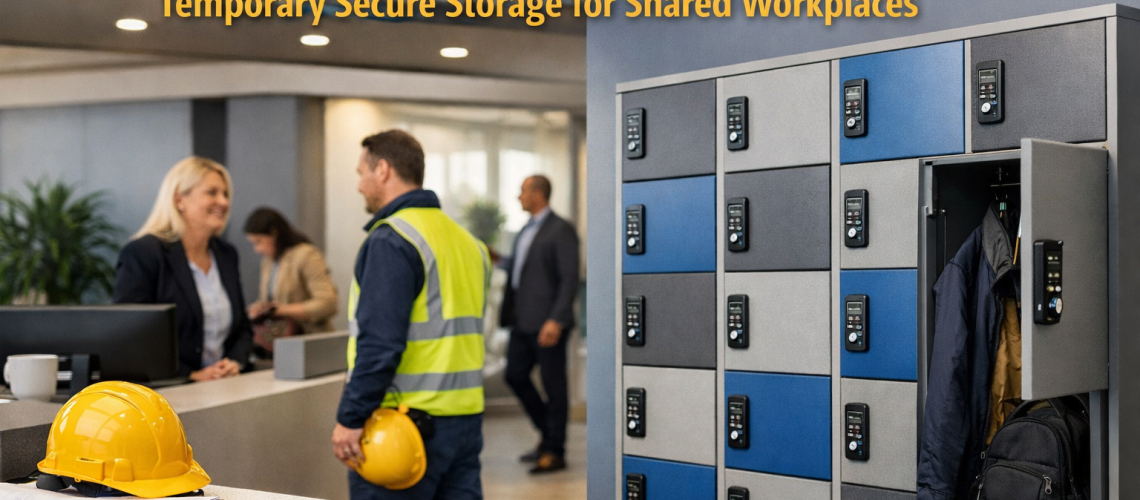
Visitor and contractor lockers can solve a practical storage problem in shared workplaces. Staff lockers are usually planned around employees, yet many sites also welcome contractors, agency workers, service teams, delivery personnel, interview candidates, visiting specialists and short-term guests. Those people often arrive with coats, bags, tools, phones, laptops or other belongings, but they do not always have a secure place to leave them while they are on site.
In the right environment, temporary storage lockers make the workplace easier to manage. They help keep shared areas tidier, reduce the number of loose belongings carried through the site and support better control over personal items, tools and devices during the visit. They can also improve the overall experience of the building by giving temporary users a clearer arrival process.
This guide explains when visitor and contractor lockers are worth considering, how they differ from standard staff storage and what to think about when planning them. For the main workplace lockers guide, visit the hub page. If your main concern is risk reduction, see our guide to workplace locker security. For technology-led temporary allocation, read smart lockers for hybrid workplaces. When you are ready to compare products, visit our workplace lockers page for staff lockers and commercial staff storage.

Why temporary storage matters in shared workplaces
Not everyone on site is a permanent employee. Many businesses now operate in mixed-use environments where external people move through the building every day. A contractor may need to store a jacket, phone or paperwork while working in a plant room. A visitor may arrive with a bag and laptop but only need access to meeting areas. An agency worker may be on site for one shift rather than one year.
Without temporary storage, these belongings often end up on chairs, in corners, under meeting tables or carried into areas where they are not ideal. That creates clutter, weakens organisation and can increase the chance of property being misplaced or left unattended. Secure day-use storage helps solve that in a straightforward way.
It can also support site control. Some workplaces prefer visitors and contractors not to carry bags, coats or personal items into operational zones, plant areas, laboratories or controlled spaces. Temporary lockers make that easier to manage without creating unnecessary friction at reception or site entry.
Who are visitor and contractor lockers for?
These lockers can support a wide mix of temporary users depending on the site.
- building visitors
- contractors and maintenance teams
- agency workers and temporary staff
- interview candidates
- consultants and project teams
- drivers and delivery personnel where appropriate
- external trainers or assessors
- short-term site guests
Not every workplace needs a locker provision for all of these groups. The important point is to identify whether temporary users regularly arrive with belongings that need secure, short-term storage. If they do, a dedicated solution may be more practical than relying on ad hoc arrangements.
How visitor lockers differ from staff lockers
Staff lockers are normally built around repeat use. They may be assigned long term, linked to a policy and sized for daily personal storage. Visitor and contractor lockers are different because they are usually used on a temporary basis. That changes the priorities.
Temporary lockers need to be easy to understand, quick to issue and simple to recover for the next user. The access method often needs less long-term administration and more focus on short-cycle turnover. The location may also be different. Instead of sitting in staff welfare areas, these lockers often work best near reception points, entrances, security desks or controlled access zones.
The storage brief can differ as well. A contractor may need space for a bag, jacket, paperwork or small tool kit. A visitor may only need room for a handbag, coat and laptop. As a result, the right format is often driven by short-term item types rather than by full daily staff routines.
Which workplaces benefit most from visitor and contractor lockers?
These lockers tend to add the most value in sites where temporary users are common and where personal belongings need more control than a simple coat stand can provide.
- corporate offices with frequent visitors
- multi-tenant office buildings
- industrial sites with regular contractor attendance
- warehouses and logistics hubs
- manufacturing plants
- healthcare-adjacent workplaces with service visitors
- education or training buildings with external users
- sites with controlled or restricted zones
In a small workplace with very few external visitors, dedicated temporary lockers may not be necessary. In a busy shared building or operational site, they can quickly become part of a smoother and more professional arrival process.
What should temporary visitor storage hold?
The answer depends on the type of site, but most visitor storage lockers are used for a practical mix of everyday belongings. Common examples include:
- coats and jackets
- bags and backpacks
- phones and wallets
- laptops and tablets
- paperwork and notebooks
- small tool bags for contractors
- personal protective items when relevant
That list helps determine the right locker size. Compact compartments may work well for office visitors who only need short-term personal storage. Contractors may require a deeper or more practical format if they arrive with additional gear. It is better to size the lockers around realistic use than to assume one small compartment will suit every short-term user.
Should these lockers be near reception?
Often, yes. Reception-adjacent placement can work very well because it turns temporary storage into part of the sign-in process. Visitors arrive, sign in, store what they do not need to carry and move on through the building. That creates a tidy sequence and reduces the need to direct people deeper into staff areas just to find storage.
In other workplaces, especially industrial or operational sites, the lockers may sit closer to the security point, welfare entrance or contractor check-in area. The best location is the one that matches the flow of temporary users without disrupting the main workplace.
The important thing is to place the lockers where people will actually use them. If they are hidden away or positioned after the point where the storage would be helpful, adoption will be weaker.
Temporary use means the locking method matters
Because these lockers are used by different people in short cycles, the lock type needs to support turnover. A simple assigned-key model may be less practical if the lockers are being used by visitors for a few hours at a time. In many cases, combination, digital or managed temporary access systems can work more smoothly.
The best option depends on how the building handles visitors and contractors. Some sites want a straightforward mechanical day-use solution. Others prefer digital control linked to a reception or security process. The key point is that the access method should make handover easy without creating unnecessary admin for the next user.
For a wider look at locker lock types, visit our guide to the best lock options for workplace lockers.
How visitor lockers support workplace security
Temporary secure storage can strengthen site control in several ways. Visitors have a place to leave non-essential personal items. The number of bags moving into controlled areas is reduced. Contractors can keep belongings contained rather than spread across work areas. This also lowers the chance of unattended items being left in meeting rooms, receptions or staff spaces.
That does not mean lockers replace wider security procedures. They support them. A good visitor process still depends on sign-in, access control, supervision where needed and clear site rules. The lockers are one practical part of that wider structure.
This is why visitor storage fits naturally alongside our guide to workplace locker security.
Contractors often need a slightly different brief
Contractors are not the same as casual visitors. They may be on site for longer, move through more operational areas and arrive with tools, PPE, drawings or work materials. That means contractor lockers may need more practical internal space and a location closer to the point where work begins.
It can be useful to distinguish between visitor lockers and contractor lockers if the site handles both groups regularly. A compact reception locker may be ideal for a meeting guest, while a more robust temporary-use locker near a welfare entrance may be better for a service engineer. One solution can still work for both groups, but only if the workplace has checked what each user type actually brings on site.
Do visitor lockers need charging or device storage?
Sometimes they do. In offices and shared buildings, visitors often arrive with phones, tablets and laptops. If secure device storage is part of the problem, charging lockers may also be relevant, especially where visits last several hours or where guests are likely to need power during the day.
However, not every temporary-use locker needs charging built in. In many cases, secure storage alone is enough. The charging element only makes sense if device use is a regular and meaningful part of the visitor or contractor routine.
For that side of the topic, see charging lockers for workplaces.
How many temporary lockers do you need?
The number should be based on actual temporary-user demand rather than on total building occupancy. A site may have hundreds of staff but only need a small bank of visitor lockers if external use is occasional. Another workplace may need more if it sees constant contractor activity or regular external visitors throughout the week.
It helps to look at peak temporary use. How many visitors arrive on the busiest day? How many contractors are on site during maintenance periods? Do they overlap with each other? Once those patterns are clear, the locker bank can be sized more accurately.
For broader capacity thinking, visit how many workplace lockers do you need.
Common mistakes with visitor and contractor lockers
- placing them too far from the sign-in or check-in point
- making the compartments too small for realistic visitor belongings
- using a lock system that is awkward for short-term turnover
- forgetting that contractors may need more practical storage than office visitors
- adding temporary lockers without linking them to the wider visitor process
- assuming every site needs them without checking real demand
- failing to separate temporary-use storage from permanent staff lockers
Most of these issues come from treating visitor storage as a spare add-on rather than as part of workplace flow and site control.
How to decide whether your workplace needs visitor and contractor lockers
The best starting point is to look at the current arrival experience. Are visitors carrying bags through the building because there is nowhere to leave them? Do contractors place personal items in work areas because temporary storage is missing? Are reception teams improvising with cupboards, side rooms or coat rails? If so, a dedicated locker solution may bring more order and security to the site.
If temporary users are rare and current arrangements work well, dedicated lockers may not be necessary. Like the rest of the workplace cluster, the answer should come from real use rather than from a generic feature list.
Good planning starts by identifying the problem, the user group and the location where storage would make the biggest difference. Once those points are clear, it becomes much easier to choose the right size, quantity and access method.
Conclusion
Visitor and contractor lockers can add real value in shared workplaces where temporary users arrive with belongings that need secure, short-term storage. They help support tidier spaces, smoother check-in routines and better control over what moves into the building. In the right environment, they are part of a more organised and professional site experience.
The best schemes are shaped by real visitor patterns, realistic storage needs and a location that fits the flow of the workplace. For the wider cluster, return to the workplace lockers guide. Security-led planning is covered in our article on workplace locker security. Product-led next steps can be found on our commercial staff storage page.
Frequently asked questions
What are visitor and contractor lockers used for?
They are used for short-term secure storage of coats, bags, devices, paperwork and other belongings brought on site by temporary users.
Where should visitor lockers be placed?
They often work best near reception, check-in points, security desks or controlled access zones where temporary users first enter the building.
Are visitor lockers the same as staff lockers?
No. They are usually planned for short-term turnover rather than permanent or long-term assignment.
Do contractors need different lockers from visitors?
Sometimes. Contractors may arrive with tools, PPE or more practical gear, so they can need a slightly different storage format from a general visitor.
Does every workplace need temporary visitor storage?
No. It is most useful in workplaces with regular temporary users and a clear need for secure short-term storage.
“`
## Image alt text
**Featured image alt text:** Visitor and contractor lockers in a shared workplace with temporary secure storage near reception for bags, coats and personal belongings
**Secondary image alt text:** Temporary secure storage lockers for visitors and contractors in a modern workplace entrance area
**Secondary image alt text:** Shared workplace lockers for contractors and visitors with practical short-term storage and controlled access
The next sensible expansion after this would be **Should Staff Lockers Be in Open Plan Areas or Separate Storage Zones?**
Discover more from Blog Total Locker Service
Subscribe to get the latest posts sent to your email.