Should Staff Lockers Be in Open Plan Areas or Separate Storage Zones?
April 2, 2026
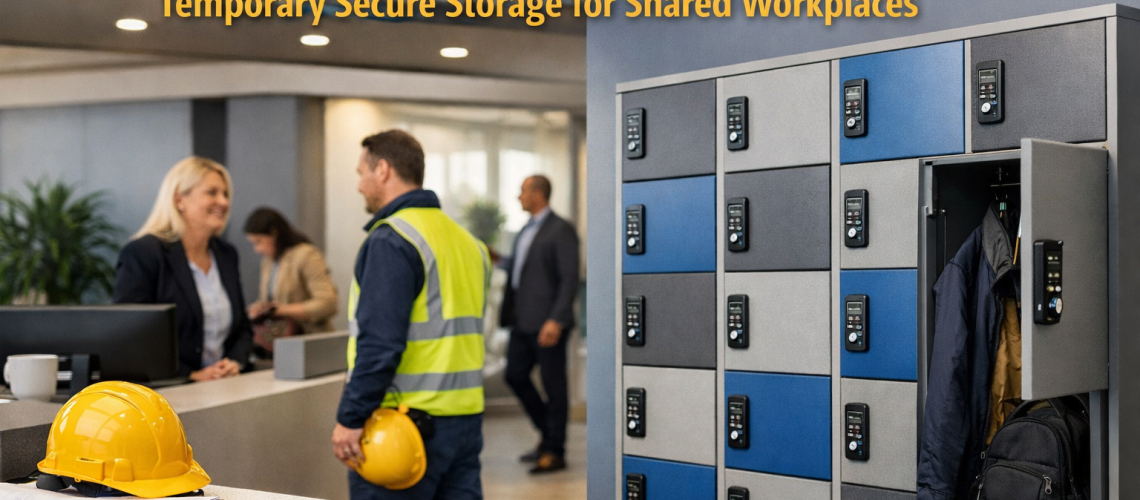
Staff lockers can improve workplace storage, reduce desk clutter and support a more organised working environment. However, choosing the lockers is only part of the job. Placement matters just as much. In many workplaces, the real question is whether the lockers should sit within the open plan area or be grouped in a separate storage zone.
There is no single answer that suits every office or shared workplace. Some layouts benefit from lockers being close to desks and collaboration areas. Others work better when personal storage is moved to a dedicated zone near the entrance or just outside the main work floor. The right decision depends on how the workplace operates, how visible the storage should be and what staff actually need from it.
This guide looks at the pros and limits of both approaches, and explains how to decide which one fits your office best. For the main workplace lockers guide, visit the hub page. For office-specific planning, see how to choose workplace lockers for a new office fit-out. If you are reviewing sizes and room planning, visit workplace locker sizes and layouts. When you are ready to compare products, see our workplace lockers page for staff lockers and commercial staff storage.
Why locker placement matters
Locker placement affects more than convenience. It shapes how people arrive at work, where they leave personal belongings, how tidy desks remain and how the office feels as a whole. A well-chosen location can make storage feel natural and easy to use. A poor location can leave the lockers underused or make the office feel cluttered and less refined.
Placement also influences the wider fit-out. Lockers can reinforce the transition between arrival and working space, or they can become part of the visible day-to-day office landscape. That means the decision is not only about storage. It is also about circulation, visual tone, staff behaviour and the balance between shared and personal space.
In practice, the best location is usually the one that supports real workplace habits rather than the one that simply uses spare wall space.
What counts as an open plan locker position?
An open plan locker position usually means the lockers are placed within the main office area or very close to it. They may sit along a perimeter wall, beside touchdown desks, near collaboration spaces or integrated into a shared floorplate where staff work throughout the day.
This approach keeps storage close to the working environment. It can feel convenient, especially in smaller offices or hybrid spaces where staff move in and out of the same zone throughout the day. At the same time, it makes the lockers more visible and more closely tied to the visual character of the office.
What counts as a separate storage zone?
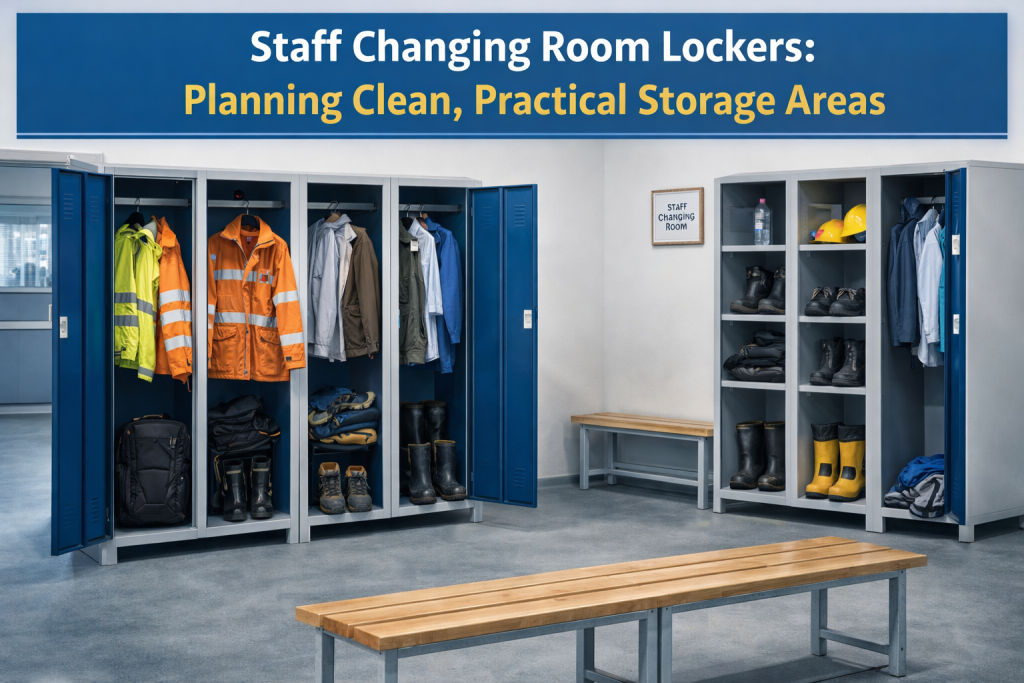
A separate storage zone places the lockers outside the main open plan work area. That could mean a dedicated storage wall near the entrance, a staff arrival zone, a side corridor, a shared services area or a quieter part of the office designed specifically for personal storage.
This approach creates a clearer distinction between where staff store personal belongings and where they actually work. It can help keep the main office floor more visually focused, especially in workplaces that want a cleaner, calmer or more client-facing environment.
Benefits of placing staff lockers in open plan areas
Open plan locker placement can work very well in the right office. The most obvious benefit is convenience. Staff can access their belongings easily without leaving the main floor, which is useful in flexible workplaces where movement between desk, meeting room and shared space is constant.
This layout can also support a more informal workplace culture. In some offices, integrated storage feels natural because the whole environment is designed around agile working, shared furniture and visible support functions. Lockers can become part of that ecosystem rather than a hidden back-of-house feature.
Another advantage is efficient use of space. Smaller offices do not always have the luxury of a dedicated storage area, so placing lockers along the edge of the main floor can make practical sense without requiring a separate room or circulation zone.
Open plan placement often suits:
- smaller offices
- agile workplaces with shared desks
- hybrid offices where staff need quick access
- touchdown areas and collaboration-led layouts
- offices where the locker design is visually integrated into the fit-out
Limits of open plan locker placement
The main risk is visual clutter. Even well-designed lockers can make an office feel heavier if they dominate the floorplate or interrupt clean sightlines. This matters most in refined office interiors, client-facing environments and spaces where the design language is intended to feel calm and open.
Noise and activity can also become a factor. If people are constantly opening lockers, moving bags, hanging coats or collecting personal items near desks, the storage zone may introduce small but repeated disruption. That may not matter in every office, but it can be noticeable in quieter, more focused work settings.
Another issue is behavioural drift. If the lockers sit too close to desks, nearby furniture can become an overflow area for coats, bags and unpacking. Instead of reducing clutter, the locker bank can end up creating a mini storage zone that spreads into the working area around it.
Benefits of using separate storage zones
A separate storage zone helps define a clearer boundary between arrival and work. Staff come in, store personal belongings, then move into the office with less visual and physical clutter following them onto the main floor. That can make the workplace feel more intentional and better organised.
This layout also supports a tidier look. The open plan area remains more focused on workstations, collaboration space and movement rather than on personal storage. In design-led offices, that can be a major advantage.
Separate storage zones can also reduce low-level disruption. Fewer people are opening lockers near active desks, which can help maintain a calmer working environment. In some workplaces, it also improves security and control because the locker zone becomes easier to supervise as a defined area.
Separate storage zones often suit:
- larger offices
- client-facing workplaces
- design-led interiors
- offices with a clear arrival sequence
- hybrid workplaces that want to keep the main floor visually clean
Limits of separate storage zones
The main drawback is distance. If the storage zone is too remote from the way staff actually move through the office, people may find it less convenient and use it less consistently. Good placement still matters even when the lockers are separate from the main floor.
Another issue is that some offices simply do not have enough spare space to create a separate zone without compromising other functions. A storage area that feels disconnected or squeezed into an awkward corner can be just as problematic as poorly placed open plan lockers.
It is also possible to over-separate storage. If people need quick access to personal items during the day, a distant locker zone can become inconvenient. In that case, staff may start keeping items at desks again, which weakens the point of the separate area.
A middle ground often works best
Many of the best office layouts do not sit at either extreme. Instead, they place lockers at the edge of the open plan area or in a dedicated arrival-adjacent zone that still feels connected to the main workplace. This gives staff easy access without making personal storage a dominant feature in the centre of the floor.
That kind of middle-ground solution often works well in hybrid offices. Staff can store coats, bags and devices near the point where they enter and settle into the day, while the core workspace remains cleaner and more focused. In practice, this is often the most balanced answer for modern offices.
How hybrid working changes the decision
Hybrid working tends to strengthen the case for a defined storage zone rather than fully distributing lockers across the work floor. In flexible offices, people arrive with more portable items, use more shared desks and benefit from a clearer transition point between arrival and work. A storage zone near that transition can make the whole office routine feel smoother.
However, some hybrid layouts still benefit from integrated lockers, especially where the office is compact or where the locker design is intended to be part of the furniture language of the space. The important thing is to base the choice on how people use the office, not on the label “hybrid” alone.
For the technology-led side of flexible storage, see smart lockers for hybrid workplaces.
Design, finish and visibility matter more in open plan areas
When lockers are placed within the open office, their appearance becomes much more important. Colour, finish, handle style, door proportions and the overall visual weight of the locker bank all influence whether it feels integrated or intrusive.
That does not mean separate zones can ignore design. It means open plan placement raises the standard because the storage is constantly in view. A product that works perfectly well in a back-of-house staff area may feel too heavy or too industrial in a refined office interior.
In this context, locker choice and locker placement should be treated as one design decision rather than as two separate stages.
Think about security as well as convenience
Both placement models can be secure, but they create different conditions. Open plan lockers may benefit from passive visibility because they sit within an occupied area. Separate storage zones can provide stronger control if access is more defined and the area is easier to supervise as a dedicated point.
The best answer depends on the workplace pattern. An office with steady footfall and strong natural oversight may be comfortable with integrated lockers. A site with more visitors, more varied users or a stronger desire for controlled storage may prefer a defined zone with clearer access management.
For the wider topic, visit our guide to workplace locker security.
What about visitors and contractors?
Temporary users usually strengthen the case for a separate storage zone. Visitor and contractor storage often works best near reception, check-in or a controlled access point rather than spread across the main office floor. That keeps temporary belongings out of the working space and makes the arrival process easier to manage.
If the site uses separate temporary storage but open plan staff lockers, the two systems should still feel coordinated. Personal storage works best when the workplace has a clear logic for who stores what, where and why.
For that part of the cluster, see visitor and contractor lockers.
Common mistakes in locker placement
- putting lockers in open plan areas without considering visual impact
- hiding lockers so far away that staff stop using them properly
- treating spare wall space as the only placement rule
- forgetting that arrival flow matters as much as desk layout
- choosing finishes that do not suit a visible office environment
- mixing staff, visitor and contractor storage without a clear logic
- ignoring how the locker area affects noise and movement
Most of these problems come from treating lockers as a secondary furniture item rather than as part of the workplace plan.
How to decide which option is right
The best decision usually comes from answering a few practical questions. Do staff need frequent access to their belongings during the day? Is the office compact or generous in footprint? Does the interior need to stay visually calm and client-ready? Is there a natural arrival zone where storage would make sense? Are visitors and contractors part of the same storage picture?
If convenience within the work floor matters most and the lockers can be integrated cleanly, open plan placement may work well. If visual clarity, cleaner arrival routines and better separation are more important, a dedicated storage zone is often the stronger option. In many cases, an edge-of-floor solution offers the best balance of both.
Good planning starts with how the office works, then shapes storage around that pattern. Once the routine is clear, the right placement choice becomes much easier.
Conclusion
Staff lockers can work in open plan areas or in separate storage zones, but the better option depends on the office pattern, the design priorities and how staff move through the workplace. Open plan placement can offer convenience and efficient use of space. Separate zones can support cleaner layouts, calmer work floors and a more defined arrival experience.
The strongest offices usually choose locker placement as part of the wider fit-out strategy rather than as a late storage decision. For the wider cluster, return to the workplace lockers guide. Office-specific planning is covered in how to choose workplace lockers for a new office fit-out. Product-led next steps can be found on our commercial staff storage page.
Frequently asked questions
Should staff lockers be in open plan offices?
They can be, especially in smaller or agile offices where quick access matters and the design integrates well with the main floor.
What is the benefit of a separate storage zone?
A separate zone can keep the main office cleaner, reduce visual clutter and create a clearer transition between arrival and work.
Which option is better for hybrid offices?
Many hybrid offices benefit from a defined storage zone near the arrival point, although some compact offices still work well with integrated lockers.
Do visitor lockers belong in open plan areas?
Usually not. Visitor and contractor lockers often work better near reception or controlled entry points rather than on the main office floor.
What is the biggest mistake in locker placement?
A common mistake is placing lockers wherever space is left over without checking how that choice affects movement, appearance and daily staff use.
“`
## Image alt text
**Featured image alt text:** Staff lockers placed at the edge of an open plan office beside a separate storage zone area for coats, bags and personal belongings
**Secondary image alt text:** Open plan office lockers integrated into a workplace layout with clear staff storage and shared desk areas
**Secondary image alt text:** Separate workplace storage zone with staff lockers positioned away from the main open plan office floor
Discover more from Blog Total Locker Service
Subscribe to get the latest posts sent to your email.