PRN Medicines in Care Homes: When to Administer, Record and Review
March 25, 2026

PRN medicines, sometimes called “when required” medicines, are a routine part of medicines management in many care homes. They are used when a resident needs treatment for a symptom or situation that does not always happen at the same time each day. This may include pain, nausea, indigestion, constipation, anxiety, insomnia or a reliever inhaler for breathing symptoms.
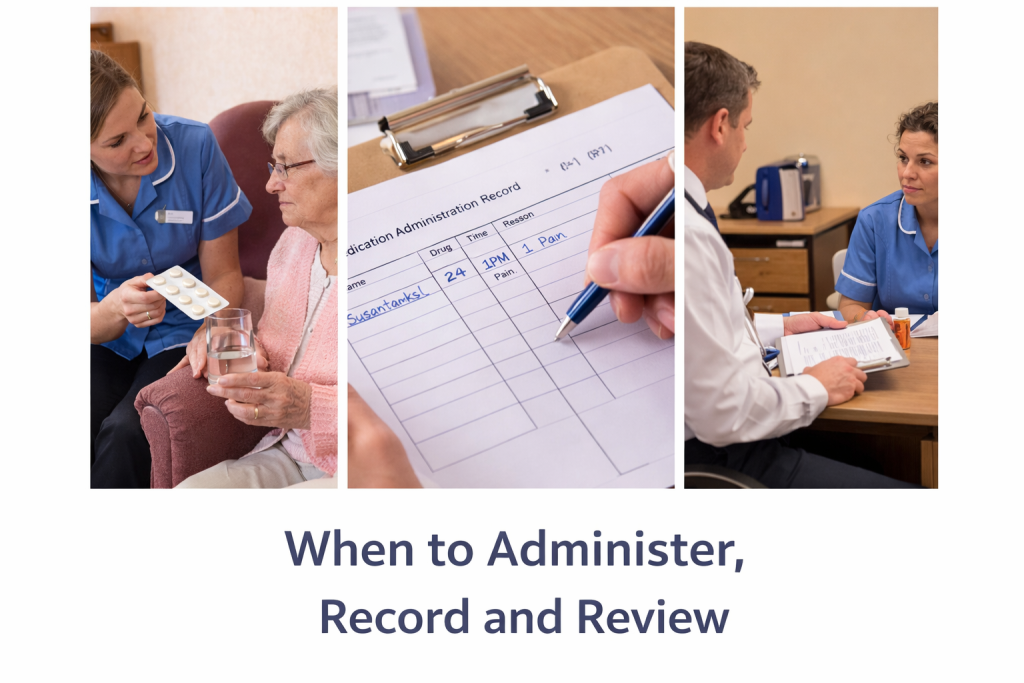
Although PRN medicines are common, they can create avoidable risk if the home does not have a clear system for when they should be offered, who decides, what staff should record and when the use should be reviewed. A standard MAR entry on its own is rarely enough. Staff need clear person-centred instructions so that PRN medicines are used safely, consistently and only when appropriate.
This guide explains how care homes can manage PRN medicines properly, how to decide when they should be administered, what must be recorded and how managers can review patterns of use before small problems turn into larger medicines governance issues.
If you are reviewing your wider medicines storage and governance system, see our comprehensive guide to medical cabinets and our medical cabinet security solutions.
What PRN medicines are
PRN stands for pro re nata, which means the medicine is given when needed rather than on a fixed schedule. In care homes, PRN medicines may be prescribed to relieve symptoms that vary during the day or are not present all the time. A resident may not need the medicine at all on some days, but may need it more than once on another day, depending on their symptoms and the prescription instructions.
This is what makes PRN medicines different from regular medicines. Regular medicines are usually given at set times. PRN medicines depend on a decision being made at the point of need. That decision has to be based on clear written instructions and staff competence, not guesswork.
Why PRN medicines need a stronger process than many homes expect
PRN medicines can look simple on paper. A box may say “one or two when required” or “use when needed”. In practice, that wording is not enough for safe care home administration. Staff need to know what the medicine is for, what symptoms justify giving it, how long to leave between doses, what the maximum daily amount is, whether anything else should be tried first and when repeated use should trigger review.
Without that structure, care homes can drift into inconsistent practice. One staff member may offer the medicine early. Another may wait too long. One may give the lower dose. Another may always give the higher dose. One may record the reason. Another may only tick a box. Over time, this creates risk for the resident and weakens the home’s audit trail.
Your PRN policy should be clear
Every care home should have a medicines policy that includes a clear process for PRN medicines. This should not be an afterthought or a vague note hidden inside the wider medicines file. Staff need to be able to find and follow the process easily.
A practical PRN policy should explain:
- who can administer PRN medicines
- where staff find the PRN protocol or care plan instructions
- how staff decide when the medicine is needed
- what records must be completed
- how variable doses should be handled
- when staff should contact the prescriber or pharmacist
- how repeated use is monitored and reviewed
- how medicines for distress and agitation are handled differently where needed.
A good policy reduces hesitation and inconsistency. It also gives managers a firmer basis for training and audit.
The PRN care plan is where the real control sits
The most important practical document is usually the resident’s PRN care plan or protocol. This needs to contain enough person-centred detail for staff to make a safe decision. It should not just repeat the label wording from the prescription.
A strong PRN care plan should include:
- what condition or symptom the medicine is prescribed for
- the prescribed dose and any variable dose instructions
- the maximum amount allowed in 24 hours
- the minimum interval between doses
- what signs or symptoms staff should look for
- whether the resident can ask for the medicine or needs prompting or observation
- what non-medicinal support or alternatives should be tried first where appropriate
- what order to use PRN medicines in if more than one is available for the same problem
- when the medicine should be reviewed
- what action to take if the medicine is ineffective or used frequently.
This is particularly important for residents who do not always communicate verbally. Staff may need guidance on non-verbal signs of pain, agitation, breathlessness, nausea or discomfort so that PRN medicines are neither withheld unfairly nor given too freely.
Offer PRN medicines when they are needed, not only during medicine rounds
One of the most useful practical points in current guidance is that PRN medicines should be offered when needed and not only at the times printed on the MAR or during routine medicines rounds. This matters because symptoms do not follow the home’s administration schedule. Pain may worsen mid-afternoon. Anxiety may peak in the evening. Nausea may happen after a meal. A reliever inhaler may be needed urgently.
If staff only think about PRN medicines at the standard round times, residents may wait too long for relief. This can reduce comfort, increase distress and make the overall medicines process feel unresponsive. Care plans should therefore help staff recognise need in real time and act within the prescription instructions.
Try other support first when the care plan says to
Not every PRN medicine should be the first response. Depending on the resident and the symptom, the care plan may say staff should try appropriate non-medicinal measures before offering the medicine. That could include reassurance, repositioning, a drink, comfort measures, toileting support, reducing noise, offering rest or using known calming strategies for that person.
This point is especially important for medicines used for distress and agitation. Care homes should take a person-centred approach and attempt to relieve distress before deciding to use a medicine. If PRN psychotropic medicines are prescribed, their use should be short-term where possible, carefully recorded and reviewed regularly.
Variable-dose PRN medicines need extra clarity
Some PRN medicines are prescribed as a range, such as one or two tablets, or with different doses depending on symptom severity. These can only be administered safely if the instructions are clear enough for staff to know when to give the lower dose and when the higher dose is appropriate.
If that detail is missing, the home should not simply invent a rule. Staff should seek clarification from the prescriber or pharmacist. Ambiguous PRN instructions create an obvious risk, especially in settings with multiple team members working across shifts.
The PRN protocol should therefore explain:
- what the variable dose range is
- how staff decide which dose to use
- when a second dose is allowed
- what symptoms or observations suggest escalation is needed
- when repeated use at the higher end of the range should trigger review.
What staff should record after giving a PRN medicine
Recording is a major part of safe PRN use. A tick on the MAR is not enough on its own. Care homes need a record that shows why the medicine was given, what amount was administered, when it was given and whether it worked.
A good PRN record should include:
- the reason for giving the medicine
- the dose given, especially if a variable dose is prescribed
- the time of administration, particularly for time-sensitive medicines
- the outcome
- whether the medicine was effective
- any side effects or concerns
- what happened next if the medicine did not work.
This final point matters. PRN administration is not finished when the medicine is handed over. Staff should be able to say whether it relieved the symptom or whether further action was needed. That follow-up evidence is often what shows whether the prescription remains suitable.
Keep PRN medicines in original packaging
PRN medicines should be kept in their original packaging. This helps maintain the correct label information, batch details, expiry information and directions. It also reduces confusion where medicines may not be used every day and therefore need to remain clearly identifiable over time.
Homes should also make sure suitable quantities are held and that stock remains in date. It is easy for PRN medicines to sit in cupboards for long periods if they are used infrequently. Stock checks should therefore include PRN items, not just regular medicines.
Storage still matters for PRN medicines
Although PRN use is mainly about decision-making and record keeping, storage still plays a major part. Medicines must be stored securely, in the correct conditions and in a way that staff can access them when needed. If the medicine is difficult to find, mixed loosely with other stock or stored in an overfilled cupboard, delays and mistakes become more likely.
Where a resident self-administers some medicines, the care plan should also make clear whether the PRN medicine is one they ask for, one they hold themselves or one staff hold and administer. The storage setup should match that decision.
PRN medicines for distress and agitation need especially close control
PRN medicines used for distress, agitation or behaviour that challenges require especially careful handling. These medicines should not become the routine answer to a person-centred problem. Their use should be recorded and reviewed, and if staff are concerned about overuse or inappropriate use, they should contact the prescriber for advice.
Care homes should also be alert to the safeguarding dimension. Overuse or inappropriate use of medicines to control behaviour may need to be reported as a safeguarding incident. That is why the protocol should explain what staff should try before medicine is considered, how the medicine is offered and how outcomes are reviewed.
When to contact the prescriber or pharmacist
PRN medicines should not stay on autopilot forever. Repeated use, poor symptom control or changed resident needs may all mean the prescription needs review. Staff should know when they are expected to escalate concerns rather than continue administering the same PRN medicine in the same way.
That may include situations where:
- the medicine does not work as expected
- the resident needs it more often than usual
- the resident no longer appears to need it
- the symptoms have changed
- the variable-dose instructions are unclear
- side effects are suspected
- staff are repeatedly relying on the medicine for the same recurring issue.
Managers should make sure staff know who to contact and how that communication is recorded.
Medication reviews should pick up PRN patterns
PRN medicines are a good example of why medication reviews matter in care homes. A medicine that is rarely used may no longer be needed. A medicine used several times a day may no longer be functioning as occasional support and might indicate the resident needs a different regular treatment plan or broader clinical review.
Medication reviews in care homes should involve the relevant health and social care team. PRN records can provide valuable evidence for those reviews because they show real symptom patterns rather than just prescribed intentions. A home that records PRN use properly gives the pharmacist, GP and wider team much better information to work with.
Common PRN mistakes care homes should avoid
Many PRN errors come from the same repeated weaknesses:
- using the prescription label as the only instruction
- failing to include symptom triggers in the care plan
- not stating the minimum interval or maximum daily dose clearly
- giving PRN medicines only during routine rounds
- not recording the reason or outcome
- unclear handling of variable-dose instructions
- allowing infrequently used PRN stock to expire unnoticed
- not reviewing repeated PRN use
- using PRN psychotropic medicines too readily for distress or agitation
- relying on unwritten staff habit rather than a clear person-centred protocol.
Most of these problems are preventable when the care plan, MAR, policy and staff training all align.
A practical PRN workflow for care home staff
Many homes benefit from a simple step-by-step approach. A practical workflow may look like this:
- Check the care plan or PRN protocol before administration.
- Confirm the symptom or trigger matches the written guidance.
- Check when the last dose was given and whether the minimum interval has passed.
- Check the maximum daily amount has not been reached.
- Use non-medicinal alternatives first if the care plan says to do so.
- Administer the medicine in line with the prescription and protocol.
- Record the reason, dose, time and outcome clearly.
- Review effectiveness and escalate if the medicine is not working or is being used frequently.
This kind of process is easier to train, easier to audit and safer for residents than a system based on habit.
Why cabinet choice and organisation still support safer PRN use
Even though PRN management is heavily about decision-making, the physical setup still affects day-to-day safety. A well-organised medical cabinet or medicines cupboard makes it easier to find the right stock quickly, check expiry dates, separate resident-specific medicines and keep original packaging intact. Overcrowded or poorly arranged cupboards make PRN administration harder than it needs to be.
For care homes reviewing their medicines systems, cabinet design, internal layout and stock separation can make a real difference to how well PRN medicines are handled in practice.
Final thoughts
PRN medicines in care homes should never be treated as informal extras. They need the same level of structure and governance as regularly administered medicines, and in some ways they need more. Because they depend on staff judgement at the point of need, the written care plan, record-keeping and review process become especially important.
The strongest homes make PRN use clear and consistent. Staff know what the medicine is for, when to offer it, what alternatives to try first where appropriate, what to record and when to seek further advice. That protects residents, strengthens medicines governance and gives the wider care team better information for review.
To support a broader medicines storage and governance review, see our medical cabinet security range and our comprehensive guide to medical cabinets.
Discover more from Blog Total Locker Service
Subscribe to get the latest posts sent to your email.