Office Locker Banks for Hot-Desking Areas: How Close Is Too Close?
April 7, 2026
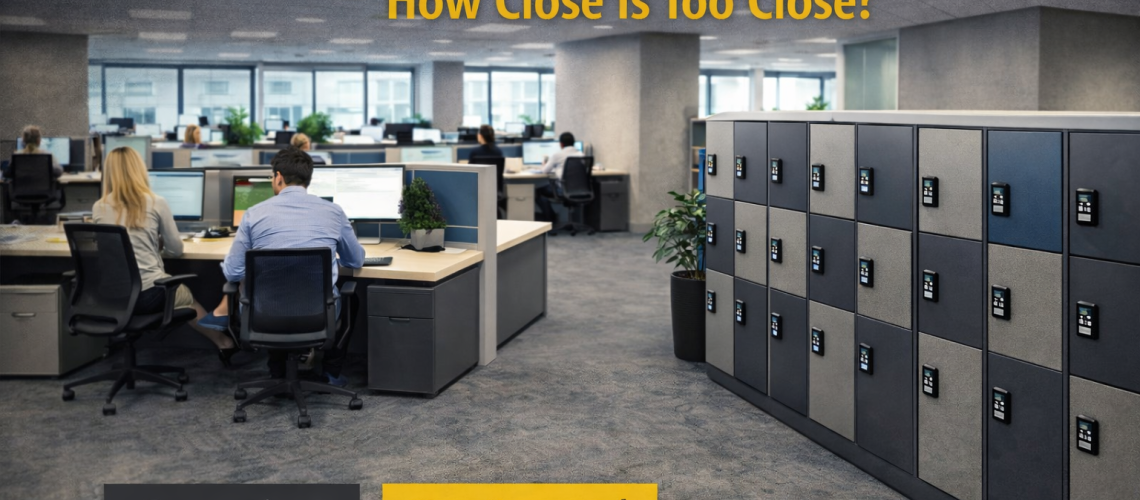
Hot-desking changes how office storage needs to work. When staff do not have a permanent desk, lockers become more important because coats, bags, laptops and personal items need a defined place to go. However, that does not mean the lockers should sit right beside every desk bank. Placement still matters, and getting it wrong can make the workspace feel cluttered, noisy or awkward to move through.
That raises a practical planning question. How close should office locker banks be to hot-desking areas? If they are too far away, staff may ignore them and keep belongings at the desk instead. If they are too close, the office can end up with a storage-heavy feel that weakens the whole point of a clean, flexible workspace.
This guide explains how to position locker banks near hot-desking areas without making the office feel cramped or disorganised. For the main workplace lockers guide, visit the hub page. For wider office planning, see how to choose workplace lockers for a new office fit-out. If you are comparing arrival and placement logic, visit where should office lockers go in a reception-to-desk journey. When you are ready to compare products, see our workplace lockers page for staff lockers and commercial staff storage.
Why hot-desking changes the storage question
In a traditional office, staff often had a desk pedestal, a fixed workstation and a more settled place for everyday items. Hot-desking removes much of that. The desk becomes temporary, which means personal storage has to move elsewhere. That is why lockers often become a key part of the fit-out rather than a side feature.
Even so, a hot-desking office still needs to feel like a place to work, not a room dominated by storage. The goal is to give staff easy access to lockers without turning the desk area into a holding zone for coats, bags and constant unpacking.
This is why the question is not only whether lockers are provided. It is where they sit in relation to the hot-desk area and how that position shapes daily behaviour.
Too close can create visual and physical clutter
When locker banks sit directly beside hot desks, the office can start to feel more like a storage corridor than a workspace. Staff may stop in the middle of the desk zone to unpack bags, hang coats, open multiple doors or collect personal items during the day. That adds movement and low-level disruption in a part of the office that should stay focused on work.
It can also affect the visual tone of the room. Even well-designed lockers have weight. If they are too tightly integrated into dense desk layouts, the workplace may feel more crowded and less calm than intended. This matters particularly in offices that want to project a tidy, flexible and professional feel.
That does not mean lockers must be far away. It means there needs to be enough separation for the work area to keep its own identity.
Too far away can weaken adoption
The opposite problem is distance. If lockers are placed too far from the hot-desking area, staff may take the easier route and keep belongings with them instead. Bags end up on spare chairs, coats appear over desk backs and personal items begin to spill into the workspace the lockers were meant to protect.
Shared storage works best when it feels natural to use. If the route to the locker bank feels inconvenient or disconnected from the way people settle into the day, the system becomes less effective no matter how good the product is.
The best answer is usually not maximum distance or maximum closeness. It is a placement that sits near the hot-desk zone without becoming part of the desk zone itself.
Edge-of-zone placement often works best
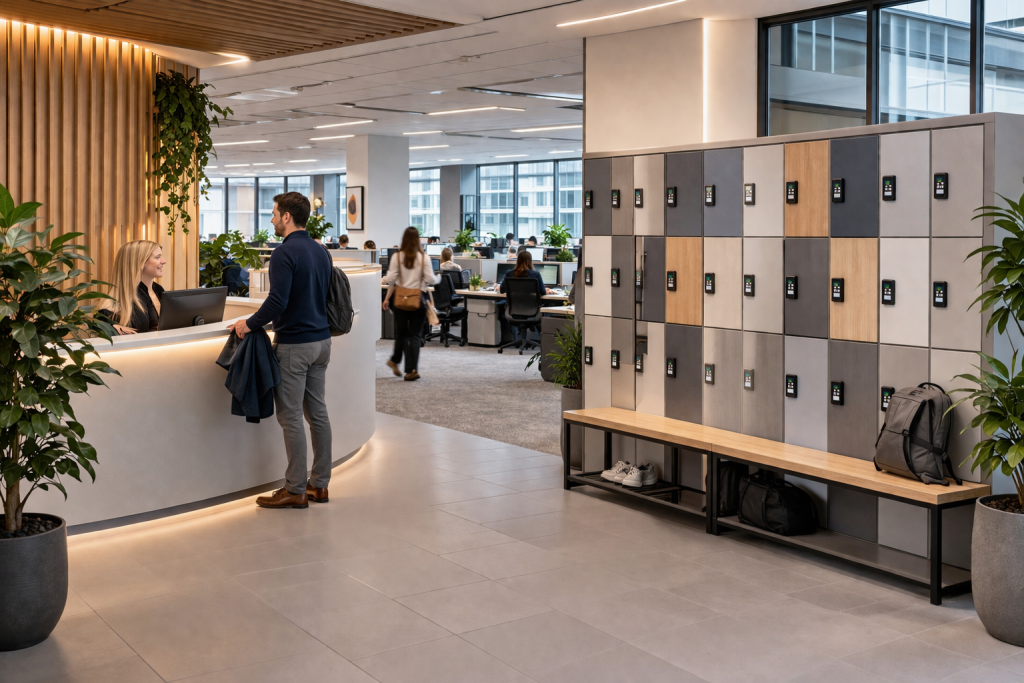
In many hybrid offices, the strongest solution is to place locker banks at the edge of the hot-desking area. That keeps them close enough for staff to use naturally at the start and end of the day, while still protecting the main desk area from becoming storage-heavy.
Edge placement often creates a better rhythm. Staff arrive, store what they need to store, then move a short distance into the hot-desk space with fewer personal items in hand. The lockers support the routine, but the desks remain the focus of the work area rather than the storage activity around them.
This kind of layout often gives the best balance between convenience, visual calm and efficient use of space.
Arrival-adjacent storage can still support hot-desking
Some offices place lockers closer to the arrival route than to the hot-desk banks themselves. That can work very well where the office wants staff to drop personal items before entering the active shared desk zone. In this model, the storage becomes part of the transition into work rather than an extension of the desk area.
This is often particularly effective in larger offices or design-led environments where the business wants the hot-desking floor to stay visually clean. Staff still have easy access to lockers, but the act of storing belongings happens earlier in the journey.
For that wider logic, see where should office lockers go in a reception-to-desk journey.
What staff are storing makes a difference
The right level of closeness depends partly on what people need to store. If the main contents are coats, backpacks and lunch items, staff usually only need access at the start and end of the day. In that case, lockers can sit a little further from the desk area without weakening the routine.
If staff are likely to open lockers several times during the day for devices, materials or other regular-use items, placement may need to be a little closer. The more often the locker is part of the working pattern, the more important convenience becomes.
This is why office locker planning always works better when it starts with behaviour instead of with a generic layout rule.
Shared day-use lockers need a natural route
Hot-desking and day-use lockers often go together, so the route between them matters. Shared storage works best when staff pass it naturally as they arrive, choose a desk and settle into work. If they have to leave the obvious route to use the lockers, they may start treating them as optional rather than essential.
That usually means the lockers should be close enough to the hot-desk area to feel relevant, but not embedded so tightly that people are unpacking next to active workstations. A short, direct movement from storage to desk is often the strongest pattern.
For the shared model itself, see day-use office lockers.
Noise and movement should stay out of the desk core
Every time someone uses a locker, they pause, open a door, move belongings and often shift position in the circulation space around them. That is normal. The planning challenge is making sure this activity does not happen constantly in the core working zone where people are trying to focus.
If locker use is concentrated in a defined edge area, the office can absorb that movement more gracefully. If it happens between densely arranged desks, the storage routine may feel more disruptive than intended. This is one reason why “close, but not too close” is usually the best answer.
The desk zone should primarily feel like a place for work, while the storage zone should handle the brief flurry of arrival and departure activity.
Open plan layouts still need clear zoning
Even in open plan offices, different functions need their own subtle boundaries. Hot-desking, collaboration, circulation and personal storage can all sit within the same broad floorplate without being mixed randomly. Good locker placement helps create that structure.
That is why locker banks near hot-desking areas often perform best when they sit in a recognisable storage zone rather than floating loosely among desks. The zone does not need to be enclosed, but it should still feel intentional.
For the wider placement discussion, visit should staff lockers be in open plan areas or separate storage zones.
Charging lockers may need slightly more convenient placement
If the lockers include charging points, staff may expect to use them more actively for devices during the day. That can strengthen the case for keeping them conveniently close to hot-desking areas, especially in hybrid offices where people move between desks and meetings with laptops or phones.
However, the same rule still applies. The lockers should support work without taking over the desk zone. In many cases, an edge-of-zone location remains the strongest answer, even when charging is part of the brief.
For that comparison, see should office lockers include charging points or just secure storage.
Common mistakes in hot-desk locker placement
- placing lockers directly between active desk clusters
- hiding lockers so far away that staff stop using them properly
- treating spare wall space as the only placement rule
- ignoring the difference between arrival activity and desk activity
- forgetting that locker doors and unpacking need space around them
- making storage part of the visual centre of the hot-desking area
- planning around the product rather than the staff routine
Most of these problems come from assuming that any nearby storage is automatically good storage.
How to judge the right distance
The best test is to watch the daily pattern in simple terms. How do people arrive? When do they use the locker? How often do they go back to it? What items are being stored? If the locker activity mainly happens at the start and end of the day, the bank can sit slightly outside the desk core. If the locker is part of a more active device or equipment routine, it may need to be closer.
In most offices, the sweet spot is near enough to feel easy, but far enough to protect the hot-desk area from becoming a storage scene. That usually means edge placement, arrival-adjacent placement or a connected storage zone just outside the densest desk cluster.
Good planning starts with how people move, then places the lockers to support that pattern.
Conclusion
Office locker banks for hot-desking areas work best when they are close enough to use naturally, but not so close that they disrupt the workspace. In many hybrid offices, edge-of-zone or arrival-adjacent placement gives the best balance between convenience, calm and efficient use of space.
The strongest result comes from treating lockers as part of the desk journey rather than as spare furniture placed wherever room is available. For the wider cluster, return to the workplace lockers guide. Office-wide planning is covered in how to choose workplace lockers for a new office fit-out. Product-led next steps can be found on our commercial staff storage page.
Frequently asked questions
Should lockers be right next to hot desks?
Usually not. In many offices, that makes the desk area feel more cluttered and introduces extra movement around active workstations.
How far should lockers be from hot-desking areas?
They should usually be close enough to feel convenient, but not placed inside the core desk cluster. Edge-of-zone placement often works best.
Do day-use lockers need to be near hot desks?
Yes, they usually need to sit on the natural arrival route or close to it, otherwise staff may not use them consistently.
Why not place lockers far away?
If lockers feel inconvenient, staff may leave coats, bags and other belongings at desks instead, which weakens the storage system.
What is the biggest mistake in hot-desk locker planning?
A common mistake is placing locker banks either directly inside the desk core or so far away that the storage becomes awkward to use.
Discover more from Blog Total Locker Service
Subscribe to get the latest posts sent to your email.