How to Monitor Medicines Storage Temperatures in a Care Home
March 25, 2026
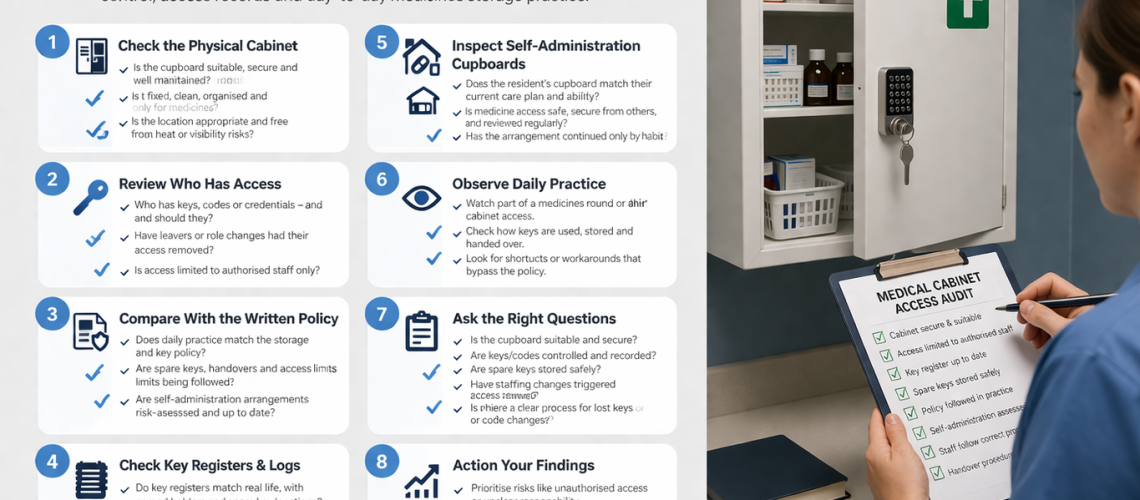
How to Monitor Medicines Storage Temperatures in a Care Home
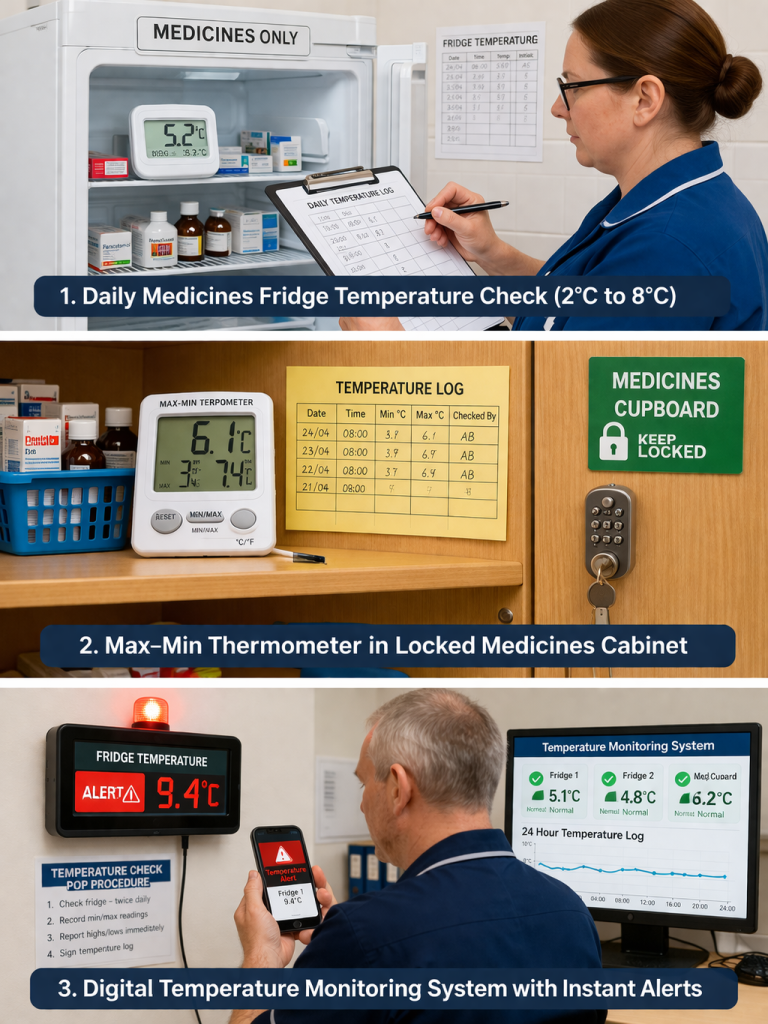
For many care homes, temperature monitoring is one of the easiest areas to overlook. A cabinet may be secure. A fridge may be in place. A medicines room may appear suitable. Yet if there is no reliable process for checking temperatures, responding to problems and recording what happened, the storage system is incomplete.
This guide explains how to monitor medicines storage temperatures in a care home, what a practical daily process looks like and how to build a safer system around cupboards, fridges, records and staff routines.
If you are also reviewing the wider layout of your medicines storage, read our comprehensive guide to medical cabinets and see our medical cabinet security solutions.
Why temperature control matters
Medicines are manufactured with specific storage conditions. Some are kept at room temperature. Some need refrigeration. Others need protection from excess heat, direct sunlight or freezing conditions. If those conditions are not maintained, the product may degrade, lose potency or become unsuitable for use.
In a busy care home, that risk is rarely caused by one dramatic failure. More often, it builds quietly over time. A cupboard is placed next to a radiator. A medicines fridge is overfilled. A room gets hot in summer. A faulty seal goes unnoticed. Staff record temperatures irregularly. No one is sure what to do when a reading falls outside the accepted range.
That is why temperature monitoring should be treated as part of the full medicines governance process rather than a stand-alone tick-box task. It links directly to resident safety, staff confidence, accountability and inspection readiness.
What good practice looks like in a care home
A strong medicines storage system is simple, consistent and easy to follow. Staff should know:
- where medicines are stored
- which areas require temperature checks
- what the acceptable range is for each storage area
- how readings are recorded
- who reviews the records
- what action to take if temperatures fall outside the required range
- when to seek pharmacy or clinical advice
- how incidents and decisions are documented.
In practical terms, that means temperature monitoring should not rely on memory, goodwill or informal handovers. It should sit inside your medicines policy and be supported by staff training, clear equipment and a clear escalation route.
The main medicines storage areas that need checking
Most care homes will need to monitor more than one type of storage area. Each one may present different risks.
1. Ambient medicines cupboards and cabinets
These are the standard lockable cupboards or cabinets used for most routine medicines. They should be located in a secure position away from obvious heat sources, damp and direct sunlight. Even if the room feels normal to staff, the cabinet environment may still become too warm, especially in summer or in poorly ventilated rooms.
2. Medicines rooms
Where medicines are stored in a dedicated room, the room temperature itself becomes important. A secure room can still be unsuitable if heat builds up during hot weather, if ventilation is poor or if the room is located near plant, boilers or sun-exposed walls.
3. Medicines fridges
Some medicines require cold storage. These products need closer control because fridge temperature drift can make medicines unusable very quickly. The fridge should be intended for medicines use, positioned correctly, monitored consistently and not used as a general staff fridge.
4. Resident room storage for self-administration
If a resident self-administers and keeps medicines in their room, temperature and storage suitability should still be considered in the resident’s risk assessment. A lockable drawer may be appropriate, but the room itself should also be suitable for the medicine concerned.
Ambient storage and room temperature
Many medicines commonly used in care homes are stored at ambient temperature. That does not mean any room is acceptable. The location still needs to be controlled as far as reasonably possible.
Common causes of poor ambient storage include:
- cupboards fixed to sunny external walls
- cabinets placed next to radiators or hot pipework
- poorly ventilated medicines rooms
- mobile heaters used in winter
- rooms that become very warm during heatwaves
- windows left open near unsecured medicines areas
- overcrowded cupboards with poor airflow.
A well-designed cabinet helps, but cabinet quality alone does not solve a bad location. The wider environment matters. When assessing storage, staff should think about the room as well as the cupboard.
Medicines fridges need their own process
Cold-chain medicines usually require tighter control. A medicines fridge should therefore be managed as a distinct part of your storage system.
Good practice usually includes:
- a dedicated, lockable fridge used only for medicines
- clear temperature monitoring arrangements
- correct siting away from heat sources
- space for airflow inside the fridge
- routine cleaning and maintenance
- an agreed escalation process for temperature excursions or equipment failure.
Staff should also know where newly received refrigerated medicines go, how long they may be left out during checking and handover, and what to do if the fridge loses power or shows an out-of-range reading.
Choosing the right monitoring equipment
The monitoring process is only as good as the equipment being used. If a device is unclear, unreliable or difficult for staff to read, errors become more likely.
Depending on the setting, care homes may use:
- digital min/max thermometers
- fridge thermometers with reset functions
- integrated temperature displays
- data loggers
- systems with alerts for temperature excursions.
For many homes, a straightforward digital system is often easier to operate consistently than a more complex arrangement that staff do not fully trust. The best solution is usually the one that matches the risk level, the layout and the staffing model.
Whatever system you use, staff should understand how to read it, when to reset min/max values if required and who is responsible for acting on an abnormal reading.
What staff should check each day
A daily routine keeps the process simple and defensible. It also helps homes spot small problems before they become serious ones.
A sensible daily check may include:
- checking the ambient storage area or medicines room temperature
- checking the medicines fridge temperature
- reviewing any min/max readings if your device records them
- confirming that cupboards and fridges are locked and secure
- checking for obvious signs of equipment failure
- recording the readings clearly
- escalating immediately if a reading is out of range.
The person completing the check should sign or initial the record in line with local policy. Blank boxes should never be left unexplained. If a reading was missed, that should be recorded honestly and reviewed. A completed log with unexplained gaps creates more risk, not less.
What to record on the temperature log
Your log does not need to be complicated, but it does need to be useful. A poor form that collects data without prompting action is not enough.
A practical temperature record usually includes:
- date
- time
- location or equipment name
- temperature reading
- min/max reading if relevant
- name or initials of staff member
- action taken if out of range
- manager review if needed.
This is one reason many providers are moving towards stronger medicines governance systems overall. A clear written audit trail helps show not just that a reading was taken, but that the home knew how to respond when something was wrong.
What to do when temperatures are out of range
This is the point where many systems fail. Staff may notice a problem, but they are not sure whether the medicines are still safe, whether the issue is minor or whether urgent action is needed. The safest process is to remove uncertainty from the first response.
Your policy should set out a clear step-by-step approach. In many homes, that means:
- re-check the reading to confirm it is accurate
- check whether the thermometer or display has been reset correctly
- look for an obvious equipment issue such as a door left open or a power problem
- quarantine affected medicines if advised by local procedure
- label stock clearly if it should not be used until checked
- escalate to the designated senior member of staff
- contact the supplying pharmacy, pharmacist or appropriate clinician for advice
- record the issue, action taken and final decision.
The key point is this: do not guess. A temperature excursion should trigger a defined process. Staff should never feel forced to decide in isolation whether overheated or undercooled medicines are acceptable to use.
Summer heat and seasonal risk
Warm weather can place real pressure on medicines storage. Care homes that operate safely for most of the year may suddenly struggle during a hot spell. Rooms that are usually stable can become unsuitable in the afternoon. Upper floors may heat up quickly. Internal cupboards may retain warmth long after the outside temperature drops.
That is why seasonal planning matters. Before warmer months, it is worth reviewing:
- which rooms become hottest
- whether medicines cupboards need relocating
- whether blinds, ventilation or cooling measures are adequate
- whether extra checks are needed during heatwaves
- whether staff know how to escalate repeated high readings.
Homes that treat summer as a special risk period are often better prepared than those that continue with the same routine regardless of conditions.
Do not separate temperature checks from the wider risk assessment
Temperature monitoring works best when it is linked to the wider medicines storage risk assessment. In other words, the home should not just ask, “Did we take a reading?” It should also ask, “Is this the right place to store these medicines in the first place?”
A good risk assessment may consider:
- the types of medicines being stored
- whether any require refrigeration
- whether residents self-administer
- how quickly emergency medicines need to be accessed
- who has access to keys
- whether the cabinet or room is positioned near heat or sunlight
- whether the home has enough storage capacity
- how disposal medicines are segregated and secured
- how staff record and review incidents.
This is also where the quality of your cabinets, lockers, cupboards and supporting storage hardware becomes important. Secure storage should make compliance easier, not harder.
Training staff to respond consistently
Even the best policy will fail if staff do not understand it. Training should therefore cover more than where the thermometer is kept. It should explain why the process matters and what actions are expected.
Staff training may include:
- how to read the monitoring device
- how often checks must be carried out
- where readings are recorded
- what the acceptable ranges are
- how to respond to an abnormal reading
- who to contact for advice
- how to document the outcome
- how to identify repeat patterns that need manager review.
Consistency is the real goal. If five different staff members would all respond differently to the same high reading, the process is not yet robust enough.
How managers can review the system
Temperature monitoring should not disappear into a folder and stay there until inspection day. Managers should review the records routinely and look for patterns.
Useful review questions include:
- Are checks being completed on time?
- Are the readings legible and complete?
- Are there repeat high or low readings in one area?
- Were out-of-range results escalated properly?
- Was advice sought when needed?
- Were affected medicines clearly identified?
- Is a room or cupboard consistently borderline and in need of redesign or relocation?
This kind of review turns the log from a passive record into a management tool. It also helps demonstrate a stronger governance culture around medicines.
Common temperature monitoring mistakes in care homes
Many medicines storage issues come from a small number of repeated mistakes. These are often easy to correct once identified.
- Recording temperatures without checking whether the reading is actually acceptable
- Using a standard domestic fridge without a clear medicines-only process
- Keeping medicines near radiators, kettles or sunny windows
- Failing to act on repeated high temperatures in summer
- Leaving out-of-range readings unexplained on the form
- Not knowing who to contact for pharmacy advice
- Overfilling cupboards or fridges so airflow is reduced
- Storing disposal stock in a way that causes confusion with active medicines
- Assuming a locked cupboard is automatically a compliant cupboard
- Letting the process depend on one experienced staff member rather than a clear policy.
Choosing cabinets and storage setups that support compliance
The physical storage setup should support the process, not fight against it. That means selecting cabinets and layouts that are suitable for the type and volume of medicines being handled.
When reviewing storage equipment, consider:
- whether the cupboard or cabinet is genuinely secure
- whether internal space is adequate and organised
- whether staff can separate stock clearly
- whether the location avoids heat build-up
- whether keys or access control arrangements are reliable
- whether refrigerated medicines are segregated properly
- whether self-administration storage can be provided safely in resident rooms
- whether the overall system makes audits easier.
Care homes often benefit from reviewing cabinets, fridge placement and room layout together rather than replacing one item in isolation. A more coherent setup can reduce staff error, improve speed during medicine rounds and make monitoring more reliable.
A practical example of a simple daily workflow
For many homes, the most effective routine is the simplest one. A typical daily workflow might look like this:
- Morning staff member checks the medicines room or cabinet area temperature.
- They check the medicines fridge temperature and min/max display.
- They confirm cupboards and fridge are secure.
- They record the readings immediately.
- If a reading is outside the expected range, they repeat the check and inspect for an obvious cause.
- They escalate to the designated senior colleague and contact pharmacy support if required.
- Any affected stock is clearly identified and not used until advice is received.
- The incident and final action are documented.
- A manager reviews exceptions and trends each week.
This kind of routine is not complicated, but it is far stronger than a system that collects numbers without ownership or follow-up.
Why inspectors and auditors look beyond the temperature sheet
During an inspection or internal audit, temperature sheets matter, but they are rarely viewed in isolation. Reviewers will often consider whether the storage environment, staff knowledge and medicines policy all align with the records presented.
For example, a fully completed form may still raise questions if:
- the cupboard is next to a heat source
- staff cannot explain the escalation process
- fridge stock is disorganised
- self-administration arrangements are unclear
- there is no evidence of management review
- out-of-range incidents were recorded but not investigated.
That is why the strongest homes build a joined-up system. Secure cabinets, suitable room layout, reliable checks, clear records and competent staff all support one another.
Final thoughts
Monitoring medicines storage temperatures in a care home should be practical, repeatable and easy to defend. It is not just about writing down a number. It is about making sure medicines remain safe, effective and ready for use when residents need them.
If your current process depends on one member of staff remembering what to do, or if your cupboards and fridges were never selected with medicines governance in mind, it may be time for a review.
A better system usually starts with a few straightforward questions. Are your cabinets secure? Are they in the right place? Are temperatures monitored properly? Do staff know what to do when something goes wrong? If the answer to any of those is uncertain, improving the storage setup can strengthen the whole medicines management process.
To review your options, explore our medical cabinet security range or read the comprehensive guide to medical cabinets for broader planning advice.
Discover more from Blog Total Locker Service
Subscribe to get the latest posts sent to your email.