Bench Materials Guide: Wood vs Plastic vs Metal for Changing Room Seating
April 13, 2026
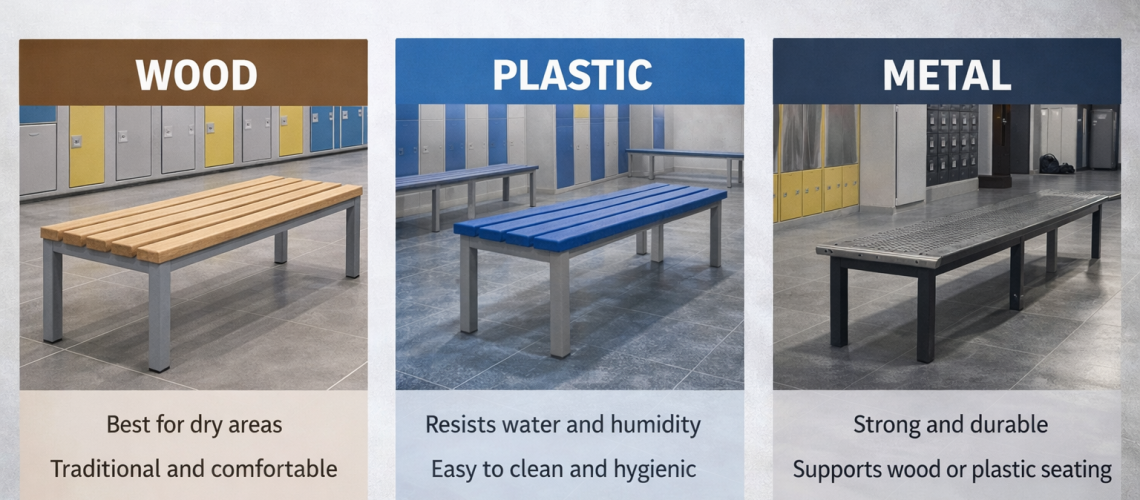
The material of a changing room bench plays a major role in how it performs over time. It affects durability, hygiene, maintenance and how well the bench suits its environment. In busy workplaces, schools, gyms and leisure facilities, choosing the right material is just as important as choosing the right layout.
Wood, plastic and metal are the three most common materials used in changing room benches. Each has its own strengths and limitations. The best choice depends on moisture levels, cleaning requirements, user behaviour and how heavily the space is used.
This guide compares wood, plastic and metal bench materials so you can choose the right option for your environment.
Why bench material matters
Bench seating is exposed to daily wear. Users sit, stand, place bags and move around the space constantly. In wet areas, moisture adds another layer of stress. The material needs to handle all of this without becoming difficult to clean or maintain.
- affects durability under daily use
- influences hygiene and cleaning standards
- determines suitability for wet or dry environments
- impacts long-term maintenance requirements
- shapes the overall appearance of the space
A well-chosen material helps benches last longer and keeps the changing room easier to manage.
Wood bench seating
Wood slat benches are one of the most traditional options. They are commonly used in dry changing rooms, workplaces and schools where a natural appearance is preferred.
Advantages of wood benches
- strong and durable in dry environments
- comfortable seating surface
- traditional and familiar appearance
- works well in schools and workplace locker rooms
Considerations for wood benches
- less suitable for wet or humid environments
- requires regular cleaning and maintenance
- can absorb moisture if exposed to water
- may show wear over time in high-use areas
Wood benches are often best for dry changing rooms where durability and appearance are both important.
Plastic and polymer bench seating
Plastic or polymer benches are designed for environments where hygiene and moisture resistance are priorities. They are widely used in wet areas such as swimming pools, leisure centres and healthcare settings.
Advantages of plastic benches
- high resistance to water and humidity
- easy to clean and maintain
- non-porous surface helps support hygiene
- suitable for wet and hygiene-sensitive environments
- often includes anti-bacterial properties
Considerations for plastic benches
- different appearance compared to traditional wood
- may feel less warm or natural as a material
- quality can vary depending on specification
Plastic benches are usually the strongest choice for wet areas and environments where hygiene is critical.
Metal bench structures
Metal is typically used as the structural frame rather than the seating surface. It provides strength and stability for both wood and plastic bench tops. In some cases, fully metal benches are used in industrial environments.
Advantages of metal benches
- very strong and durable
- supports heavy-duty use
- long lifespan in demanding environments
- provides stable support for seating surfaces
Considerations for metal benches
- can feel cold or less comfortable as a seating surface
- may require protective coatings to prevent corrosion
- less commonly used as a standalone seating surface in changing rooms
Metal is essential for structure and strength, particularly in high-use or industrial environments.
Wet areas vs dry areas: choosing the right material
The environment is often the most important factor when choosing bench materials.
In wet or humid areas, plastic or polymer seating is usually the most reliable choice. It resists moisture and is easier to keep clean. In dry environments, wood can offer a more traditional look and comfortable seating surface.
Metal frames support both options and provide the structural strength needed for long-term use.
Hygiene and cleaning considerations
Bench materials affect how easy it is to maintain hygiene. Non-porous surfaces are generally easier to clean and less likely to retain moisture or bacteria. Designs that allow easy access for cleaning are just as important as the material itself.
- plastic is typically the easiest to clean
- wood requires more care to maintain hygiene
- metal frames should be protected against corrosion
- bench design should allow access underneath and around the seating
Durability and long-term performance
Different environments place different demands on bench materials. High-traffic areas require strong, long-lasting solutions. Moist environments require materials that resist damage over time.
- wood performs well in controlled, dry environments
- plastic performs best in wet or hygiene-sensitive areas
- metal provides structural strength across all environments
The best results often come from combining materials, such as wood or plastic seating supported by a metal frame.
How to choose the right bench material
Choosing the right material starts with understanding the environment and how the benches will be used.
- use plastic for wet or high-hygiene environments
- use wood for dry areas where appearance matters
- ensure metal frames are strong and well-finished
- consider maintenance and cleaning routines
- match material choice to user behaviour and traffic levels
A practical approach will always lead to better long-term performance than choosing based on appearance alone.
Common mistakes to avoid
- using wood in wet environments without protection
- choosing materials that are difficult to clean
- ignoring long-term maintenance requirements
- focusing only on cost rather than durability
- overlooking the importance of structural support
A material that looks suitable at the start may not perform well over time if the environment is not considered properly.
Final thoughts on bench materials
Wood, plastic and metal each have a clear role in changing room bench design. The best choice depends on moisture levels, hygiene requirements, durability needs and how the space is used.
By matching the material to the environment, you can create a bench system that is practical, easy to maintain and built to last.
Explore our locker range, review locker lock options, and browse more guidance on the Total Locker Service blog.
“`
Discover more from Blog Total Locker Service
Subscribe to get the latest posts sent to your email.