May 13, 2026
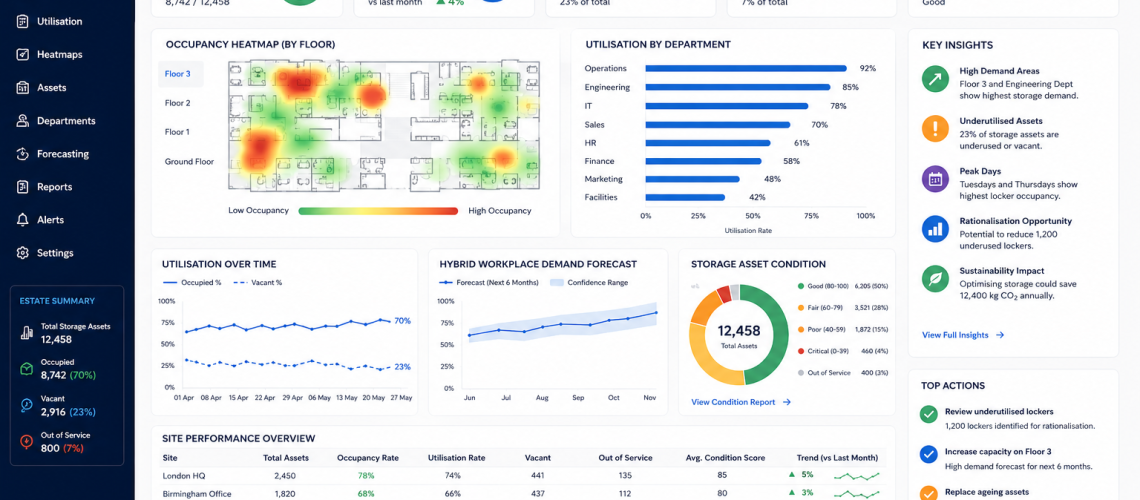
Workplace storage is no longer just a fixed set of lockers, cupboards, cabinets and charging points. In modern workplaces, storage is part of the operational infrastructure.
Blog storage solutions
May 13, 2026
Workplace storage is no longer just a fixed set of lockers, cupboards, cabinets and charging points. In modern workplaces, storage is part of the operational infrastructure.
Workplace storage analytics helps organisations understand how lockers, cabinets, smart storage systems and shared-use storage areas are actually used across an estate.
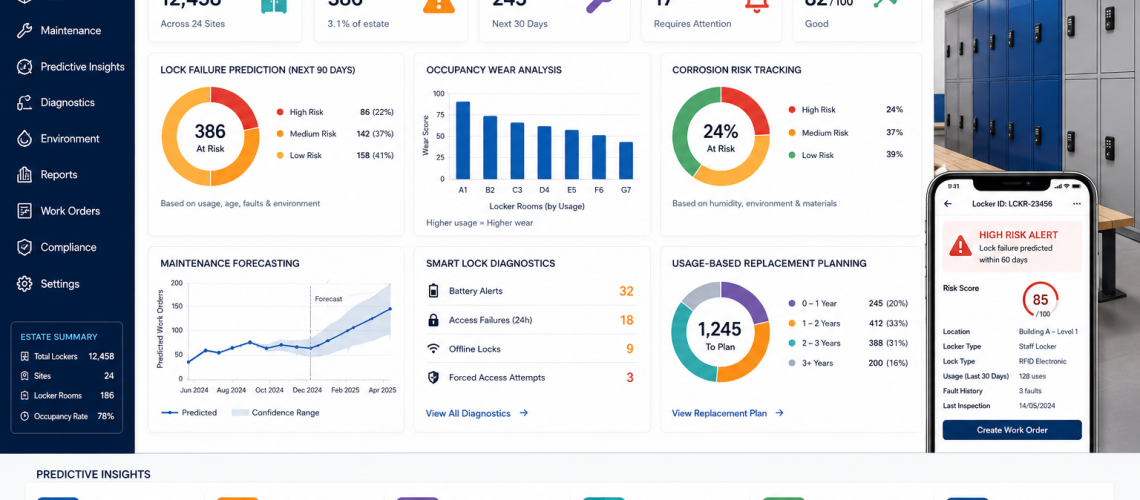
Locker predictive maintenance helps organisations move from reactive repairs to planned infrastructure control. Instead of waiting for locks, doors, hinges or electronic systems to fail, facilities teams can use data to forecast maintenance needs before disruption occurs.
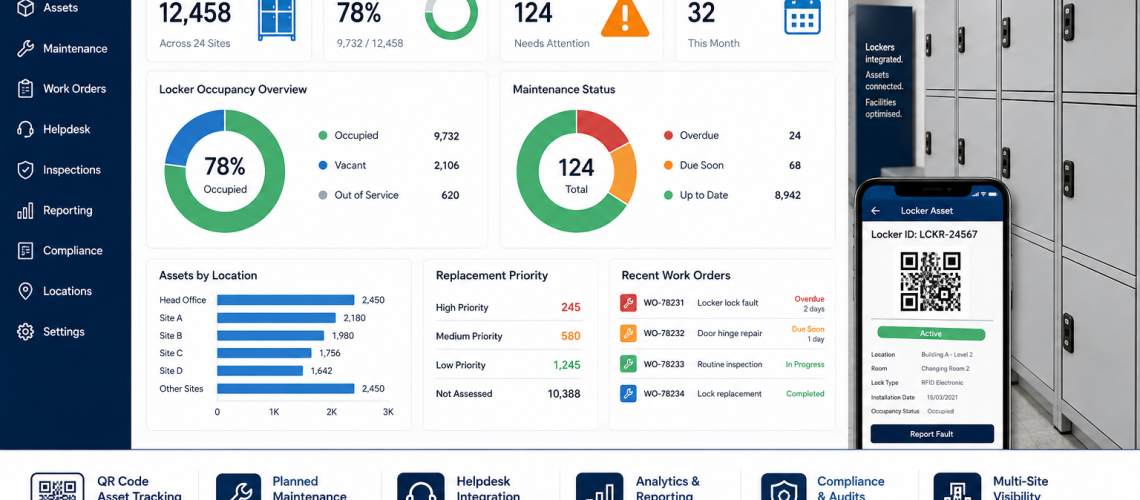
Locker systems are no longer isolated workplace assets. Across workplaces, schools, NHS estates, leisure centres and industrial facilities, lockers are increasingly managed as part of wider facilities-management infrastructure.
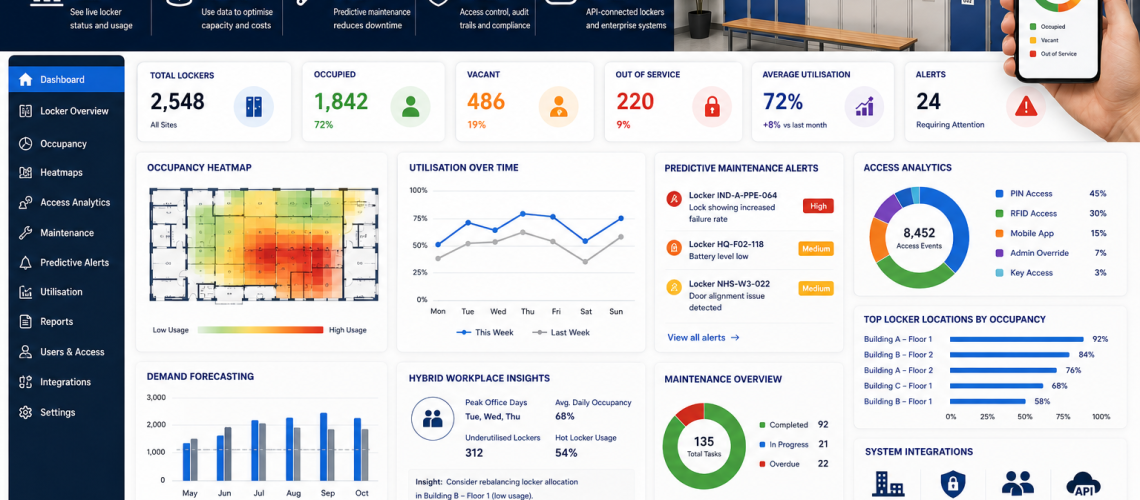
Smart locker analytics helps UK organisations understand how lockers are used, accessed, maintained and planned across a site or estate. Once a locker asset register exists, analytics becomes the next logical layer. The register defines the locker estate. Analytics shows how that estate performs.
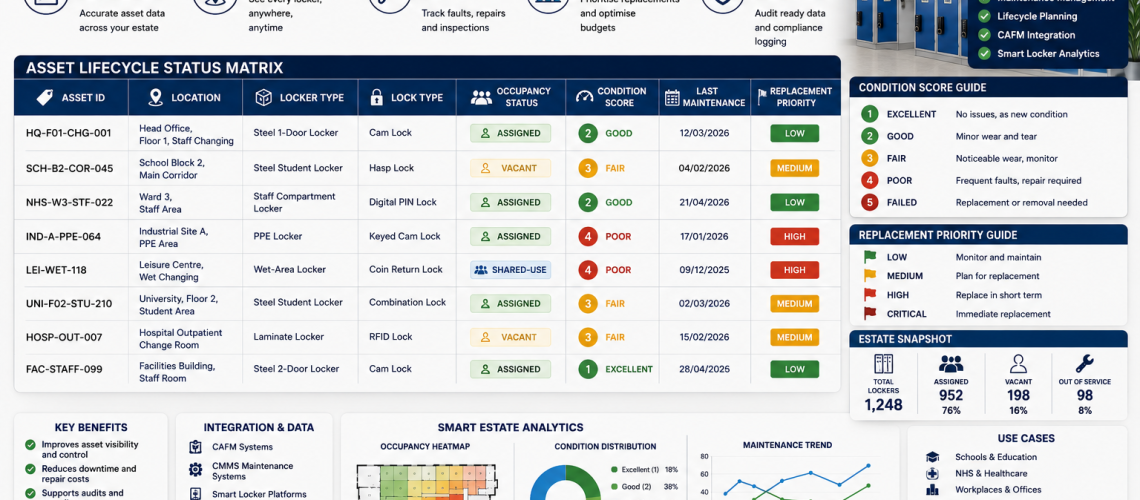
A locker asset lifecycle status matrix is a structured management table used to track locker condition, occupancy, maintenance history and replacement priority across a site or estate. It helps UK facilities managers, estates teams, schools, workplaces, NHS departments and procurement teams manage lockers as operational infrastructure rather than isolated storage units.
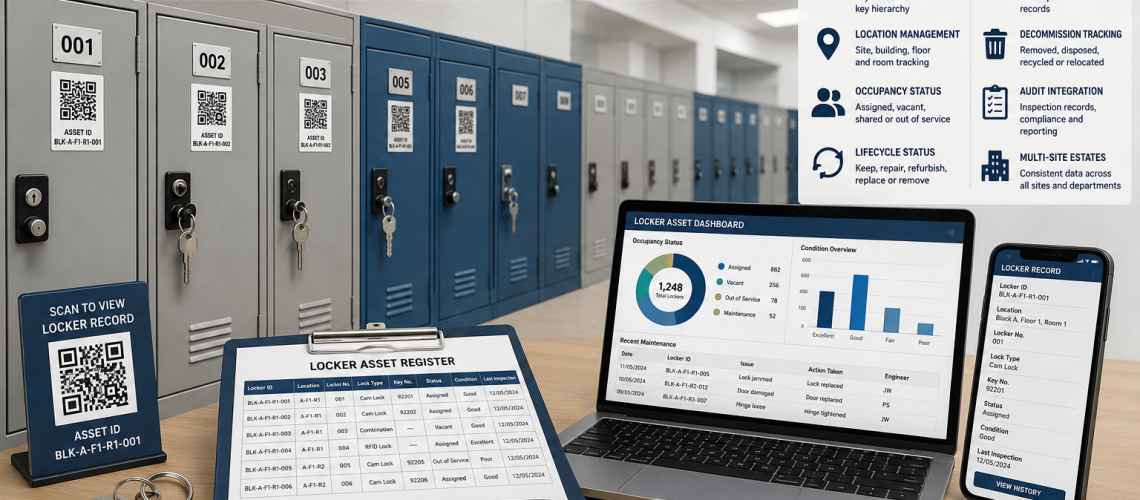
A locker asset register is the central record used to track every locker, lock, key, location, user status, maintenance action and lifecycle decision across a site or estate. It gives UK facilities managers, estates teams, schools, NHS sites, workplaces and procurement teams a structured way to manage lockers as operational assets.
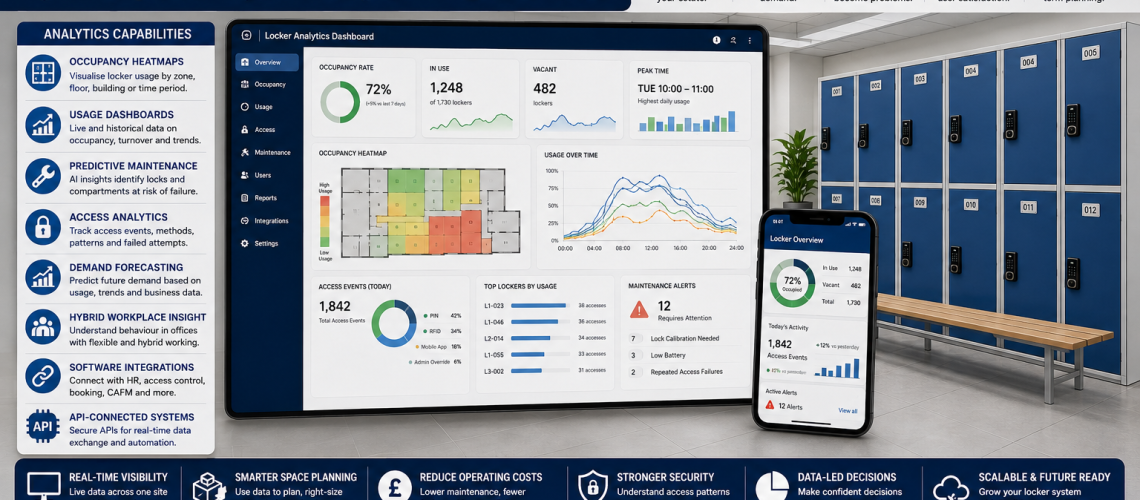
Smart locker analytics helps UK organisations understand how lockers are used across workplaces, schools, healthcare sites, leisure centres and multi-site estates. It connects locker access, occupancy, user activity, maintenance trends and demand forecasting into useful operational data.
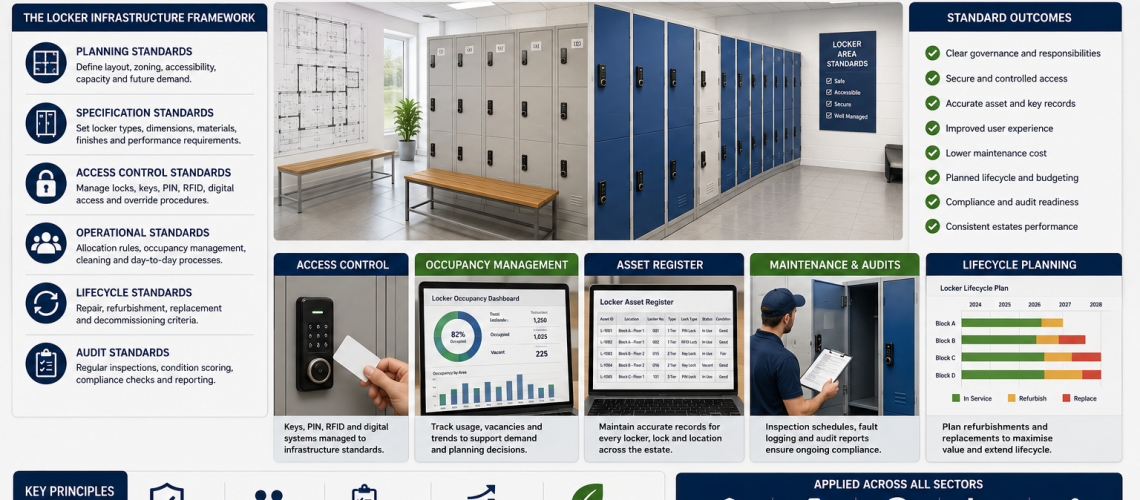
Locker infrastructure standards help UK organisations plan, manage and maintain lockers as part of a wider workplace, school, healthcare or facilities estate. They cover layout, access control, lifecycle management, occupancy, audits, asset records, maintenance and long-term replacement planning.
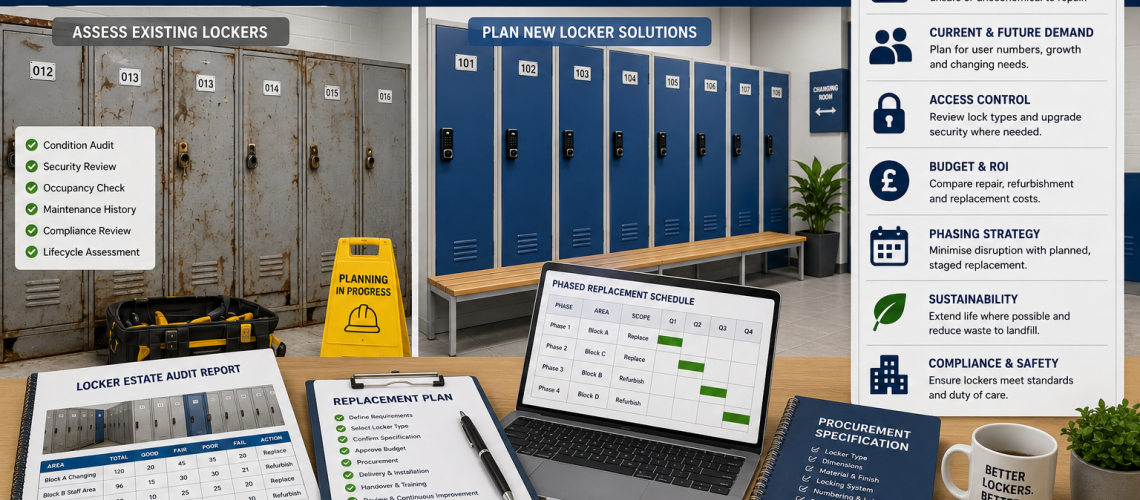
Locker replacement planning helps UK organisations decide when existing lockers should be repaired, refurbished, relocated or replaced. It gives estates teams, procurement teams, schools, workplaces, NHS sites and facilities managers a structured way to plan locker upgrades before failures become urgent.