Cash Safes for Retail Shops UK: Till Security, Daily Takings and Overnight Cash Storage
September 24, 2026
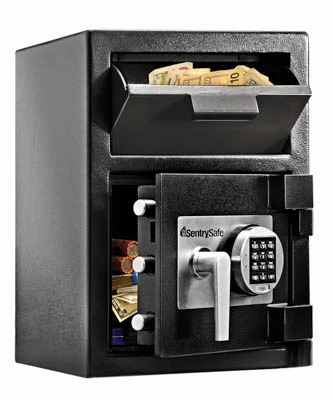
Retail cash security is not simply about putting the day’s takings into a safe after closing. Cash moves through several stages during the trading day, from customer payments and till floats to cash drops, reconciliation, overnight storage and banking. The safest arrangement is one that controls that complete journey while limiting how much money remains accessible at the checkout.
This guide explains how UK retailers can choose and use cash safes for shops, including till security, under-counter note safes, deposit safes, overnight cash storage, cash ratings, locking methods, staff access, safe positioning and cash-handling procedures.
Quick Answer: What Cash Safe Does a Retail Shop Need?
A retail shop should choose its safe around the maximum cash that may be held, how cash moves away from the till, who needs access and whether money remains on site overnight. Small retailers may use one appropriately rated cash safe, while businesses with frequent cash transactions may benefit from an under-counter note safe or deposit safe for daytime drops plus a higher-security safe for accumulated takings.
| Retail requirement | Safe solution to consider |
|---|---|
| Small petty-cash holding | Compact office or security safe |
| Remove excess notes from till | Under-counter note-deposit safe |
| Several staff make cash drops | Cashier or day-deposit safe |
| Several tills feed one secure location | Central deposit safe |
| Cash retained overnight | Appropriately cash-rated security safe |
| Higher-value overnight holdings | Certified high-security or Euro Grade safe |
Why Retail Cash Security Needs More Than One Decision
Retail businesses can face different cash-security problems at different times of the day.
- The till needs enough money to operate normally.
- Excess cash may build up during busy trading periods.
- Several employees may need to make deposits.
- Only selected staff should retrieve accumulated takings.
- Cash may need to be counted and reconciled after trading.
- Money may remain on site overnight.
- Banking or cash collection may not take place every day.
Trying to solve every stage with a single till drawer or one unrestricted safe can create unnecessary exposure. A better approach is to identify each stage and decide how much access is actually needed.
The Retail Cash Journey
A typical retail cash process may involve several stages:
- The till begins with a working float.
- Customers make cash payments.
- The amount held in the till increases.
- Excess notes are removed according to the retailer’s cash-drop procedure.
- The money is deposited into secure storage.
- An authorised manager or cash handler retrieves accumulated deposits.
- Cash is counted and reconciled against till records.
- Takings move into overnight storage where required.
- Money is banked or collected according to the retailer’s procedure.
The safest solution is not necessarily one safe performing every task. Different storage points can serve different stages of the process.
How Much Cash Should Stay in the Till?
A till needs enough cash to provide change and support normal trading. Beyond that working requirement, allowing large amounts of money to accumulate can increase the value immediately accessible at the checkout.
The appropriate till level depends on the business, transaction pattern and internal procedures. Retailers may establish a cash-drop trigger based on:
- a set amount in the till;
- specific times of day;
- shift changes;
- supervisor instructions;
- busy trading periods;
- the retailer’s own risk-control procedures.
The aim is to keep enough money available for normal transactions without unnecessarily retaining accumulated takings at the customer-facing position.
Under-Counter Cash Safes for Retail Tills
An under-counter note safe is useful where staff need to move surplus banknotes away from the till quickly.
The safe is positioned beneath or close to the checkout so the cashier can deposit notes without opening the secure storage compartment.
This can create a useful division between:
- cashiers, who can make deposits; and
- managers or cash-office staff, who can retrieve the contents.
Total Locker Service supplies the Phoenix SS0991KD Under Counter Note Deposit Safe for this type of application.
For the detailed selection and installation questions, see Under-Counter Cash Safes UK.
Deposit Safes for Retail Shops
A larger deposit safe may suit retailers that need to receive repeated cash drops from several staff members, tills or departments.
Instead of each cashier opening the main safe, employees place money into a dedicated deposit facility. Retrieval remains restricted.
Deposit safes can help retailers:
- reduce till holdings;
- centralise cash from several checkouts;
- separate deposit access from retrieval access;
- support shift-based cash drops;
- reduce repeated opening of the main secure compartment;
- hold deposits securely before reconciliation.
See the TLS deposit-safe range and our Deposit Safes UK guide for a more detailed comparison.
One Safe per Till or One Central Deposit Safe?
The answer depends on store layout and transaction volume.
Local till-drop safes
A compact under-counter safe can keep the deposit point very close to the cashier. This reduces the distance staff need to move with cash.
This may work well for:
- small shops;
- individual service counters;
- high-volume checkout positions;
- sites where staff should not leave the till area.
Central deposit safes
A larger central safe may suit retailers where several checkouts feed one secure staff area or cash office.
This can reduce the number of separate secure units that need management, but the route from each till to the central deposit point also needs consideration.
There is no universal arrangement. Store layout and cash movement should determine the design.
Overnight Cash Storage for Retail Shops
Daytime cash-drop security and overnight storage are related but different requirements.
A compact under-counter safe may be useful for moving notes away from the till but may not be the appropriate final storage location for substantial accumulated takings.
For overnight storage, establish:
- the maximum cash likely to remain on site;
- whether weekend holdings are higher;
- whether bank holidays increase the holding period;
- the value of other items stored with the cash;
- the security or cash rating required;
- any insurer requirements;
- the required fixing and installation method.
The maximum realistic holding is more important than the average day’s takings.
For security grades and indicative cash ratings, see Insurance Rated Safe UK: EN 14450 vs EN 1143.
Weekends, Bank Holidays and Peak Retail Cash Holdings
Retail cash holdings do not always remain constant throughout the week.
A business that banks cash every weekday may normally hold relatively little overnight. At weekends or around bank holidays, however, several trading days may accumulate before the next banking or collection opportunity.
Seasonal retail peaks can create the same problem.
- Christmas trading;
- Black Friday and major sales periods;
- weekends;
- local events;
- tourist-season peaks;
- extended opening periods.
Size and rate the overnight safe around the highest realistic holding rather than a quiet midweek average.
Cash Ratings for Retail Safes
A manufacturer may state a recommended cash rating for a security safe. This is useful when comparing products, but it should not be treated as an automatic guarantee of insurance cover.
The insurer may consider factors including:
- maximum cash holding;
- safe grade;
- location;
- anchoring;
- alarm systems;
- building security;
- other risk controls.
Confirm the required safe specification with your insurer or broker where insurance cover depends on the safe.
Your existing insurance-rating guide covers this technical subject in detail, so this retail guide should use it as the supporting technical reference rather than duplicate it.
What Size Cash Safe Does a Shop Need?
Cash value and physical capacity are separate questions.
Banknotes require relatively little space. Coin bags, till drawers, cash cassettes and sealed banking bags can require much more.
Before ordering, list everything that will go inside:
- banknotes;
- coins;
- till floats;
- cash bags;
- banking envelopes;
- complete till drawers;
- cash cassettes;
- cheques;
- keys;
- other valuables.
Then compare the largest item with the safe’s internal dimensions and clear door opening.
See Cash Safe Size Guide UK for detailed sizing guidance.
Storing Complete Till Drawers
Some retailers remove the complete till drawer or cash cassette at the end of trading and place it into secure storage.
If this forms part of the procedure, the safe must have sufficient internal width, height and depth for the complete cassette.
The clear door opening also matters. A rigid drawer may fit within the internal cavity but still be too large to pass through the safe opening.
Total Locker Service supplies compact products such as the Mini Vault 3 for applications including till-drawer storage.
Key or Electronic Safe for a Retail Shop?
Both can be suitable. The best choice depends on the way the retailer manages authorised access.
Key locks may suit:
- owner-operated shops;
- very small management teams;
- sites with good physical key control;
- businesses that do not need electronic access functions.
Electronic locks may suit:
- stores with changing duty managers;
- sites where codes need to be changed regularly;
- businesses requiring multiple users;
- applications requiring time delay or dual control on suitable locks.
For a full comparison, see Key vs Electronic Cash Safes UK.
Which Retail Staff Should Have Safe Access?
Not every employee who handles cash needs unrestricted access to accumulated takings.
A retailer may separate users into:
- cashiers who operate tills;
- deposit users who can make cash drops;
- supervisors who oversee shift procedures;
- retrieval users who can open the secure safe compartment;
- cash-office or management users who reconcile and prepare banking.
The precise roles depend on the retailer, but access should follow operational need.
Staff leaving the business
When an authorised employee leaves or changes role, review their access immediately.
For key-lock safes, confirm keys have been returned. For electronic safes, change or remove credentials where supported by the lock.
Where Should a Retail Cash Safe Be Located?
Safe position should balance security, staff workflow and structural installation requirements.
A high-security overnight safe may suit a restricted office, cash room or staff-only back area. An under-counter deposit safe needs to be close enough to the point of sale for staff to use it effectively.
- Avoid unnecessary visibility from customer areas.
- Consider the route cash takes through the store.
- Check the floor or wall is suitable for anchoring.
- Allow the door to open fully.
- Keep the safe accessible to authorised staff.
- Check the delivery route before ordering.
For the installation side, see Cash Safe Installation & Fixing UK.
Should a Retail Cash Safe Be Bolted Down?
Where the safe is designed for anchoring, follow the manufacturer’s fixing instructions.
A secure safe that can be removed intact may be more vulnerable than the same safe properly attached to a suitable structural floor or wall.
Do not rely on weight alone where fixing is specified.
Check for concealed services before drilling, including electrical cables, pipes and underfloor heating.
Cash Safes for Small Independent Shops
A small independent retailer may have one till, a limited number of authorised users and relatively modest overnight holdings.
A practical arrangement may consist of:
- a defined till float;
- periodic cash drops where needed;
- one secure cash safe;
- access restricted to the owner or manager;
- regular banking to prevent unnecessary accumulation.
The correct safe still depends on maximum cash holdings and any insurer requirements.
Cash Safes for Multi-Till Retail Stores
A larger store may need a more structured system because several tills can generate deposits simultaneously.
Questions include:
- Does each till have its own deposit point?
- Do all deposits go to one central safe?
- Who transports money from the till?
- How are deposits identified?
- How frequently is the central safe emptied?
- How are shift handovers managed?
- What is the peak overnight holding?
The physical safes should support that workflow rather than forcing staff to improvise around unsuitable storage.
Cash Safes for Convenience Stores and Long-Hours Retail
Convenience stores and other long-hours retailers may accumulate cash over extended trading periods and operate with changing shifts.
A deposit-safe system can allow staff to reduce till holdings during trading while restricting access to the accumulated cash.
Where the shop trades late or operates seven days a week, consider how often the safe is emptied and how long cash remains on site before banking or collection.
Higher-Value Retail Environments
Some retailers need secure storage not only for cash but also for compact high-value stock or valuables.
Where higher values are involved, consider:
- the maximum cash holding;
- the value of stored goods;
- the safe’s recommended cash and valuables ratings;
- certified burglary resistance;
- lock certification;
- anchoring;
- insurer requirements.
Browse high-security safes where the required protection extends beyond ordinary commercial cash storage.
Can Retailers Store Documents in the Same Safe?
They can where the physical space and security requirements are suitable, but theft protection and fire protection are separate considerations.
If the safe also holds contracts, insurance records or other important documents, consider whether fire protection is required in addition to cash security.
A security safe should not automatically be assumed to provide a particular level of fire protection.
See Fire Safe Ratings UK where document fire protection is part of the requirement.
What About Till Backups and Digital Media?
A retailer may also hold USB drives, hard drives or other local backup media.
Do not assume that a cash safe or ordinary document fire safe provides suitable fire protection for digital media. Data and media storage can require lower internal temperature protection.
See Data Safes vs Fire Safes if physical backup media needs fire protection.
Example Retail Cash-Safe Procedure
A retailer might structure the daily process as follows:
- Issue the agreed till float.
- Record the staff member responsible for the till.
- Trade normally.
- Make cash drops according to the store procedure.
- Place dropped cash into secure deposit storage.
- Restrict retrieval to nominated personnel.
- Reconcile the till at shift or trading close.
- Count and verify accumulated deposits.
- Transfer retained takings to the appropriate overnight safe.
- Secure safe keys or electronic credentials.
- Bank or transfer the money according to the next scheduled process.
This is an example framework rather than a universal operating procedure. Each retailer should adapt its controls to its own premises, staffing, risk and insurance arrangements.
Common Retail Cash-Safe Mistakes
- Leaving all takings in the till until closing: consider whether excess cash can be moved into secure storage during trading.
- Giving every cashier access to the main safe: deposit access and retrieval access can be separated.
- Choosing the overnight safe from average takings: consider peak, weekend and bank-holiday holdings.
- Assuming a deposit safe automatically has a high cash rating: check the exact security specification.
- Ignoring complete till drawers: measure rigid cassettes if they need to fit inside the safe.
- Sharing safe keys or codes unnecessarily: restrict access according to business need.
- Failing to change electronic credentials when staff leave: access control should follow staffing changes.
- Leaving spare safe keys near the safe: backup credentials must also be secured.
- Failing to anchor the safe correctly: follow the manufacturer’s fixing requirements.
- Assuming burglary protection also means fire protection: check each specification separately.
Retail Cash Safe Selection Checklist
- How many tills does the shop operate?
- What is the normal working float?
- What is the maximum cash likely to accumulate?
- How often are cash drops made?
- Do staff need an under-counter note safe?
- Would one central deposit safe be more practical?
- Who can make deposits?
- Who can retrieve deposited cash?
- Will complete till drawers be stored?
- What is the maximum overnight cash holding?
- Are weekend or bank-holiday holdings higher?
- Does an insurer specify a cash rating or safe grade?
- Would key or electronic locking better suit management?
- Where will the safe be located?
- Can it be securely anchored?
- Can the safe be delivered to the intended location?
- Are documents or other valuables also being stored?
- Is separate fire or data protection required?
Retail Cash Safe FAQs
What safe does a retail shop need?
The correct safe depends on the maximum cash held, how staff deposit money, whether cash remains overnight and any insurer requirements. Some retailers use separate daytime deposit and overnight storage solutions.
What is a till-drop safe?
A till-drop safe allows staff to move excess cash away from the working till into secure storage without giving them unrestricted access to previously deposited money.
Should shops remove excess cash from tills during the day?
Many retailers use cash-drop procedures to reduce the amount retained at customer-facing tills. The appropriate trigger and process depend on the individual business.
Can cashiers use a deposit safe without knowing the safe code?
Yes, where the safe has a separate deposit facility. Staff can place cash inside while retrieval remains restricted to authorised users.
Should a shop safe be bolted down?
Where the manufacturer specifies anchoring, the safe should be securely fixed to a suitable structural floor or wall using the intended fixing points.
Should a retail shop use a key or electronic safe?
Either can be appropriate. Key locks can suit small, stable management teams, while electronic locks can make access changes easier where authorised staff change regularly.
What cash rating should a retail safe have?
The required rating should reflect the maximum cash holding and any insurer requirements. Manufacturer cash ratings are useful guidance but should not be treated as automatic confirmation of insurance cover.
Should weekend takings affect safe choice?
Yes. If several days of takings can accumulate before banking or collection, size and select the safe around the maximum realistic holding rather than the average weekday amount.
Can I store the whole till drawer in a safe?
Yes, if the safe’s internal dimensions and clear door opening accommodate the complete till drawer or cash cassette.
Does a retail cash safe protect against fire?
Not automatically. Theft resistance and fire resistance are separate specifications. If both are required, choose a product that provides the appropriate protection for each risk.
Build Retail Cash Security Around the Complete Cash Journey
The best retail cash-safe arrangement starts with how money moves through the business. Consider the working till float, daytime cash drops, staff permissions, reconciliation, overnight holdings and final banking or collection process.
A small shop may need only a straightforward cash safe. A busier retailer may benefit from under-counter or central deposit safes during trading and a separate higher-security safe for overnight storage.
Whatever arrangement is used, match the safe to the maximum value being protected, the physical contents, the staff workflow and any insurer requirements. Then install and manage it as part of the retailer’s wider cash-security procedure.
Related Cash Safe Guides and Products
- Cash Safes UK: Security Ratings, Insurance Grades and Business Cash Protection
- Deposit Safes UK: Cash Handling, Till Drops and Staff Deposit Security
- Under-Counter Cash Safes UK
- Cash Safe Installation & Fixing UK
- Cash Safe Size Guide UK
- Key vs Electronic Cash Safes UK
- Insurance Rated Safe UK: EN 14450 vs EN 1143
- Deposit Safes
- Under-Counter Note Deposit Safe
- High-Security Safes
- Safes UK
Discover more from Blog Total Locker Service
Subscribe to get the latest posts sent to your email.