Adding Lockers to an Existing Installation UK: How to Extend a Locker Bank
February 10, 2026
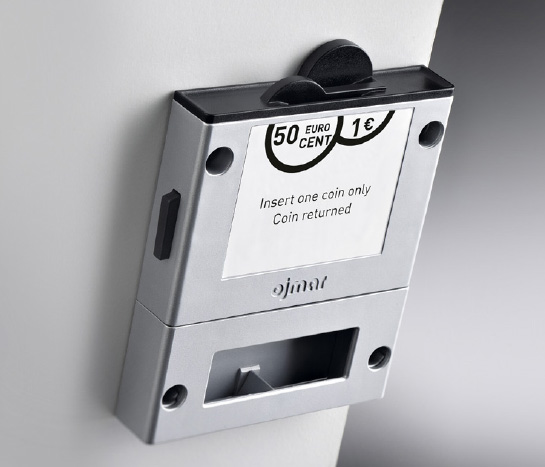
Adjustable coin locks give locker operators something that fixed-denomination coin locks cannot: the ability to change the coin or compatible token used by the locker without automatically replacing the complete locking system.
For leisure centres, swimming pools, gyms, schools, universities and other shared facilities, that flexibility can significantly extend the useful life of a locker installation. A site may use one coin denomination today, change its refundable deposit later, standardise several facilities around another coin, or move towards a compatible token system.
Instead of making the accepted coin a permanent decision at the point of installation, an adjustable mechanism keeps that part of the locker specification flexible.
This guide concentrates specifically on adjustable coin locks. For the wider differences between return, retain and token-operated systems, see our coin-operated locker locks UK guide. If you are comparing coin locks with keys, combinations, PIN or RFID access, use our broader locker locking systems guide.
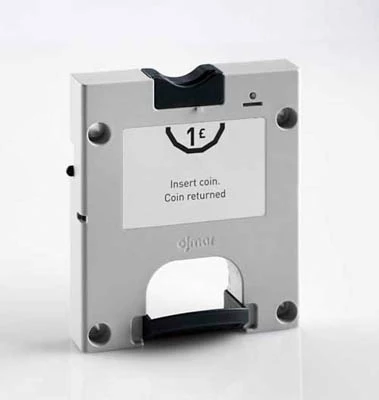
Quick Answer: What Is the Main Benefit of an Adjustable Coin Lock?
The main benefit is future flexibility. A fixed coin lock is configured around a particular denomination. If the organisation later wants its users to insert another coin, the lock may need to be converted or replaced.
An adjustable Ojmar coin lock allows the accepted denomination to be changed where the alternative coin is compatible with the adjustment range. Total Locker Service supplies adjustable Ojmar coin locks whose denomination can be altered using the appropriate adjustment template and a screwdriver without removing or dismantling the complete lock.
That distinction becomes increasingly important as the size of the locker installation grows. Altering 200 existing mechanisms is a very different project from purchasing, removing and replacing 200 complete locks.
What Is an Adjustable Coin Lock?
A coin-operated locker lock requires the user to insert the specified coin or token as part of the locking process. Depending on the system, the deposit may be returned when the locker is released or retained by the operator.
With a fixed-denomination coin lock, the mechanism is configured for a particular coin. With an adjustable coin lock, the recognition mechanism can be reset for another compatible denomination.
Ojmar’s adjustable OMS Classic system supports coins with diameters from approximately 21 mm to 28 mm. The mechanism still needs to be configured for the intended denomination, so this does not mean every coin or token within that diameter range can simply be inserted without adjustment.
The current Ojmar coin-lock range from Total Locker Service includes selectable 20p, 50p and £1 configurations together with fixed and adjustable versions, coin return and coin collect operation, and wet-area and dry-area options.
Fixed Coin Lock vs Adjustable Coin Lock
| Consideration | Fixed coin lock | Adjustable coin lock |
|---|---|---|
| Initial denomination | Configured for a particular coin | Configured for the required coin |
| Future denomination change | May require conversion or replacement | Can be adjusted where the alternative coin is compatible |
| Removing complete lock to change denomination | Depends on lock and conversion | Not required on the adjustable Ojmar system |
| Long-term flexibility | Lower | Higher |
| Multi-site standardisation | More difficult if sites use different denominations | Easier where compatible adjustable locks are installed |
| Future compatible token use | Depends on fixed mechanism | Potential option subject to compatibility |
If you are still deciding whether a coin lock is appropriate at all, compare it with other commercial locker lock types before selecting the denomination.
1. Change the Coin Without Replacing the Complete Lock
This is the strongest reason for specifying an adjustable coin lock.
A commercial locker installation may remain serviceable for many years. During that period, however, the way the facility operates can change considerably.
A leisure centre may originally specify a £1 refundable deposit because that denomination is convenient for users. Several years later, management may decide another denomination is more appropriate. A group of leisure centres may also decide to standardise different sites around one locker policy.
With a compatible adjustable Ojmar lock, changing that policy does not automatically require a new mechanism on every locker door.
The coin setting can be altered using the correct adjustment template and a screwdriver while the main lock remains fitted to the locker.
This turns what might otherwise become a major replacement programme into a controlled adjustment exercise.
2. Protect the Locker Installation Against Future Currency Changes
Locker installations commonly remain in service much longer than individual operating policies or payment habits.
A fixed coin mechanism links part of the locker specification to the denomination selected when the installation was purchased. An adjustable mechanism reduces that dependency.
This does not mean that an adjustable lock can accommodate every future UK coin automatically. Diameter and other physical characteristics still have to fall within the mechanism’s operating limits. However, adjustability creates substantially more scope for change than a permanently fixed denomination.
For organisations planning the whole-life cost of their lockers, this is a more useful way to evaluate the lock than considering only its initial purchase price.
3. Change the Refundable Deposit as User Behaviour Changes
The most convenient locker deposit today may not remain the most convenient throughout the life of the installation.
In a coin-return system, the deposit is normally intended to encourage users to complete the locker-use cycle rather than generate income. The user inserts the required coin, secures the locker and gets the coin back when the locker is released correctly.
If users stop routinely carrying a particular denomination, however, the deposit can become inconvenient rather than useful.
An adjustable mechanism gives the operator a route to change that requirement while continuing to use the existing lockers and lock bodies.
4. Move to a Compatible Token System
Some facilities prefer not to depend on circulating currency at all and instead issue their own locker tokens.
A token system can be useful where reception already issues access items, where visitors cannot be expected to carry the correct UK coin, or where the organisation wants the locker system to operate independently of future currency changes.
An adjustable coin mechanism can offer additional flexibility if a suitable token falls within the lock’s adjustment capabilities.
Compatibility should nevertheless be confirmed before buying large quantities of tokens. Diameter alone is not sufficient evidence that an arbitrary token will operate correctly.
For the broader differences between deposit, retain and token systems, see Coin Operated Locker Locks UK: Return vs Retain Systems Explained.
5. Standardise Different Locker Areas
Locker estates are often built up over several refurbishment programmes rather than installed as one uniform project.
A leisure centre might have separate locker banks in:
- swimming changing rooms;
- fitness changing rooms;
- staff areas;
- sports halls;
- visitor facilities;
- areas added during later extensions.
That can leave the site with different coin denominations or operating arrangements across different parts of the building.
Where compatible adjustable locks are present, the organisation may be able to bring those areas onto a common denomination without replacing every complete lock.
Standardisation can simplify:
- customer signage;
- reception instructions;
- staff training;
- maintenance procedures;
- spare-part identification;
- token or coin availability;
- future refurbishment planning.
6. Simplify Multi-Site Locker Management
The same principle becomes more valuable when an organisation operates several sites.
Different leisure centres may have been opened or acquired at different times and may therefore contain different locker configurations. If compatible adjustable coin locks are already installed, the estate can potentially be moved towards a common standard gradually.
This is particularly useful when the objective is to standardise operations without carrying out a complete locker replacement programme at every location simultaneously.
7. Reduce the Number of Different Replacement Locks Required
Maintenance teams need to identify and stock replacement parts for the locker systems they manage.
Where several fixed denominations are installed, different coin mechanisms may need to be treated as separate replacement items.
An adjustable strategy can reduce that fragmentation because compatible adjustable mechanisms can be configured for the denomination required at the particular site.
If you are dealing with an unknown existing coin lock, identify it before ordering. Our locker lock identification guide explains what to photograph and record, while the main replacement locker locks page shows the wider range of available lock types.
8. Retain Serviceable Lockers Instead of Replacing Them
A change in locker operating policy does not necessarily mean the locker itself has reached the end of its useful life.
If the locker carcase, door, hinges and surrounding components remain serviceable, changing or adjusting the locking arrangement can be more economical than replacing complete banks of lockers.
Total Locker Service supplies replacement Ojmar coin locks, Ojmar V Series replacement coin-lock cylinders and a wider range of replacement locker locks.
This makes it possible to treat the locker as a maintainable assembly rather than one product that has to be discarded whenever one component no longer suits the site’s requirements.
For the broader replacement process, see our locker lock replacement guide.
9. Coin Return Helps Support Shared Locker Turnover
Coin-return operation is especially useful where lockers are intended for temporary shared use rather than permanent assignment.
A visitor inserts the required deposit and uses the locker for the duration of the visit. When the locker is released normally, the deposit is returned.
This creates an incentive to finish the locker-use cycle and can help discourage users from treating shared lockers as permanently allocated personal storage.
Typical applications include:
- swimming pools;
- leisure centres;
- gyms;
- health clubs;
- sports centres;
- visitor changing areas;
- university sports facilities.
For complete locker installations rather than replacement locks, see our coin-operated lockers for gyms, pools and leisure centres.
10. Coin Collect Provides a Different Operating Model
Not every organisation wants to return the deposited coin. Where locker use is charged, a coin-collect system allows the payment to be retained.
The current Ojmar range includes coin-return and coin-collection configurations. This means the operator can consider two separate questions:
- What coin or compatible token should operate the locker?
- Should that deposit be returned or retained?
Adjustability concerns the first question. Return or collect operation concerns the second.
Keeping those decisions separate makes the locker specification clearer and avoids confusing coin denomination with the facility’s charging policy.
11. Wet-Area Adjustable Coin Locks
Swimming pools and wet changing rooms require locks specified for a harsher environment than normal dry changing areas.
Humidity, water, cleaning chemicals and frequent use all affect the lock specification.
The Ojmar coin-lock range supplied by Total Locker Service includes dry-area and wet-area variants, together with standard and higher-security wet-area key options.
Wet-area suitability should therefore be specified independently from coin adjustability. Do not assume that a lock is suitable for a swimming-pool environment simply because the coin mechanism itself is correct.
If you are comparing locks specifically for gyms and leisure environments, see our locker locks for gyms and leisure centres guide.
12. Removable Cylinders Extend Serviceability
Coin denomination is only one part of the lock’s long-term maintainability.
Ojmar coin locks use removable cylinders, allowing the cylinder to be replaced separately where appropriate instead of automatically replacing the complete coin mechanism.
Total Locker Service supplies replacement Ojmar V Series coin-lock cylinders as well as the complete Ojmar locker lock range.
This means several different maintenance issues can be treated separately:
- change the coin denomination;
- replace a worn or damaged cylinder;
- order replacement keys;
- service the coin mechanism;
- replace one damaged lock;
- retain the surrounding locker installation.
13. Manual Coin Release Helps with Incorrect Coins
Public locker systems inevitably encounter occasional incorrect operation.
Users can insert the wrong denomination, an unsuitable token or another object into the coin mechanism. The Ojmar coin locks supplied by Total Locker Service incorporate a lever intended to assist with releasing jammed coins.
For a busy leisure facility this is a practical maintenance advantage because staff can potentially return the locker to service without immediately dismantling the complete locking mechanism.
14. Adjustable Locks Support Phased Locker Refurbishment
Large locker estates are frequently refurbished in phases rather than replaced in one project.
Damaged locks may be replaced first. Cylinders may be changed later. Doors, benches, locker numbering or other components may be renewed as budgets and operational requirements allow.
An adjustable coin lock fits this approach because the organisation can replace failed mechanisms with adjustable versions while continuing to use the current denomination.
If the site later decides to change the deposit coin, those adjustable locks can potentially be reset rather than replaced again.
This separates two decisions that do not necessarily need to happen at the same time:
- when the physical lock needs replacing;
- when the organisation wants to change its coin policy.
15. Lower Whole-Life Cost Can Matter More Than Initial Lock Price
The least expensive lock on the day it is purchased is not necessarily the least expensive system across the life of the locker installation.
When comparing fixed and adjustable coin locks, consider what would happen if the denomination had to change several years later.
A complete replacement programme can involve:
- new lock mechanisms;
- maintenance labour;
- removal of existing locks;
- installation time;
- locker downtime;
- new signage;
- new maintenance stock;
- disposal of serviceable components;
- possible changes to keys or cylinders.
An adjustable mechanism potentially avoids much of this work if the required future coin is compatible.
That is why adjustable coin locks make particular sense where lockers are being specified as long-term commercial assets rather than treated as disposable equipment.
Where Are Adjustable Coin Locks Most Useful?
Swimming Pools and Leisure Centres
Swimming pools and leisure centres are among the strongest applications because lockers are generally shared, turnover is high and installations can remain in service for many years.
A wet-area adjustable coin lock allows the locker system to remain mechanically straightforward while preserving the option to change the deposit denomination later.
Gyms and Fitness Centres
Gyms may change membership processes, changing-room layouts and access policies during the life of their lockers. An adjustable coin mechanism means a denomination change does not automatically force the operator towards complete lock replacement.
Universities and Colleges
Sports facilities, visitor changing areas and other shared university environments can use coin-operated locks where compartments need to return to general availability after each user.
Schools
Coin locks are not normally the first choice for permanently assigned pupil lockers, where keyed, hasp or combination systems may make more sense. However, coin operation can be useful for temporary shared changing-room or sports-facility storage.
Multi-Site Leisure Operators
Adjustability becomes particularly valuable where an organisation manages several locker estates and wants to standardise their operating policy over time without replacing every lock simultaneously.
Example: Changing 200 Lockers to Another Denomination
Consider a changing room containing 200 coin-return lockers.
The locker carcases and doors remain in good condition, but management decides that the existing deposit denomination is no longer convenient for users.
With a fixed mechanism that cannot be economically converted, the project may become a 200-lock replacement programme.
That can involve sourcing the replacement locks, removing the existing mechanisms, fitting the new units and checking every door afterwards.
Where compatible adjustable Ojmar locks have already been installed, the work becomes primarily an adjustment programme. Each mechanism can be reset with the correct template, tested with the new denomination and given updated user identification.
The locker doors, carcases and otherwise serviceable lock mechanisms remain in use.
That is the real commercial advantage of adjustability.
Adjustable Coin Lock vs Electronic Locker Lock
An adjustable mechanical coin lock is not automatically preferable to an electronic system. The two approaches solve different operational problems.
| Requirement | Adjustable coin lock | Electronic or RFID lock |
|---|---|---|
| Simple temporary locker use | Strong fit | Possible |
| No batteries at the lock | Yes | Depends on system |
| Refundable physical deposit | Yes | Normally not required |
| Change compatible coin denomination | Yes | Not applicable |
| Staff cards, wristbands or fobs | No | Available on suitable systems |
| Electronic audit records | No | Available on suitable systems |
| Central software management | No | Available on suitable systems |
| Simple standalone operation | Yes | Depends on product |
Where you need to compare all the main access technologies, use our Locker Locks UK guide. You can also browse the complete locker lock range or the specialist Ojmar locker lock range.
What Should You Check Before Ordering an Adjustable Coin Lock?
Adjustability is important, but it is only one part of the specification. Before ordering, establish:
- whether the lockers are in a wet or dry environment;
- the coin denomination required now;
- likely future denomination requirements;
- whether a token system might be required later;
- whether the coin should be returned or collected;
- the existing lock manufacturer and model;
- door handing where relevant;
- door thickness and construction;
- the existing lock footprint and fixing arrangement;
- the cylinder and key system required;
- management or emergency access requirements;
- the total quantity of locks involved.
For existing lockers, photographs of the complete lock, front plate, rear mechanism, cylinder number and locker door can help establish the correct replacement. See How to Identify a Locker Lock before placing a bulk order.
Do Not Choose the Coin Denomination in Isolation
The correct denomination is ultimately a user-experience decision as well as a mechanical one.
Consider who uses the lockers and how those users arrive at the site.
A denomination regularly carried by local gym members may work well in one facility but be inconvenient at a tourist attraction or public swimming pool. A token may be logical where reception already controls admission but create unnecessary administration where completely independent locker access is required.
The advantage of the adjustable lock is that the first decision does not necessarily have to remain the final decision for the entire life of the locker.
How Is the Coin Setting Changed?
The adjustable Ojmar coin locks supplied by Total Locker Service are designed so the denomination can be altered without removing or dismantling the complete lock.
The adjustment requires the appropriate denomination template and a screwdriver.
This is an important distinction. An adjustable coin lock is not a mechanism that automatically recognises any coin placed into it. It is a lock that can be deliberately reset for another compatible denomination.
After adjustment, each lock should be tested using the intended coin. Any denomination labels and user instructions should also be changed so that the signage matches the physical lock setting.
Why Adjustability Matters More as the Locker Estate Gets Larger
For one locker, the difference between adjusting and replacing a lock is relatively small.
Across 50 lockers, it becomes more noticeable.
Across 500 lockers or several sites, it becomes an estate-management issue.
This is why adjustable coin locks should be evaluated at system level rather than simply as individual pieces of hardware.
The larger the estate, the more valuable it becomes to separate the useful life of the physical hardware from the site’s current coin policy.
Adjustability Is Really About Preserving Options
The most important benefit of an adjustable coin lock is therefore not simply that the mechanism can be changed from one coin to another.
Its real benefit is that the organisation retains more options during the life of the locker installation.
- The denomination can potentially be changed.
- A compatible token can potentially be introduced.
- Different locker areas can be standardised.
- Existing lockers can remain in service.
- Replacement-lock stock can be simplified.
- Refurbishment can be phased.
- Future operating-policy changes do not automatically require complete lock replacement.
That makes adjustability particularly relevant for facilities looking at whole-life locker cost rather than only initial lock price.
Ojmar Adjustable Coin Locks from Total Locker Service
Total Locker Service supplies Ojmar adjustable coin-operated locker locks for new installations, replacements and refurbishment projects.
The current range includes fixed and adjustable configurations, coin return and coin collect operation, selectable coin denominations, and versions for wet and dry environments.
You can also:
- browse all replacement locker locks;
- view the wider Ojmar locker lock range;
- order replacement Ojmar V Series cylinders;
- compare complete coin-operated locker systems;
- read the coin-operated locker lock guide.
If you are replacing an existing coin lock and are uncertain about the model, send clear photographs of the front and rear mechanism, cylinder markings and locker door before ordering. Matching the existing installation first is considerably easier than correcting an incompatible lock after a bulk order has been placed.
Frequently Asked Questions About Adjustable Coin Locks
What is an adjustable coin lock?
An adjustable coin lock is a mechanical locker lock whose coin mechanism can be configured for different compatible coin denominations rather than remaining permanently fixed to one denomination.
What size coins can an adjustable Ojmar coin lock use?
The adjustable Ojmar OMS Classic is designed for compatible coins with diameters of approximately 21 mm to 28 mm. The mechanism must still be correctly adjusted for the intended denomination.
Can an Ojmar adjustable coin lock be changed to another denomination?
Yes, where the proposed denomination is compatible with the adjustable mechanism. The setting can be changed using the appropriate adjustment template and a screwdriver.
Do you need to remove an adjustable Ojmar coin lock to change the denomination?
No. The adjustable Ojmar coin locks supplied by Total Locker Service allow the coin setting to be changed without removing or dismantling the complete lock.
Can adjustable coin locks use tokens?
A suitable compatible token may be possible, but compatibility should be checked before tokens are purchased or an existing locker installation is changed. Diameter alone does not prove that a token will work correctly.
Are adjustable coin locks available for swimming-pool lockers?
Yes. Ojmar coin locks are available in wet-area as well as dry-area specifications. The correct environmental version should be selected for swimming pools and wet changing rooms.
What is the difference between coin return and coin collect?
A coin-return lock returns the deposited coin after the normal locker-use cycle. A coin-collect lock retains the coin where the operator charges for locker use.
Why choose an adjustable coin lock instead of a fixed coin lock?
The principal advantage is future flexibility. If the site’s preferred denomination changes, a compatible adjustable mechanism can be reset rather than automatically requiring replacement of the complete coin lock.
Can an Ojmar coin-lock cylinder be replaced separately?
Yes. Ojmar coin locks use removable cylinders, allowing compatible cylinders to be replaced independently of the complete coin mechanism.
Where can I buy adjustable Ojmar coin locks in the UK?
Total Locker Service supplies adjustable Ojmar coin locks, replacement cylinders, complete coin-operated lockers and other commercial locker locking systems in the UK.
Conclusion: A Small Specification Choice Can Avoid a Large Future Replacement Job
Coin locks are mechanically straightforward, but choosing between a fixed and adjustable mechanism can have consequences many years after the lockers are installed.
An adjustable coin lock gives a facility room to respond if the preferred deposit changes, several locker areas need to be standardised or a compatible token becomes more appropriate than the original coin.
With the adjustable Ojmar system, the denomination can be changed without removing the complete lock, provided the proposed coin is compatible and the correct adjustment equipment is used.
Across a large commercial locker installation, that can mean the difference between adjusting an existing asset and replacing hundreds of otherwise serviceable locks.
View Ojmar adjustable coin locks, compare our complete coin-operated lockers, or browse the wider locker lock range.
Discover more from Blog Total Locker Service
Subscribe to get the latest posts sent to your email.