School Lockers UK Guide: Sizes, Materials, Layouts and Locks
March 12, 2026
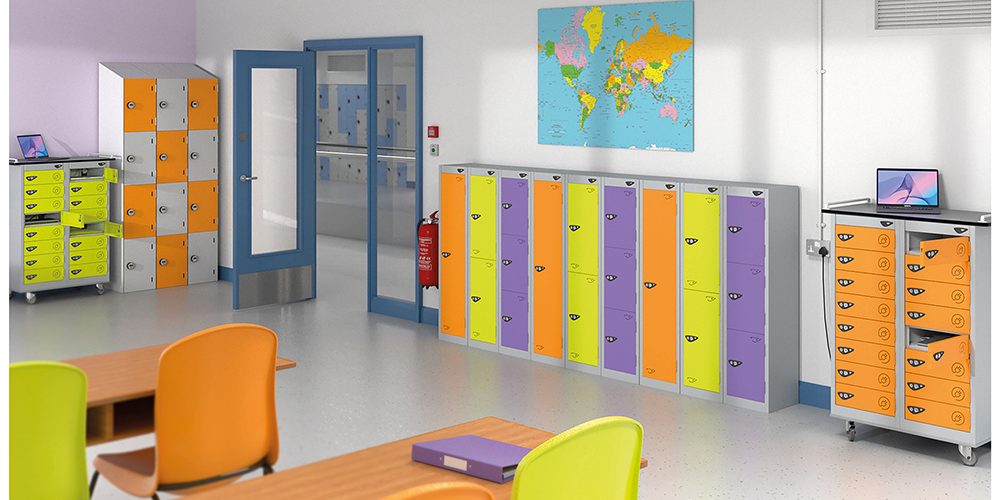
Choosing school lockers involves more than selecting a cabinet size or door colour. Schools need to consider pupil age, storage requirements, available space, locking systems, maintenance and how each locker installation will be used.
This guide explains how to plan school locker storage for UK primary schools, secondary schools, academies, sixth forms and colleges. It covers compartment sizes, materials, corridor layouts, PE changing rooms, accessibility, security, installation and ongoing management.
Ready to compare products? Visit our School Lockers UK range for available locker configurations, product options and quotations.

How to Plan School Lockers
A successful school locker installation begins with a clear understanding of who will use the lockers, what they need to store and when they will access them.
- Users: Identify whether the lockers are for primary pupils, secondary pupils, sixth-form students, teachers or other staff.
- Allocation: Decide whether each user receives an assigned compartment or lockers are shared.
- Belongings: Measure bags, books, folders, coats, PE kit and any electronic equipment.
- Location: Assess corridors, classrooms, cloakrooms, changing rooms and other proposed positions.
- Access: Consider how many pupils will open their lockers simultaneously.
- Management: Decide who will administer keys, combinations, allocations and maintenance.
- Installation: Check delivery access, fixing requirements and the school’s preferred installation period.
Schools should establish these requirements before selecting individual locker models. This reduces the risk of purchasing compartments that are too small, choosing an unsuitable lock or creating congestion around locker banks.
Choosing School Locker Sizes
School locker dimensions should reflect the belongings pupils actually carry rather than their age alone. A younger pupil storing a coat and book bag may need a different compartment from a secondary pupil carrying textbooks, sportswear and a large school bag.
| User group | Typical storage | Planning approach |
|---|---|---|
| Primary pupils | Coats, book bags, lunch boxes | Consider low-height lockers and easily reached compartments |
| Secondary pupils | School bags, books, PE kit, coats | Measure typical bags and compare multi-tier compartment sizes |
| Sixth-form students | Folders, laptops, books, larger bags | Consider larger compartments or suitable device storage |
| Teachers and staff | Coats, bags, workwear, personal belongings | Consider full-height or garment-style compartments where required |
How to Check Compartment Dimensions
Measure the largest typical item that pupils need to store. Check its height, width and depth, allowing space for handles, straps, other belongings and practical loading and unloading.
Compare these measurements with the manufacturer’s usable internal compartment dimensions. Overall locker dimensions do not necessarily represent the space available inside each compartment.
For example, a locker described as 300 mm wide may have less than 300 mm of usable internal width because of its construction. Shelves, doors, hinges and locking components can also affect usable space.
Where possible, test representative school bags and equipment against the intended compartment before committing to a large installation.
How Many School Lockers Are Needed?
The number of compartments required depends on pupil numbers, allocation policy and whether storage is permanently assigned or shared.
For assigned lockers: start with the number of users requiring individual storage. For shared lockers, calculate the maximum number of simultaneous users rather than simply dividing the total number of pupils by a chosen ratio.
Worked Example: Planning 120 Pupil Lockers
Consider a hypothetical secondary-school project requiring 120 individually assigned compartments.
| Planning item | Example |
|---|---|
| Pupils requiring storage | 120 |
| Compartments per locker column | 4 |
| Locker columns required | 30 |
| Nominal column width | 300 mm |
| Nominal combined bank length | 9,000 mm |
In this example, 120 compartments require 30 four-door locker columns. At a nominal width of 300 mm per column, the combined locker-bank length is approximately 9 metres.
Important: This is an illustrative calculation, not an installation specification. It excludes any additional overall dimensions, end panels, gaps, structural features, access clearances and practical subdivision of the lockers into separate banks.
The columns could be distributed across several locations rather than installed in one continuous run. Actual compartment dimensions, fixing arrangements and usable circulation space must be checked against the selected product and building layout.
Schools should also consider future enrolment changes, damaged compartments, temporary allocations and whether a small number of additional lockers would be useful.
Planning School Corridor Locker Layouts
Corridor locker installations require more planning than simply measuring an available wall. Pupils need room to approach, open and use their lockers while other people continue moving through the building.
- Measure the available wall length and corridor width.
- Account for the full depth of the proposed locker.
- Allow for locker doors when fully opened.
- Consider pupils standing, bending or placing bags in front of compartments.
- Assess congestion during lesson changes and break periods.
- Keep classroom entrances, stairways and fire doors clear.
- Maintain suitable access for cleaning and maintenance.
- Check accessibility requirements and circulation routes.
- Review the proposed layout against the school’s fire strategy and building requirements.
Worked Example: Corridor Space
Imagine an existing corridor measuring 2,400 mm across, with a proposed locker bank 300 mm deep on one side.
The nominal remaining corridor width would be 2,100 mm before accounting for projecting doors, handles, pupils using lockers or other obstructions.
This calculation demonstrates why corridor width alone cannot determine whether the installation is suitable. The project must also account for actual open-door projection, simultaneous pupil use, accessibility, escape provisions and the building’s approved circulation strategy.
Do not interpret this example as a recommended or compliant minimum corridor width. Project-specific requirements should be confirmed with the school and relevant building or fire-safety professionals.
For broader layout principles, see our Locker Room Layout and Planning Guide.
School Locker Materials: Steel, Laminate and Plastic
Locker material affects durability, cleaning, appearance, resistance to moisture and long-term maintenance. The most appropriate construction depends on where the lockers will be installed.
| Material | Typical application | Main consideration |
|---|---|---|
| Powder-coated steel | Dry corridors, classrooms and staff areas | Practical, durable storage with a broad choice of configurations |
| Steel with laminate doors | Sixth forms and higher-specification interiors | Decorative finishes and door construction |
| Plastic | Selected damp, wet or corrosion-sensitive environments | Moisture resistance of the complete locker system |
| Specialist construction | Outdoor and demanding locations | Manufacturer suitability for the actual exposure |
Standard powder-coated steel is often a practical starting point for dry internal school environments. Laminate doors may be appropriate where appearance and door characteristics are important. Suitable plastic systems can be considered where moisture resistance is a priority.
Material descriptions alone are insufficient. Check the complete locker construction, including doors, frames, locks, hinges and fittings.
Read our Locker Materials Guide: Steel vs Laminate vs Plastic for a more detailed comparison.
Choosing School Locker Locks
A suitable school locker locking system should provide appropriate security while remaining manageable for pupils, teachers and site staff.
| Lock type | Typical application | Management consideration |
|---|---|---|
| Keyed cam lock | Assigned pupil or staff storage | Key issue, loss, replacements and authorised override |
| Hasp lock | Padlock-operated storage | Padlock policy and abandoned locks |
| Mechanical combination | Keyless assigned lockers | Forgotten codes and authorised reset procedures |
| Electronic PIN | Selected assigned or shared-use installations | Batteries, codes, override and administration |
| RFID | Compatible card-based access systems | Credential compatibility, permissions and management |
Schools choosing keyed locks should establish a consistent process for issuing keys, obtaining replacements and managing authorised access. Schools choosing combinations or electronic systems should establish reset and override procedures before installation.
For a detailed comparison, read our Locker Locking Systems Guide. Existing installations can also use our Replacement Locker Keys service.
Primary School Lockers and Cloakroom Storage
Primary-school locker planning often focuses on accessible storage for coats, book bags, lunch boxes and personal items. Position and compartment accessibility may be more important than maximising the number of doors within each locker column.
- Choose compartments appropriate for the age and reach of pupils.
- Consider how easily pupils can operate doors and locks.
- Plan around supervision and classroom routines.
- Keep loose bags away from main walking routes.
- Allow staff to identify and manage individual compartments.
Where younger pupils need frequent access to belongings, the most densely configured locker is not necessarily the most practical choice.
PE and School Changing-Room Lockers
School PE changing rooms can experience concentrated use before and after lessons. Pupils may need to store school uniforms, sportswear, trainers, coats, bags and personal items at the same time.
When planning changing-room lockers, consider the relationship between compartment size, ventilation, bench positions and movement space. A locker that accommodates ordinary books and bags may not provide sufficient usable space for bulky sports equipment or footwear.
Moisture and ventilation should also be considered. Regularly damp clothing and footwear can create odours and increase cleaning demands.
For seating options, see our Changing-Room Bench Seating range.
School Laptop and Tablet Charging Lockers
Schools managing shared laptops and tablets may require secure charging storage rather than ordinary compartments. Charging lockers combine controlled access with a suitable internal power arrangement.
- Confirm the number and type of devices requiring storage.
- Measure devices together with protective cases.
- Check charger, cable and socket requirements.
- Establish who can access the devices.
- Consider ventilation and the manufacturer’s charging instructions.
- Check the electrical and installation requirements of the selected unit.
A standard unpowered locker should not be assumed suitable for charging equipment. For the technical explanation, see How Charging Lockers Work.
Accessibility and Inclusive School Locker Planning
Schools should consider accessibility as part of the original locker specification rather than leaving adjustments until after installation.
- Consider the height and reach of allocated compartments.
- Assess whether lock controls are suitable for the intended users.
- Allow appropriate approach and manoeuvring space.
- Consider pupils who cannot comfortably use high or low compartments.
- Check whether particular users need alternative access arrangements.
- Coordinate the proposed layout with the school’s accessibility requirements.
Different pupils may require different compartment positions or operating arrangements. The appropriate specification should reflect individual requirements and relevant building-access provisions.
School Locker Fire and Building Considerations
Where school lockers are proposed for corridors, escape routes or other sensitive locations, the installation should be reviewed against the building’s fire strategy and relevant requirements.
Schools should not assume that every locker product is suitable for every circulation area. Fire-performance requirements, obstruction risks, fixing methods and available escape widths depend on the particular building and installation.
Confirm any required product performance evidence and obtain appropriate approval before ordering or installing lockers in sensitive locations.
School Locker Numbering and Allocation
Clear numbering makes school lockers easier to allocate, maintain and manage. A consistent identification system is particularly useful for larger installations containing several locker banks or floors.
Schools may find it useful to record the locker number, physical location, user allocation, lock information and maintenance history in one controlled register.
Read our Locker Numbering and Labelling Guide for practical identification methods.
Cleaning and Maintaining School Lockers
School lockers should be included in routine site cleaning and maintenance arrangements. Frequent use, lost keys, damaged doors and accumulated belongings can create problems when compartments are not inspected regularly.
- Clean locker exteriors and frequently touched surfaces.
- Arrange periodic compartment clear-outs under school procedures.
- Check locks, keys, hinges and door operation.
- Keep ventilation openings clear.
- Inspect locker numbering and replace missing labels.
- Check for loose fixings or damaged components.
- Record faults and arrange repairs where necessary.
For routine care, see our Locker Cleaning and Maintenance Guide. For component issues, use our Locker Parts, Repairs and Servicing Guide.
Planning Delivery and Installation
School locker projects should account for delivery and installation requirements before an order is placed. Large locker banks may involve restricted access, narrow corridors, stairways, lifting arrangements and limited working periods.
- Confirm product dimensions and quantities.
- Measure entrances, corridors, lifts and other delivery routes.
- Check whether lockers require assembly or nesting on site.
- Confirm any wall or floor fixing requirements.
- Consider the effect of installation work on normal school activity.
- Identify suitable delivery and installation dates.
- Check unloading arrangements and site restrictions.
- Confirm whether installation forms part of the quotation.
For larger projects, a documented layout and clear installation specification can help identify problems before the lockers arrive.
School Locker Planning Checklist
Before finalising a school locker specification, confirm the following:
- Number of pupils or staff requiring storage.
- Assigned or shared-use allocation.
- Typical contents of each compartment.
- Required usable internal dimensions.
- Number of compartments per locker column.
- Overall available wall length and floor area.
- Circulation space and open-door clearances.
- Locker material and environmental suitability.
- Lock type and administration procedures.
- Numbering and identification requirements.
- Accessibility arrangements.
- Fire and building requirements.
- Maintenance and cleaning access.
- Delivery and installation requirements.
Once these requirements are understood, they can be used to compare suitable products and request a quotation.
School Locker Planning FAQs
What size lockers should schools choose?
The correct size depends on pupil age, belongings and location. Schools should measure representative bags, books, coats and PE equipment, then compare those measurements with the usable internal dimensions of available compartments.
Are two-door or four-door lockers better for schools?
Neither configuration is universally better. Two-door lockers generally provide larger individual compartments within a column of the same height, while four-door lockers provide more compartments within the same nominal footprint. The decision should reflect storage needs and accessibility.
Can school lockers be installed in corridors?
Corridor installations may be suitable where the layout, access, fire strategy and building requirements allow. Schools need to consider locker depth, open doors, pupil congestion, supervision and available circulation space before confirming the installation.
Which school locker material is best?
Powder-coated steel is a practical option for many dry school environments. Laminate-door lockers can offer different finishes and door characteristics, while suitable plastic lockers may be preferable in moisture-prone areas. Always check the complete product specification.
Are combination locks suitable for pupils?
Combination locks can provide keyless access, but schools need procedures for forgotten codes, allocation changes and authorised opening. The suitability of the lock depends on the age of users and how the system will be administered.
How many lockers does a school need?
For individually assigned storage, the number of compartments will normally start with the number of users requiring lockers. Shared-use schemes should be calculated around maximum simultaneous demand, operating rules and available capacity.
Should school lockers have sloping tops?
Sloping tops may help discourage the storage of bags, litter and other loose items above locker banks. Their suitability depends on the installation location, available height, cleaning requirements and product configuration.
Next Step: Compare School Locker Products
Once the required compartment sizes, layout, materials and locking method have been established, the next step is to compare available products and prepare a specification for quotation.
Visit our School Lockers UK product page to explore available options and discuss a school locker project with Total Locker Service.
Discover more from Blog Total Locker Service
Subscribe to get the latest posts sent to your email.