School Lockers Guide: Choosing the Right Lockers for UK Schools
March 12, 2026
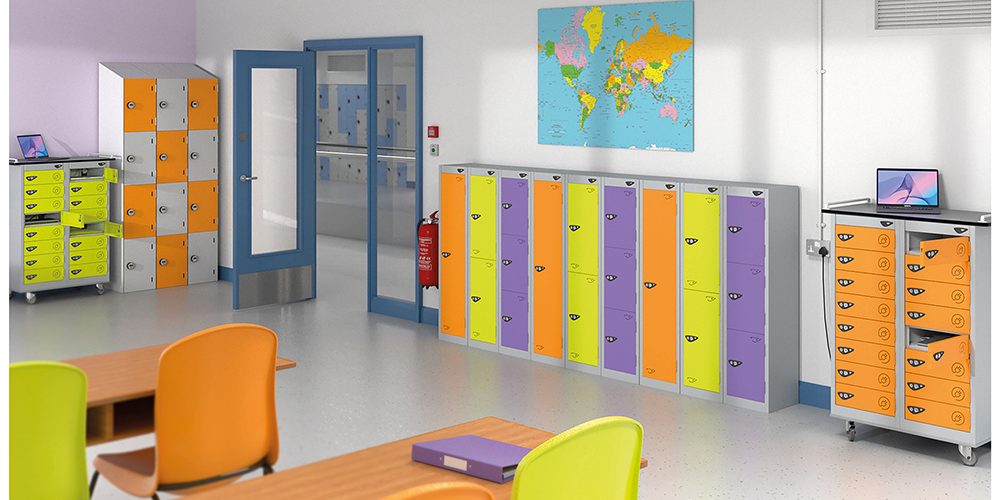
Choosing school lockers starts with understanding what pupils need to store, where the lockers will be installed and how they will be used during the school day. A locker suitable for a primary-school cloakroom may be very different from one required in a secondary-school corridor, PE changing room, sixth-form area or device-storage room.
The main decisions are pupil age, storage requirement, compartment size, locker configuration, material, lock type, available space and the number of pupils likely to access the lockers at busy times. Schools should also consider cleaning, maintenance, supervision and how replacement keys, locks and parts will be managed.
This guide explains how to choose lockers for UK primary schools, secondary schools, academies, colleges and sixth-form environments. It focuses on selecting the physical lockers. For allocation records, key management, access control, termly administration and wider operational management, use our separate school locker systems guide.
If you already know what type of lockers you require and want to compare products, see our school locker range.
Quick Answer: How Do You Choose School Lockers?
- Identify the pupil or staff group using the lockers.
- List what they need to store.
- Measure representative school bags, PE kit or devices.
- Decide how much storage each user requires.
- Calculate how many compartments are needed.
- Choose an appropriate locker configuration.
- Select a material suitable for the location.
- Choose a manageable locking system.
- Check corridor, classroom or changing-room space.
- Consider busy lesson-change and break-time use.
- Plan cleaning, installation and maintenance.
- Check future availability of keys, locks and replacement parts.
Choose school lockers around what pupils actually carry and where the lockers will be used, rather than simply fitting the greatest possible number of doors into the available space.
School Locker Selection by Location
| School area | Typical storage | Main selection consideration |
|---|---|---|
| Primary-school cloakroom | Coats, book bags, lunch boxes and small belongings | Easy pupil access and sensible compartment size |
| Secondary-school corridor | Books, bags, coats and PE kit | Capacity, durability and movement at busy times |
| Classroom | Learning materials, bags and shared equipment | Compact storage close to teaching areas |
| PE changing room | Sportswear, shoes, bags and personal items | Compartment size, ventilation, benches and moisture |
| Sixth form | Folders, books, laptops and larger bags | Larger compartments and device storage |
| IT or device area | Laptops, tablets and charging equipment | Device dimensions, power and controlled access |
| Staff room | Coats, bags and personal belongings | Assigned storage and straightforward access |
Start with What Pupils Need to Store
Storage contents should determine the locker size and configuration.
Depending on the school and age group, lockers may need to accommodate:
- school bags and rucksacks;
- books and folders;
- coats;
- PE kit;
- trainers and sports footwear;
- lunch boxes;
- musical or specialist equipment;
- laptops and tablets;
- and personal belongings.
Measure representative large items rather than judging capacity from a photograph or external locker dimensions. A compartment that is suitable for books may still be too small for a normal pupil rucksack or PE bag.
Choosing School Lockers by Pupil Age
Pupil age can influence locker position, compartment size and the type of belongings being stored, but age should not be used as a substitute for checking the actual requirement.
| User group | Common storage requirement | Useful starting point |
|---|---|---|
| Primary pupils | Coats, book bags, lunch boxes and smaller personal items | Accessible low-height or compact storage |
| Secondary pupils | Rucksacks, books, coats and PE kit | Medium or larger compartments depending on belongings |
| Sixth-form students | Folders, books, laptops and larger bags | Larger compartments or device-storage options |
| Teaching and support staff | Coats, bags, work items and personal belongings | Assigned staff or garment lockers |
Avoid assuming that all younger pupils need one fixed locker size or that all older pupils require full-height lockers. Storage need, available space and the way the school operates should determine the final choice.
School Locker Configurations
Locker configuration determines how much storage each pupil receives and how many users can be served by one locker bank.
| Configuration | Typical school use | Main advantage |
|---|---|---|
| Single door | Coats, larger bags, staff storage and hanging garments | Maximum individual storage volume |
| Two door | Bags, books, coats and general student storage | Good balance of compartment size and capacity |
| Three or four door | Books, bags and smaller personal storage | More pupils served within the same locker bank |
| Five or six door | Compact personal storage | High compartment density |
| Specialist compartment lockers | Phones, devices or small valuables | Purpose-specific secure storage |
More doors are not automatically better. Increasing the number of compartments reduces the space available to each pupil.
For detailed dimensions and configuration planning, see our Locker Sizes and Dimensions Guide UK.
Single-Door School Lockers
Single-door lockers provide the greatest individual storage volume and can be useful where pupils or staff need to store coats, large bags, sports equipment or hanging garments.
The trade-off is capacity. One locker column serves one user rather than several pupils.
Two-Door School Lockers
Two-door lockers divide the locker column into two separate compartments and are often a practical compromise for secondary-school storage.
They can provide enough space for bags, books and clothing while accommodating more pupils within a fixed wall area than full-height lockers.
Multi-Tier School Lockers
Three, four, five and six-tier configurations increase the number of individual storage compartments.
They can work well where:
- storage requirements are relatively compact;
- large numbers of pupils need individual compartments;
- available wall space is limited;
- or the locker is intended for small personal items rather than coats and large bags.
Check representative school bags before choosing a high-tier configuration.
Choosing School Locker Materials
The locker material should be selected for its environment, expected level of use, cleaning requirements and appearance.
| Material | Typical school application | Main consideration |
|---|---|---|
| Steel | Corridors, classrooms, cloakrooms and general school storage | Durable and available in many configurations |
| Laminate door | Higher-specification interiors and visible student areas | Appearance combined with robust door construction |
| Plastic | Wet, humid or corrosion-sensitive areas | Moisture and corrosion resistance |
| Specialist locker construction | Outdoor, wet-area or application-specific locations | Match the product to the actual environment |
Steel School Lockers
Steel lockers are widely used throughout education because they are available in many heights, widths, depths and compartment configurations.
They can suit:
- secondary-school corridors;
- classrooms;
- cloakrooms;
- staff areas;
- PE changing rooms where the environment is suitable;
- and general pupil storage.
Durability still depends on the particular product, installation, environment and way the lockers are treated.
Laminate Door School Lockers
Laminate-door lockers can be useful where appearance and robust door surfaces are important.
They may suit sixth-form areas, newer school buildings, reception-adjacent storage or other locations where lockers form a visible part of the interior design.
Plastic School Lockers
Plastic lockers can be useful in wet, humid or corrosion-sensitive locations.
They should not be described as maintenance-free. Locks, hinges, doors, fixings and surrounding areas still require inspection and cleaning.
Choosing School Locker Locks
The best lock is the one the school can manage reliably.
| Lock type | Typical school use | Main management issue |
|---|---|---|
| Keyed cam lock | Assigned pupil or staff lockers | Key issue, loss and replacement |
| Padlock fitting | User-managed padlock access | Lost or abandoned padlocks |
| Mechanical combination | Keyless assigned storage | Forgotten codes and resets |
| Electronic PIN | Selected shared or controlled applications | Codes, batteries and administrator access |
| RFID | Sites with compatible cards or credentials | Credential compatibility and administration |
For the complete comparison, use our locker locking systems guide.
For school-wide allocation, master-key procedures, lost keys and termly locker administration, use our School Locker Systems UK guide.
School Corridor Lockers
Corridor lockers need more planning than a simple measurement of available wall length.
Consider:
- locker depth;
- open-door projection;
- pupils standing in front of lockers;
- classroom entrances;
- stairwells and junctions;
- busy lesson-change periods;
- cleaning access;
- supervision;
- and the building’s circulation and fire strategy.
A corridor may look wide enough when empty but become congested when several locker doors are open and pupils stop to change books or collect bags.
For the broader planning process, use our Locker Planning UK guide.
Plan for Busy Periods
School lockers are often used in concentrated bursts rather than evenly throughout the day.
Typical busy periods include:
- before registration;
- between lessons;
- before and after PE;
- break time;
- lunchtime;
- and the end of the school day.
Plan the locker position around these peak conditions rather than judging the space when the corridor or room is empty.
School PE and Changing-Room Lockers
PE and sports changing areas create a different storage requirement from normal classroom or corridor lockers.
Pupils may need space for:
- school uniform;
- PE kit;
- trainers;
- bags;
- coats;
- and personal belongings.
Changing areas can also experience moisture, high user turnover and short periods when a whole class needs access simultaneously.
Consider locker material, ventilation, compartment size, door opening, bench position and the space required for pupils to change.
For commercial seating options, see our changing-room bench seating.
School Lockers and Bench Seating
Benches can make PE changing rooms easier to use, but they also reduce available circulation space.
Plan lockers and benches together and check:
- whether locker doors can open fully;
- where pupils stand while using the locker;
- where bags will be placed;
- how pupils pass seated users;
- and whether the arrangement still works when the room is busy.
School Device and Charging Lockers
Laptops and tablets create a different requirement from ordinary pupil belongings.
For device storage, check:
- the largest device dimensions;
- protective cases;
- chargers and cables;
- the number of devices;
- whether devices are individually issued or shared;
- who requires access;
- and whether charging is required while stored.
If equipment needs power while stored, choose a purpose-designed charging product rather than treating a standard pupil locker as a charging locker. Our How Charging Lockers Work guide explains the distinction.
School Staff Lockers
Teachers, support staff, cleaners and site teams may have different storage needs from pupils.
Staff lockers may need room for:
- coats;
- bags;
- personal belongings;
- workwear;
- equipment;
- and footwear.
Do not automatically use the same multi-tier pupil locker throughout every area of the school if staff require larger assigned storage.
School Locker Accessibility and Reach
Locker position and compartment height should reflect the people who need to use them.
Consider:
- pupil age and height;
- reachable lock positions;
- lower compartments;
- door operation;
- clear space in front of the locker;
- and any specific individual access requirements identified by the school.
A high-capacity locker bank is not useful if a pupil cannot comfortably reach or operate the allocated compartment.
School Locker Fire and Building Considerations
Where lockers are installed in corridors, circulation areas or other sensitive locations, their position and specification should be considered alongside the school’s building and fire strategy.
Do not assume that one generic locker specification is automatically suitable for every corridor or school building. Confirm any project-specific fire-performance, access, circulation or fixing requirements before ordering.
Sloping Tops for School Lockers
Sloping tops can be useful where schools want to discourage bags, books, food packaging and other items from accumulating on top of locker banks.
They can make high locker runs easier to keep tidy and reduce inaccessible horizontal surfaces, although they are an option rather than a requirement for every installation.
School Locker Numbering
Clear locker numbering makes allocation, replacement keys, fault reporting and maintenance considerably easier.
For larger schools, keep the locker number associated with:
- location;
- pupil or user where assigned;
- key number where applicable;
- lock type;
- and repair history where useful.
The detailed operational process belongs in the School Locker Systems UK guide.
Cleaning School Lockers
School lockers should be positioned and specified so routine cleaning remains practical.
Consider:
- floor access;
- locker stands or plinths;
- door and handle surfaces;
- ventilation openings;
- the top of locker banks;
- and the manufacturer’s cleaning guidance for the selected material.
A particular material should not be described as maintenance-free simply because it resists corrosion or is easy to wipe clean.
School Locker Maintenance
Regular inspection can prevent small faults from turning into larger repair programmes.
Check:
- locks;
- keys;
- hinges;
- door alignment;
- cams and latches;
- number plates;
- loose fixings;
- damaged locker doors;
- and signs of repeated misuse or impact.
Keeping spare keys, suitable replacement locks and records of the installed locker ranges can make future maintenance quicker.
Repair or Replace Existing School Lockers?
A damaged key or lock does not necessarily mean the complete locker installation needs replacing.
Repair can remain practical where:
- cabinet bodies are sound;
- doors remain serviceable;
- hinges are in reasonable condition;
- replacement locks and keys are available;
- the lockers are still the correct size;
- and the layout continues to suit the school.
Replacement becomes more attractive where widespread structural damage, corrosion, unsuitable compartment sizes or changing school requirements make continued repair uneconomical.
Plan School Locker Installation Before Delivery
Before ordering a substantial quantity, check:
- delivery access;
- doorways;
- stairs and lifts;
- final locker positions;
- wall and floor conditions;
- the manufacturer’s installation requirements;
- school operating hours;
- and how the installation area will be kept clear while work is carried out.
Correct installation is important for stability and operation, but it should not be described as automatically making an installation compliant with every requirement. Suitability depends on the complete project.
School Locker Procurement: Compare the Same Specification
When comparing quotations, ensure each supplier is pricing substantially the same requirement.
- Number of compartments
- Overall dimensions
- Locker material
- Door configuration
- Lock type
- Colour and finish
- Numbering
- Sloping tops where required
- Stands or plinths
- Delivery
- Installation
- Replacement keys
- Master-key requirements
- Replacement-part support
A lower price for a substantially different locker specification is not a useful like-for-like comparison.
Common School Locker Selection Mistakes
- Choosing locker size without checking pupil bags.
- Maximising the number of doors at the expense of usable storage.
- Using the same compartment size for every school age group without checking need.
- Ignoring PE kit and sports footwear.
- Installing lockers in corridor pinch points.
- Planning the layout when corridors are empty rather than during lesson changeover.
- Ignoring open locker doors.
- Ignoring cleaning access.
- Choosing a lock the school cannot administer efficiently.
- Failing to plan replacement keys and master access.
- Assuming plastic lockers require no maintenance.
- Using generic service-life claims when products and environments differ.
- Failing to consider device storage separately.
- Adding benches after changing-room locker positions have already been fixed.
- Ordering large quantities without confirming dimensions and specification.
School Locker Buying Checklist
- Which pupils or staff will use the lockers?
- What do they need to store?
- Have representative bags and equipment been measured?
- How many compartments are required?
- Are lockers individually assigned?
- What compartment configuration works best?
- What overall height, width and depth can the location accept?
- What material suits the environment?
- What lock will be used?
- How will lost keys or forgotten codes be handled?
- Is authorised staff access required?
- Will lockers be installed in corridors?
- How busy is the area between lessons?
- Will locker doors restrict movement when open?
- Are benches required?
- Are the lockers for PE or wet changing areas?
- Are devices being stored?
- Is charging required?
- Are compartment heights accessible to intended users?
- Has the school’s fire and building strategy been considered where relevant?
- Are sloping tops required?
- Will lockers be numbered?
- Can they be cleaned easily?
- Can replacement keys and locks be obtained?
- Is delivery access suitable?
- How will the lockers be installed?
- Is future capacity likely to increase?
Related School Locker Guides
- School Lockers – compare commercial school locker products.
- School Locker Systems UK – allocation, access control, key management and administration.
- Locker Sizes and Dimensions – compartment sizes and configurations.
- Locker Planning UK – space, layout and installation planning.
- Locker Locking Systems – keyed, combination and electronic locker locks.
- How Charging Lockers Work – secure powered storage for laptops and tablets.
- Changing Room Bench Seating – seating for school and PE changing rooms.
School Locker FAQs
What are the best lockers for schools?
The best school lockers are those matched to pupil age, belongings, location, available space and the school’s preferred access method. There is no single locker type that is best for every primary school, secondary school, sixth form or changing room.
What size should school lockers be?
School locker size should be based on what pupils need to store and where the locker will be installed. Measure typical bags, books, coats, PE kit and devices before selecting compartment dimensions.
Are multi-tier lockers suitable for schools?
Yes, where the compartments remain large enough for the intended belongings. Multi-tier lockers increase pupil capacity, but adding more doors reduces the storage space available to each user.
What locker material is best for schools?
Steel is widely used for general school storage, laminate doors can suit higher-specification interiors, and plastic or other specialist constructions can be useful in wet or corrosion-sensitive environments. Choose the material for the actual location and use.
What locks are best for school lockers?
Keyed locks and mechanical combination locks are common school options. Padlock, electronic and RFID systems can also be appropriate. The best choice depends on pupil use and how the school wants to manage keys, codes and authorised access.
Should primary and secondary pupils use the same lockers?
Not necessarily. Younger pupils may need more accessible storage for coats and book bags, while older pupils may need compartments that accommodate larger bags, books, folders, PE kit or devices.
What should schools consider when putting lockers in corridors?
Consider locker depth, open doors, pupils standing at lockers, lesson-change congestion, classroom entrances, cleaning, supervision and the school’s circulation and fire strategy.
What lockers are suitable for school PE changing rooms?
PE lockers should provide enough room for sportswear, shoes, bags and personal belongings. Material, ventilation, moisture exposure, lock type and the relationship between lockers and benches should also be considered.
Can school lockers charge laptops and tablets?
Purpose-designed charging lockers can securely store and charge laptops, tablets and other compatible equipment. Device dimensions, charging arrangements, cables, power and access requirements should be considered before selecting the product.
Are plastic school lockers maintenance-free?
No locker should be assumed maintenance-free. Even corrosion-resistant locker constructions still have doors, hinges, locks, fixings and surrounding areas that need cleaning and periodic inspection.
Should school lockers have sloping tops?
Sloping tops can be useful where a school wants to discourage bags, books, litter and other objects from being left on top of locker banks. They are an option rather than a requirement for every installation.
Should schools repair existing lockers or replace them?
Repair may be practical where cabinets and doors remain sound and replacement locks, keys and parts are available. Replacement may be more appropriate where widespread damage, corrosion or unsuitable dimensions mean the existing lockers no longer meet the school’s requirements.
Choose School Lockers Around Daily Use
A successful school locker installation begins with the pupils and the school day.
Identify what pupils need to store, measure typical belongings, choose an appropriate compartment configuration and then consider material, lock type and location. Check how the area works during busy lesson changes, not only when the building is quiet.
For PE areas, include changing activity and benches. For device storage, treat charging as a specialist requirement. For larger school estates, plan how keys, locker allocation and maintenance will be managed after installation.
When the requirement is defined, compare products on our School Lockers page.
For help choosing school lockers, call Total Locker Service on 01284 749211 or email sales@totallocker.co.uk.
Discover more from Blog Total Locker Service
Subscribe to get the latest posts sent to your email.