Heated Lockers for Workplaces UK: Drying Wet Workwear, PPE and Cycling Clothing
September 25, 2026
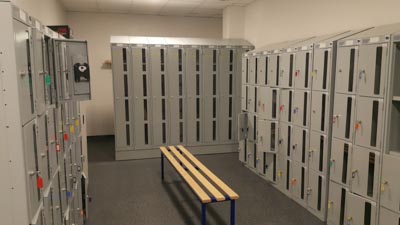
Heated lockers give workplaces a secure way to store and gradually dry wet workwear, cycling clothing and other damp garments while they are not being worn. They are particularly useful where employees work outdoors, cycle to work, change between shifts or regularly return to a changing area with wet clothing that would otherwise remain damp inside a standard locker.
This guide explains when heated lockers are useful, how they differ from ordinary ventilated lockers, how warm air moves through the locker, which workplaces benefit most and what to consider when planning heated lockers for staff changing rooms and workplace welfare areas. The focus is specifically on active drying of damp workwear and clothing; general staff-locker selection, clean/dirty separation and room zoning remain in their own guides.
If you are comparing heated lockers with mesh, outdoor or other specialist locker types, use our specialist locker applications guide.
Quick Answer: What Are Heated Lockers Used For?
Heated lockers are designed for workplaces where clothing becomes wet or damp and needs secure storage while drying. Typical applications include cycling clothing, outdoor workwear, uniforms, coats and other garments used by staff working in wet environments. Warm air rises through perforations in the locker while the clothing remains secured inside.
| Workplace problem | Heated locker benefit |
|---|---|
| Wet cycling clothes | Secure drying while the employee is working |
| Damp outdoor workwear | Clothing can dry between shifts |
| Wet coats or uniforms | Warm ventilated storage |
| Clothing left hanging around changing rooms | Dedicated secure drying space |
| Ordinary locker stays damp | Warm rising air assists drying |
| Several staff need the same facility | Heated lockers can be supplied in connected runs |
Which Workplaces Need Heated Lockers?
Heated lockers are most useful where wet clothing is a predictable part of the working day rather than an occasional inconvenience.
- construction and civil engineering sites;
- utilities and energy operations;
- warehouses and logistics facilities;
- farms and agricultural workplaces;
- forestry and grounds-maintenance teams;
- transport and ferry operations;
- factories and industrial sites;
- universities and colleges;
- hospitals and large estates;
- offices with cycle-to-work facilities;
- workplaces with showers and staff changing rooms.
The common requirement is not the sector itself. It is that staff regularly arrive with, or generate, wet clothing that needs to be stored securely before it is worn again.
Heated Lockers vs Ordinary Ventilated Lockers
A standard ventilated locker can allow some natural air movement around stored clothing. That may be enough where garments are only slightly damp or have plenty of time to dry.
A heated locker adds a controlled source of warmth beneath the storage area so that warm air rises through the locker.
| Feature | Standard ventilated locker | Heated locker |
|---|---|---|
| Secure personal storage | Yes | Yes |
| Natural air movement | Depending on design | Yes |
| Active source of warmth | No | Yes |
| Suitable for routinely wet clothing | Limited | Better suited |
| Electrical supply required | No | Yes |
| Drying between shifts | Depends on conditions | Designed to assist drying |
If staff are simply storing coats, bags and dry clothing, a standard workplace locker may be the more appropriate solution. Heated lockers make more sense where damp clothing is a recurring operational problem.
For conventional staff-storage planning, see Workplace Lockers UK. For the broader principles of passive airflow, moisture and odour control, use the Locker Ventilation and Airflow Guide.
How Do Heated Lockers Work?
The Total Locker Service heated-locker system uses a tube heater beneath the locker bank. Warm air rises through perforations in the base and internal components, creating gentle air circulation around the stored clothing.
The lockers sit on a skirted stand containing the heating arrangement. The warm air enters from below rather than relying on a heater mounted directly beside the garments.
The aim is gradual drying while the clothing remains securely stored.
Warm air rises through the locker
Perforated bases and shelves allow warm air to move upwards through the storage space. This is important because simply heating the space beneath a sealed locker would provide much less useful airflow around the clothing.
Single or twin heaters
Standard installations can use a single tube-heater arrangement. Additional heating may be available depending on the locker configuration and workplace requirement. Any required drying performance should be checked against the current product specification rather than assumed from heater quantity alone.
See the current heated lockers for drying workwear range for configuration and heater options.
Heated Lockers for Cycling to Work
Employees who cycle to work can arrive with wet jackets, trousers, gloves or other clothing after travelling in poor weather.
Without suitable drying facilities, wet kit may end up:
- hanging over radiators;
- draped over office furniture;
- left in shower areas;
- stored wet inside ordinary lockers;
- carried into working areas.
A heated locker gives the cyclist an individual secure place where wet clothing can remain during the working day while warm air assists drying.
This can be particularly useful where the workplace already provides showers, cycle parking and changing facilities but lacks a practical way to deal with wet clothing afterwards.
Heated Lockers for Outdoor Workers
Outdoor teams may finish a shift with clothing that is damp from rain, mud, moisture or general working conditions.
Examples include:
- construction workers;
- grounds-maintenance teams;
- forestry workers;
- utilities staff;
- transport personnel;
- agricultural workers;
- maintenance engineers;
- site and estate teams.
If wet clothing is simply locked away until the following shift, it may still be damp when the worker returns.
Heated lockers provide a practical way to combine storage and drying within the same staff-changing routine.
Heated Lockers for Workwear and PPE
Some workplaces already use lockers for uniforms, workwear and personal protective equipment. Where those items regularly become wet, the storage requirement changes.
The key question is whether the item should merely be stored or whether it also needs help drying before its next use.
Examples may include:
- water-resistant outer garments;
- high-visibility jackets;
- work coats;
- uniform layers;
- gloves where suitable for the storage arrangement;
- other damp workwear.
Not every item of PPE should automatically be placed in a heated locker. Follow the manufacturer’s care and storage instructions for the specific equipment, particularly where heat could affect materials, coatings, adhesives or protective performance.
For wider PPE, uniform and changing-room planning, see Workplace Changing Rooms and the Workplace Lockers UK guide.
Drying Workwear Between Shifts
Shift-based workplaces are one of the clearest applications for heated lockers.
A worker may finish an afternoon or night shift, leave damp clothing in the changing area and expect to use the same equipment again at the next shift.
The available drying time may therefore be limited to the gap between shifts.
When planning the system, consider:
- how wet clothing normally becomes;
- how many hours are available between uses;
- how many employees need drying space;
- whether lockers are individually assigned;
- whether garments need hanging space;
- whether footwear is stored separately;
- whether the heating period can be timed.
The aim is to match the drying facility to the actual work pattern rather than simply adding heat to an ordinary locker bank.
Planning Heated Lockers in Staff Changing Rooms
Heated lockers should be considered as part of the whole changing-room layout.
Plan for:
- number of users;
- locker-bank width;
- bench position;
- door clearance;
- electrical supply;
- wall position;
- cleaning access;
- staff circulation;
- wet and dry zones;
- maintenance access.
A technically suitable heated locker can still perform poorly if it is placed in a congested changing area or the electrical arrangement has not been planned before installation.
For wider room planning, see Workplace Changing Rooms and Locker Room Zoning Guide UK.
Single-Door or Two-Door Heated Lockers?
Heated lockers can be configured with full-length or two-door storage depending on the requirement.
Full-length lockers
A full-height compartment provides more hanging space for longer garments and can suit coats, workwear and cycling clothing.
Two-door lockers
Two compartments increase the number of users that can be accommodated within the same locker-bank footprint.
The trade-off is reduced compartment height, so the choice should depend on what employees actually need to store and dry.
For current sizes and configurations, visit heated lockers for drying workwear.
How Many Heated Lockers Do You Need?
Start with the number of employees who genuinely need drying storage rather than automatically specifying heated lockers for every member of staff.
Consider:
- number of cyclists;
- number of outdoor workers;
- shift size;
- number of staff using wet-weather clothing;
- whether lockers are permanently assigned;
- whether different shifts can reuse compartments;
- future workforce growth.
A mixed locker room may sometimes be more appropriate, with heated lockers reserved for users who need drying facilities and ordinary lockers provided for staff storing dry personal belongings.
Planning Heated Locker Runs
Heated lockers can be supplied in connected runs rather than as isolated individual cabinets.
This allows the heating arrangement and locker bank to be planned together.
When calculating the run, check:
- overall width;
- number of compartments;
- heater arrangement;
- available wall length;
- power connection;
- surrounding benches and doors;
- maintenance access.
The current TLS range is available in runs from one to six locker widths, with standard widths building from 300 mm modules.
Energy Use and Heated Locker Timers
A heated locker does not necessarily need to operate continuously throughout every hour the building is open.
Where the working pattern allows it, timers can be used so the heating operates during the period when drying is required.
For example, a workplace may choose to run the lockers:
- during the working day for cycle clothing;
- between shifts for workwear;
- overnight for garments needed the following morning;
- only during wetter periods where operationally appropriate.
The appropriate control arrangement depends on the site’s working pattern and electrical installation.
Tube-heater power
The TLS heated-locker system uses tube heaters rated at approximately 60 W per 300 mm of heater length. The total installed power therefore depends on the size of the locker run and heating configuration.
Check the current product specification before calculating running costs because electricity prices and the exact heater arrangement can change.
Electrical Planning for Heated Lockers
Heated lockers require an electrical supply, so this needs to be considered before the locker bank is positioned.
Check:
- available electrical supply;
- connection location;
- cable route;
- timer or control requirements;
- site electrical procedures;
- access for future maintenance.
The current TLS system can be supplied for connection to a standard mains supply, with other heater arrangements available for specific requirements.
Electrical installation and modification should be carried out in accordance with the requirements of the site and by suitably competent personnel.
Why Ventilation Still Matters
Heat alone is not the complete drying system. Moisture needs a route away from the clothing.
The heated locker design therefore uses perforations to encourage warm-air movement through the compartment.
When planning the room, avoid treating the locker bank as completely isolated from the surrounding changing environment. The room itself should also have suitable ventilation for the number of users and amount of wet clothing being handled.
For the wider airflow principles, see our Locker Ventilation and Airflow Guide. For room layout and installation planning, use the Locker Planning UK guide.
Heated Lockers and Clean/Dirty Workwear Separation
Drying and clean/dirty separation are related but different requirements. A heated locker solves a moisture and drying problem; it does not by itself create a compliant clean/dirty workflow.
A heated locker can assist with wet garments, but workplaces that need strict separation between clean clothing, used workwear and personal belongings may need a wider locker-room zoning or garment-storage strategy.
Consider whether the employee needs:
- one heated compartment;
- separate clean and used clothing storage;
- boot storage;
- PPE storage;
- personal-item storage;
- laundry collection.
For clean and used workwear separation, see Locker Room Zoning Guide UK and Clean & Dirty Lockers.
Locking Options for Heated Lockers
Heating does not remove the need to select the correct access method.
Heated lockers can be specified with different locking options depending on how the workplace manages users.
- key locks;
- hasp locks for padlocks;
- coin-operated locks;
- mechanical combination locks;
- electronic locking options.
The lock choice should follow the same operational questions as an ordinary workplace locker: assigned or shared use, number of users, management overhead and how lost credentials will be handled.
Do not choose the drying system and access system independently if the lockers will form part of a managed staff-changing facility. For the broader comparison of keys, hasps, combinations and electronic access, see our Locker Locking Systems guide.
Installing Heated Lockers
Heated-locker installation combines ordinary locker planning with an electrical requirement.
Before ordering, check:
- delivery route;
- final wall position;
- locker-bank width;
- floor condition;
- wall fixing;
- electrical supply;
- cable location;
- bench clearance;
- locker-door clearance;
- room ventilation;
- cleaning access.
Planning these items before delivery is considerably easier than moving an installed locker run because the electrical supply or room layout was overlooked.
For the general site-planning process, see Locker Installation Planning UK.
When Do You Not Need Heated Lockers?
Heated lockers are a specialist solution and should not be specified where ordinary storage is sufficient.
A standard locker may be more appropriate where:
- clothing is normally dry;
- users mainly store bags and personal belongings;
- the locker is used only briefly;
- wet clothing is handled through a separate drying room;
- there is no practical electrical supply;
- the workplace does not need individual drying storage.
Specifying heat unnecessarily increases installation complexity and energy use without solving a real operational problem.
Heated Lockers vs a Shared Drying Room
A shared drying room and heated lockers can both deal with wet clothing, but they support different operating models.
| Requirement | Heated lockers | Shared drying room |
|---|---|---|
| Individual secure storage | Yes | Requires separate arrangement |
| Garments separated by user | Yes | Not automatically |
| Large quantities of bulky wet kit | Limited by locker capacity | Can be advantageous |
| Integrated with staff locker room | Yes | Requires dedicated room or zone |
| Individual access control | Built into locker | Depends on room management |
Some larger sites may use both: heated lockers for regular staff clothing and a separate drying area for bulkier workwear.
Heated Locker Planning Examples
Office with cycle-to-work facilities
An office already has secure cycle parking and showers. The remaining problem is wet cycling clothing during the working day. A small bank of heated lockers can be allocated to regular cyclists while ordinary lockers continue to serve other staff.
Construction or utilities welfare facility
Outdoor staff regularly finish shifts with damp coats and workwear. Full-length heated lockers provide hanging space and drying between shifts, while separate storage may still be needed for boots or specialist PPE.
Warehouse operating several shifts
Only part of the workforce works outdoors. The locker room can therefore combine standard lockers with heated units allocated to employees who regularly need wet workwear drying.
Large estate or university
Grounds, maintenance and facilities teams may have very different storage requirements from office-based users. Heated lockers can be placed in the operational staff welfare area without making them the standard specification across the entire estate.
Common Heated Locker Specification Mistakes
- Specifying heated lockers for everyone: identify which users genuinely need drying storage.
- Ignoring garment length: choose full-height or two-door compartments according to what staff store.
- Forgetting the electrical supply: include power and cable routing in the room plan.
- Ignoring ventilation: warm air and moisture movement need to be considered together.
- Treating heated lockers as a substitute for all PPE storage: some equipment may have separate care requirements.
- Failing to allow drying time: consider how long garments remain in the locker between uses.
- Ignoring the room layout: benches, doors and circulation still need sufficient clearance.
- Leaving heating on unnecessarily: use suitable controls where the operating pattern permits.
- Using ordinary lockers for routinely soaked clothing: natural ventilation may not solve the underlying problem.
- Assuming every wet item can be heated: check garment and PPE care instructions where relevant.
Heated Locker Selection Checklist
- Which employees regularly have wet clothing?
- What garments need to dry?
- How wet do they normally become?
- How long is available between uses?
- How many heated compartments are required?
- Are lockers assigned or shared?
- Is full-length hanging space required?
- Would two-door compartments provide enough space?
- Is separate boot or PPE storage required?
- Where will the locker bank be installed?
- Is there a suitable electrical supply?
- How will the cable be routed?
- Is timer control required?
- Is room ventilation adequate?
- Are benches and circulation clearances sufficient?
- What locking method is required?
- Will standard lockers also be needed for dry-storage users?
- Can the locker bank be cleaned and maintained easily?
Heated Locker FAQs
What is a heated locker?
A heated locker is a secure staff-storage locker that uses controlled warmth and airflow to assist with drying wet or damp clothing while it is stored.
Are heated lockers suitable for cycling clothes?
They can be useful where employees cycle to work and need secure storage for wet cycling clothing during the working day.
Can heated lockers dry workwear overnight?
Heated lockers are designed to assist drying while clothing is stored. Actual drying time depends on the garment, how wet it is, the heater configuration, airflow and the time available.
Do heated lockers need ventilation?
Yes. The locker design needs a route for warm air and moisture to move, and the wider changing area should also have suitable ventilation.
Do heated lockers require electricity?
Yes. The heating system requires an electrical supply, so the connection, cable route and any controls should be planned before installation.
Should every locker in a changing room be heated?
Not necessarily. A mixed installation can be more practical where only part of the workforce regularly needs drying facilities.
Choose Heated Lockers When Wet Clothing Is a Regular Workplace Problem
Heated lockers are most useful when employees regularly need to store wet clothing securely and use it again later the same day or on a following shift.
They can provide a practical solution for cyclists, outdoor workers, facilities teams and operational staff by combining secure personal storage with heated airflow intended to assist drying.
Before specifying them, establish who actually needs drying storage, what garments they use, how much drying time is available and how the electrical supply, ventilation and locker layout will work together. Where those needs are genuine, heated lockers can solve a problem that an ordinary ventilated locker cannot address as effectively.
Related Workplace Locker Guides
Discover more from Blog Total Locker Service
Subscribe to get the latest posts sent to your email.