Hasp Lock Conversion Kits for Converting Coin-Operated Lockers to Padlock Operation
August 28, 2026
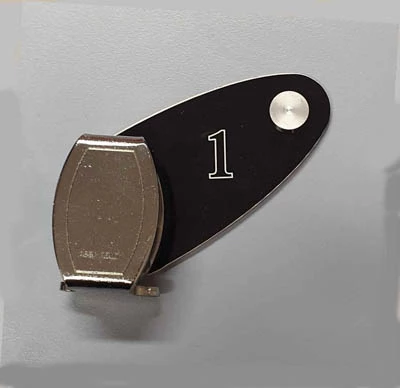
Locker installations can remain serviceable for many years after the locking system originally fitted to them has become unsuitable for the way the site now operates.
This is particularly common with older leisure centre, swimming pool, workplace and changing-room lockers fitted with coin-operated locks.
The locker bodies may still be sound. The doors may be in good condition. Hinges, frames and benches may have many years of useful life remaining. The problem is simply that the organisation no longer wants to operate a coin-lock system.
In many cases, replacing the complete locker installation is unnecessary.
Total Locker Service supplies and manufactures hasp lock conversion kits that allow suitable existing coin-operated lockers to be converted to padlock operation.
We supply established conversion products for systems including Ojmar and Helmsman lockers, but our capability goes further than supplying standard components.
We design and manufacture locker lock conversion kits. Where an off-the-shelf conversion does not exist, we can assess the existing locker door, original lock and proposed replacement lock and manufacture the conversion plates, escutcheons and associated components needed to make a practical conversion possible.
You can view our wider range of locker locks and replacement locker locks, or visit Total Locker Service for lockers, locks, keys, parts, accessories and refurbishment products.
What is a hasp locker lock?
A hasp locker lock is a simple mechanical fitting designed to allow the locker door to be secured using a separate padlock.
Instead of the locker containing an integral user key, coin mechanism or electronic keypad, the user passes the padlock shackle through the hasp and secures the locker with their own or a site-issued padlock.
This can be a key-operated padlock, combination padlock or, where required, part of a managed or master-keyed padlock system.
The arrangement is mechanically simple and can substantially reduce the amount of user-key administration required by the facility.
For more information about this locking method, see our guide to padlock fittings and hasp locks for lockers.
Why convert a coin-operated locker to a hasp?
Coin-operated locker locks remain an excellent solution for many leisure and changing-room installations. Total Locker Service continues to supply, repair and replace coin locks where coin operation remains appropriate.
However, the way a facility operates can change.
A leisure centre may no longer want customers to search for the correct coin. A gym may prefer members to bring their own combination padlock. A workplace may want to move away from a coin-return mechanism to a much simpler user-controlled locking method.
Older coin locks may also become increasingly expensive to maintain as cylinders, keys or other components wear or become obsolete.
In these circumstances, converting to a hasp can simplify the locker installation without requiring the locker itself to be replaced.
The conversion changes the method of access while retaining the existing door, cabinet and locker layout.
Why can’t the old coin lock simply be removed and replaced with a hasp?
This is where locker lock conversion becomes more interesting.
Coin-operated locker locks are usually much larger than a conventional hasp fitting.
The existing door may have a large opening, several fixing holes and a substantial prepared area designed specifically around the original coin mechanism.
Once that mechanism is removed, a small hasp does not automatically fit the existing door preparation.
The old fixing holes may remain visible. The new lock may need different fixing positions. The rear cam may need to engage with the locker frame at a different position. The original escutcheon may also have carried the locker number.
A properly designed conversion kit solves these problems.
The conversion plate provides the mechanical interface between the existing door preparation and the new lock. An escutcheon can cover redundant holes and provide a clean visible finish. Locker numbering can also be incorporated where required.
Instead of treating each locker as a separate fabrication job, the conversion becomes a repeatable engineered process.
Ojmar hasp lock conversion kits
One of the principal hasp-conversion products supplied by Total Locker Service is the Ojmar Hasp Lock and Conversion Plate.
The Ojmar H-00 hasp provides padlock-operated access for compatible locker installations.
Where an existing locker uses a suitable Euro-footprint coin lock, an optional conversion backplate can be used to adapt the old coin-lock footprint to the new Ojmar hasp.
The existing coin mechanism is removed and the hasp is fitted through the appropriate door aperture. The conversion backplate covers the larger area previously occupied by the coin lock and, where the existing preparation is compatible, can make use of the existing fixing positions.
This avoids the converted locker looking as though a small replacement lock has simply been fitted into the remains of a much larger mechanism.
The result is a much cleaner and more deliberate conversion.
For a practical example of this type of work, see our article on converting coin locks to Ojmar hasp locks.
Ojmar H-00 hasps for leisure and changing-room lockers
Ojmar locking products are widely used in leisure, swimming-pool and changing-room installations, so they are particularly relevant when older coin-operated lockers are being refurbished.
The Ojmar H-00 hasp is available in appropriate left-hand and right-hand arrangements and is designed for suitable locker doors where padlock operation is required.
For compatible Euro coin-lock installations, the conversion backplate allows the footprint of the original mechanism to be adapted rather than forcing the customer to replace an otherwise serviceable locker door.
This can be particularly valuable on laminate and specialist leisure lockers where replacing doors across a large installation could represent a substantial cost.
View the product and conversion options on our Ojmar Hasp Lock page.
Helmsman System 2000 hasp lock conversion kit
Total Locker Service also supplies a purpose-designed Helmsman System 2000 Hasp Lock Conversion Kit.
This conversion was developed to allow compatible Helmsman System 2000 leisure lockers to be changed from the original coin-operated lock arrangement to an ASSA hasp and padlock-operated system.
The conversion is designed around the existing locker-door preparation.
A stainless steel conversion plate provides the mechanical interface between the locker door and the replacement hasp. The design can utilise compatible existing fixing positions, which means additional drilling is normally unnecessary where the original door preparation matches the conversion.
This can make a major difference on a large installation.
Drilling two or three additional holes in one locker may not sound significant. Repeating the process across 200 or 300 doors substantially increases installation time and introduces more opportunities for inaccurate positioning or damage.
A manufactured conversion kit provides a consistent method for every door.
Engraved locker-number escutcheons
The visible finish is also an important part of a locker-lock conversion.
Removing an old coin mechanism can leave fixing holes, marks and a large prepared area on the front of the locker.
A conversion may work perfectly mechanically but still look unfinished if these areas remain exposed.
The Helmsman System 2000 conversion therefore incorporates an engraved laminate escutcheon in addition to the mechanical conversion plate.
The escutcheon covers the relevant visible area and can also carry the locker number.
This allows an existing numbered locker installation to retain its established numbering sequence after conversion.
Total Locker Service manufactures a broad range of engraved products, including locker number plates, discs, labels and key fobs, so identification components can form part of a conversion rather than having to be sourced separately.
What does Total Locker Service sell for hasp lock conversions?
- Ojmar H-00 hasp locks for compatible padlock-operated locker applications.
- Ojmar Euro coin-lock conversion backplates for suitable existing Euro-footprint coin-lock installations.
- Helmsman System 2000 hasp lock conversion kits designed around compatible existing locker-door preparations.
- ASSA hasp components for appropriate Helmsman conversions.
- Stainless steel conversion plates for suitable standard and bespoke applications.
- Engraved laminate escutcheons to provide a clean finish and retain locker numbering.
- Key-operated and combination padlocks for suitable hasp installations.
- Bespoke locker lock conversion kits designed and manufactured for installations where no standard product exists.
- Replacement locker locks and parts where a different conversion route is more suitable.
The important point is that our range is not limited to a handful of standard conversion plates.
If the existing lock and proposed replacement do not share the same footprint, that does not necessarily prevent the conversion.
Total Locker Service designs and manufactures bespoke conversion kits
This is one of the most important parts of our locker refurbishment service.
We manufacture conversion components ourselves.
That means we are not restricted to searching catalogues for another lock with exactly the same fixing holes as the existing one.
Where practical, we can design the interface required to allow a new lock to fit the existing locker.
The starting point is simple:
What lock is fitted now, and what lock do you want to fit instead?
From there, we consider the locker-door construction, door thickness, existing apertures, fixing positions, available clearance behind the door, cam position and the area that needs to be covered on the visible face.
We can then determine whether a conversion plate, escutcheon or other manufactured component can bridge the difference between the two systems.
Our article on locker lock conversions gives examples of purpose-manufactured conversion plates, escutcheons and fittings used to adapt existing lockers to different locking systems.
The conversion plate is an engineered component
A locker conversion plate may look like a simple piece of metal, but mechanically it performs an important function.
Its job is to connect two locking systems that were never originally designed to fit one another.
An old coin lock may use widely spaced fixing points and a large door opening. The proposed hasp may use a much smaller central aperture and a completely different fixing arrangement.
The conversion plate can pick up the strong existing mounting positions while providing the preparation required by the new lock.
It can also cover redundant apertures and spread loads over a larger area of the locker door.
The design therefore needs to consider much more than appearance.
The new lock must be held securely, operate correctly and engage with the locker frame or keep in the correct position.
The escutcheon solves the visible side of the conversion
The rear conversion plate can be almost entirely functional.
The front of the locker door needs more consideration because it is visible to users.
Old fixing holes, marks and large openings can make an otherwise successful conversion look untidy.
A purpose-made escutcheon allows us to cover the original lock footprint and present the new hasp neatly.
Because we manufacture engraved laminate products, the escutcheon can also incorporate the locker number or another identification reference.
The mechanical plate and visible escutcheon therefore perform different but complementary jobs.
The plate makes the new lock fit.
The escutcheon makes the conversion look finished.
Using the existing fixing holes can save substantial installation time
One of the principal aims when designing a conversion is to reuse existing fixing positions wherever practical.
This is not always possible, but when it is, it can substantially simplify installation.
Consider a bank of 300 locker doors.
If the installer has to mark and drill several new holes in every door, even a few additional minutes per locker becomes many hours of extra work.
There is also a greater risk of drill slip, inaccurate positioning and variation from one locker to another.
A purpose-designed conversion plate can turn the job into a repeatable fitting process.
Remove the compatible old lock, fit the manufactured conversion components, install the hasp, confirm the cam operation and move to the next locker.
For large refurbishment projects, repeatability is extremely valuable.
Hasp conversion is not limited to steel lockers
Many coin-operated locker installations are found in leisure centres, swimming pools and changing facilities where the lockers may have laminate, compact laminate, timber or other specialist doors.
The principles of conversion remain similar, but door material and thickness become particularly important.
A fixing method suitable for a steel door may not be appropriate for a thicker laminate door.
The rear clearance, lock body and cam arrangement also need to be checked.
This is why we recommend identifying the complete existing lock arrangement rather than selecting a replacement solely from a photograph of the front.
Padlock choice after converting to a hasp
Once the locker has been converted to a hasp, the facility has several options for everyday user security.
Users may provide their own padlocks.
The site may issue approved key-operated padlocks.
A gym or leisure centre may sell combination padlocks at reception.
A workplace or school may standardise on one specified type of lock.
Where management access is required, a compatible master-keyed padlock system can also be considered.
This decision should ideally be made before converting a large installation because the chosen padlock needs to be physically compatible with the hasp.
Check the padlock shackle before ordering in quantity
Padlock compatibility is about more than whether the shackle appears small enough.
The shackle diameter must fit through the hasp aperture.
There must be sufficient internal clearance for the padlock to be fitted and removed comfortably.
The padlock body must not interfere with the locker door, handle or adjacent features.
For this reason, we recommend checking the intended padlock against the hasp before ordering a large quantity for a converted locker installation.
This is particularly important where a site plans to standardise hundreds of lockers on one padlock model.
Combination padlocks can eliminate everyday locker keys
One of the attractions of converting to a hasp is that the site does not necessarily have to replace the old coin system with another key-management system.
A suitable combination padlock allows the user to secure the locker without carrying a locker key.
The locker itself contains no battery-operated keypad and no permanent combination mechanism.
The user-controlled padlock carries the combination.
If the user leaves the organisation, their locking credential leaves with the padlock rather than remaining built into the locker.
For some high-turnover workplaces, gyms and changing facilities, this can considerably simplify administration.
Hasp conversion is not always the right answer
Total Locker Service does not recommend changing every coin lock to a hasp simply because the conversion is possible.
The correct lock depends on the way the site wants the lockers to operate.
Coin locks remain appropriate for many public and leisure installations.
In other environments, a keyed cam lock, mechanical combination lock, electronic keypad or RFID system may provide a better solution.
We have also carried out conversions in the opposite direction, converting existing hasp-operated lockers to coin-lock systems where that better matched the customer’s operational requirements.
See our coin lock conversion case study for an example.
The important question is not simply which lock is easiest to fit.
It is which locking system best suits the organisation now.
Conversion kits can also support electronic lock upgrades
The same principles used for coin-to-hasp conversions can be applied to much more substantial changes in locking technology.
Total Locker Service has designed conversion arrangements to allow existing lockers to accept electronic and RFID locks where the new product has a completely different footprint from the original mechanism.
One example covered in our locker lock conversion article involved converting lockers from Lowe & Fletcher coin-return locks to Ojmar electronic locking technology.
This illustrates an important point.
A conversion kit does not merely allow one similar mechanical lock to replace another.
Where the locker and door are suitable, it can provide the interface required to move between completely different generations of access technology.
A lock footprint should not decide when a good locker becomes obsolete
Locker doors are manufactured around the locks available when the installation is first supplied.
Ten or twenty years later, that original preparation can become restrictive.
The old lock may no longer be available.
The customer may no longer want that type of lock.
A modern replacement may use completely different dimensions and fixing positions.
Without a conversion option, the holes made for the original lock can effectively dictate which products can be fitted in future.
A purpose-designed conversion plate removes much of that restriction.
The original aperture and fixing pattern become design inputs rather than absolute limits.
This can substantially extend the useful life of a good-quality locker installation.
Retrofitting can cost far less than replacing complete lockers
Replacing a locker installation involves more than the purchase price of the new lockers.
The old installation may need to be removed and disposed of.
The new lockers need to be delivered and moved into position.
Benches, stands, plinths and other surrounding components may need alteration.
Changing rooms may have to be closed while the work takes place.
New locker numbers may need to be allocated and site records changed.
If the existing locker cabinets and doors are already deteriorated, replacement may still be the sensible option.
But where the lockers remain structurally sound, replacing hundreds of complete units simply because the original coin lock no longer suits the site can be unnecessary.
Our guide to retrofitting and upgrading existing locker locks examines this wider refurbishment principle.
Trial a bespoke conversion before manufacturing the complete quantity
For unusual or bespoke installations, producing and testing one conversion first is good practice.
A trial allows the complete arrangement to be checked on the actual locker rather than relying only on measurements and assumptions.
We can confirm that the plate fits the existing preparation, the escutcheon covers the required area, the hasp is correctly positioned, the cam engages properly and the intended padlock has sufficient clearance.
The appearance can also be assessed before the full production quantity is made.
For a conversion involving hundreds of lockers, this can prevent a small dimensional issue being multiplied across the entire installation.
What information do we need to design a bespoke conversion?
The best starting point is to tell us what is fitted now and what you want to fit instead.
Photographs of the existing locker door and lock are extremely useful, including the front of the lock and the rear mechanism where this is safely accessible.
We may also need the locker manufacturer, lock manufacturer and model where known, door thickness, dimensions of the existing aperture, fixing-hole centres, cam arrangement and the quantity of lockers involved.
If the visible escutcheon needs to incorporate locker numbers, the numbering sequence should also be supplied.
For particularly unusual projects, a physical sample of the existing lock or associated component can make development considerably easier.
If you do not know what lock you have, use our locker lock and replacement part identification form and send us the available photographs and information.
We can design a conversion around the lock you actually want
This is the major advantage of having manufacturing capability in-house.
Customers do not necessarily have to choose a replacement lock simply because it happens to fit the existing holes.
Where a conversion is mechanically practical, we can work from the desired new locking system and determine what needs to be manufactured to make it fit the existing door.
That may be a simple conversion plate.
It may require a front escutcheon and rear plate.
It may involve adapting existing fixings.
It may require locker numbering to be incorporated into the visible component.
Each application has to be considered on its own dimensions and mechanical requirements.
But the principle is simple:
If the old lock and new lock do not naturally fit the same door preparation, we can investigate manufacturing the interface between them.
Changing the lock can give an old locker a new purpose
Locker refurbishment does not always begin because something has broken.
An existing coin lock may be functioning exactly as intended.
The organisation may simply no longer want coin operation.
That makes the conversion a change in function rather than a repair.
The same locker can move from coin operation to user padlocks, from keyed access to combination locking or, in suitable cases, from mechanical locking to electronic access.
This flexibility can give an established locker installation a substantially longer useful life.
A small conversion plate can save hundreds of lockers
The conversion components themselves are often relatively small compared with the locker installation they preserve.
A stainless steel plate, engraved escutcheon and hasp may represent only a small amount of material.
But if those components allow 100, 200 or 500 sound lockers to remain in service, their practical value is much greater than their physical size suggests.
The conversion kit is the bridge between the locker the customer already owns and the locking system the customer now needs.
That is why Total Locker Service treats locker lock conversion as an engineering and manufacturing service rather than simply a search for a similar replacement lock.
Talk to Total Locker Service before replacing serviceable coin-operated lockers
If you have an existing locker installation fitted with coin-operated locks and want to change to padlock operation, it is worth investigating conversion before replacing the complete lockers.
For compatible Helmsman installations, view our Helmsman System 2000 Hasp Lock Conversion Kit.
For suitable Ojmar and Euro-footprint coin-lock applications, view the Ojmar Hasp Lock and Conversion Plate.
For a practical refurbishment example, read Converting Coin Locks to Ojmar Hasp Locks.
For wider information about adapting existing locker doors to new locking technology, see our Locker Lock Conversion article and our guide to retrofitting locker locks.
If your existing lock does not match one of our standard conversion products, send us the details.
Total Locker Service can design and manufacture bespoke conversion plates, escutcheons and associated components to allow a different lock to be fitted where a practical conversion is possible.
Visit Total Locker Service for lockers, locker locks, hasps, coin locks, padlocks, replacement parts and accessories.
Visit the Total Locker Service Blog for further guides covering locker refurbishment, replacement locks, lock conversion, maintenance, locker security and access-control systems.
Before replacing a good locker because the existing coin lock no longer suits the site, consider whether the lock can be converted. A purpose-designed hasp conversion kit may allow the existing locker installation to remain in service for many more years.
Discover more from Blog Total Locker Service
Subscribe to get the latest posts sent to your email.