Locker Lock Problems UK: Causes, Fixes & Prevention
February 23, 2026
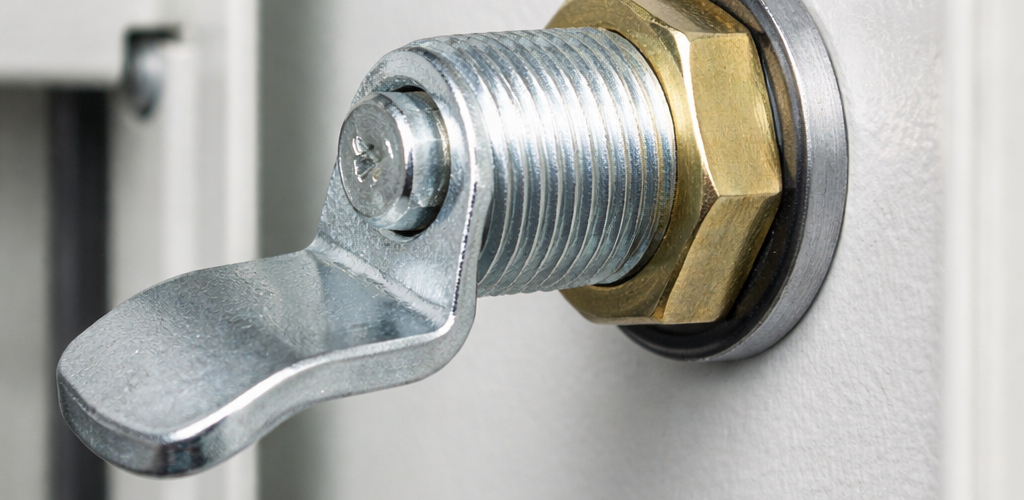
Locker lock problems are common in schools, workplaces, factories, warehouses, gyms, leisure centres and changing rooms. A key may stop turning, a lock barrel may spin, a cam may bend, a combination lock may refuse to open or an electronic lock may appear completely dead.
Many of these faults do not require a complete locker replacement. The cause may be a worn key, loose fixing, damaged cam, door misalignment, flat battery, incorrect code, jammed coin mechanism or simply the wrong replacement component.
This guide explains the most common locker lock problems, their likely causes, practical checks and when the correct solution is a replacement key, replacement part, complete lock replacement or an upgrade to another locking system.
If you already know the lock needs replacing, see our Locker Lock Replacement Guide UK. If you cannot identify the lock, use our Locker Lock Identification Guide UK.
Common Locker Lock Problems at a Glance
| Problem | Common cause | Typical next step |
|---|---|---|
| Locker key will not turn | Worn key, damaged barrel, pressure against door or dirt | Check key, alignment and lock condition |
| Lock barrel spins | Loose nut, damaged clip or worn fixing | Tighten or replace fixing components |
| Key turns but locker stays locked | Bent, loose or incorrect cam | Inspect cam and door alignment |
| Locker lock is jammed | Wear, debris, corrosion or alignment | Inspect before forcing the mechanism |
| Combination lock will not open | Wrong code, forgotten code or mechanical wear | Use approved reset or management access |
| Electronic lock appears dead | Flat battery or electrical fault | Follow manufacturer emergency-access procedure |
| Coin lock will not return coin | Jam, foreign object, wear or incorrect coin | Inspect and service coin mechanism |
| Padlock fitting is bent | Forced entry, oversized padlock or heavy use | Inspect fitting and locker door |
| Replacement key does not work | Wrong key code, wrong range or damaged lock | Recheck code and lock identification |
Do not force a locker lock simply because it will not open. A small lock or alignment fault can quickly become a broken key, damaged cam or distorted locker door.
1. Locker Key Will Not Turn
If a locker key enters the lock but will not turn normally, first determine whether the problem is with the key, the cylinder or pressure from the locker door.
Common causes include:
- a worn or bent key;
- an incorrect replacement key;
- dirt inside the keyway;
- internal cylinder wear;
- corrosion;
- a damaged lock barrel;
- or pressure from a misaligned locker door.
Try a known-good spare key if one is available. Gently reduce pressure against the locker door while operating the key. If the key still will not turn, investigate the lock rather than applying increasing force.
A badly worn or damaged key can snap inside the cylinder if forced.
2. Locker Lock Barrel Spins in the Door
If the complete lock barrel rotates when the key or knob is turned, the problem is usually with the way the lock is fixed to the locker door.
Possible causes include:
- a loose retaining nut;
- a damaged retaining clip;
- stripped lock threads;
- a missing anti-rotation component;
- or damage around the locker door cut-out.
If the locker door itself is undamaged, tightening or replacing the appropriate fixing may solve the problem. Where the aperture has become distorted or enlarged, the door may require further repair.
3. Key Turns but the Locker Door Will Not Open
If the key rotates normally but the locker remains locked, the fault may be behind the door rather than inside the cylinder.
Common causes include:
- a loose cam;
- a bent cam;
- an incorrect cam length;
- the cam rotating in the wrong direction;
- the cam missing the locker frame;
- a damaged latch;
- or door misalignment placing excessive pressure on the mechanism.
The cam is the metal component on the rear of many locker locks that rotates behind the frame to secure the door. Its length, shape, offset and rotation are important.
When replacing a locker lock, do not assume that a new lock with the same-looking front face will use the correct cam.
4. Locker Lock Jammed or Stuck
A jammed lock may be caused by the lock itself, the cam or latch, or pressure from the locker door.
Signs include:
- the key only turning part way;
- the lock becoming increasingly stiff;
- the cam failing to complete its movement;
- the door refusing to release;
- or the lock working when the door is open but not when it is closed.
If the lock works correctly with the door open but becomes difficult when the door is closed, check alignment and cam engagement before replacing the cylinder.
Repeated stiffness is a warning sign. Investigating it early can prevent broken keys and complete lock failure.
5. Broken or Bent Locker Lock Cam
The cam takes the mechanical load when many conventional locker locks secure the door. It can bend or break through wear, misuse, incorrect adjustment or excessive force against a badly aligned locker.
Possible causes include:
- incorrect cam length;
- incorrect cam offset;
- door misalignment;
- forcing the locker shut;
- impact damage;
- or repeated heavy use.
When replacing the cam, compare the original length, offset, shape, fixing and rotation carefully.
6. Locker Key Has Broken in the Lock
A broken key can result from wear, bending, corrosion or excessive force being applied to a stiff lock.
Before fitting another key, determine why the original broke. If the cylinder is stiff or the door is placing excessive pressure on the lock, inserting another key without correcting the cause may simply repeat the failure.
If the lock remains serviceable and the correct key number is known, replacement keys may be available through our replacement locker key service.
7. Lost Locker Key
A lost key does not automatically mean the complete lock needs replacing.
Check:
- whether a spare key exists;
- whether authorised master-key access is available;
- whether the key number appears on the lock face;
- whether the site has accurate key records;
- and whether the missing key creates a genuine security concern.
If the correct key number can be identified, a replacement can often be cut to code.
See our Lost Locker Key UK guide and How to Find Your Locker Key Code UK.
8. Replacement Locker Key Does Not Work
If a replacement key will not operate the lock, do not immediately assume that the newly cut key is faulty.
Check:
- the complete key number;
- any letter prefix;
- leading zeroes;
- the lock manufacturer;
- the correct key series;
- whether the lock has previously been replaced;
- and whether the cylinder itself is worn or damaged.
The locker number displayed on the door is not necessarily the key number.
9. Combination Locker Lock Will Not Open
Mechanical combination locks can fail to open because of an incorrect code, forgotten code, incorrect operating procedure or mechanical wear.
Depending on the product, check:
- whether it is operating in private or public-use mode;
- whether the user is entering the code correctly;
- whether an authorised master or override method exists;
- whether a code-finding or reset procedure is available;
- and whether the mechanism feels unusually stiff or damaged.
Reset and override procedures vary between manufacturers. Use the correct instructions for the exact lock rather than trying unrelated procedures.
10. Forgotten Locker Combination
Forgotten codes are an administrative issue as well as a hardware issue.
A managed installation should define:
- who is authorised to assist users;
- how ownership or allocation is confirmed;
- where reset tools are stored;
- who holds management keys;
- and how codes are reset before the locker is reassigned.
11. Electronic Locker Lock Not Working
Electronic locker locks introduce a different group of possible faults.
These can include:
- flat batteries;
- damaged battery connections;
- keypad faults;
- RFID reader problems;
- incorrect programming;
- lost administrator credentials;
- water ingress;
- impact damage;
- or internal mechanical failure.
Before replacing an electronic lock, identify the exact model and check the manufacturer’s emergency-access, battery replacement and reset procedures.
Do not assume that a lock with no visible response is mechanically broken. A depleted battery can create very similar symptoms.
12. RFID Locker Lock Will Not Recognise a Card or Fob
An RFID lock may be mechanically sound but unable to recognise the presented credential.
Possible causes include:
- an incompatible RFID technology;
- an unregistered credential;
- a revoked credential;
- a faulty reader;
- a low lock battery;
- incorrect programming;
- or the lock being configured for a different operating mode.
RFID is a general description rather than one universal standard. A card working elsewhere on a site does not automatically mean it will operate a particular locker lock.
13. Coin Locker Lock Will Not Accept or Return the Coin
Coin-operated locker locks have additional mechanical parts and can experience faults that ordinary cam locks do not.
Common causes include:
- incorrect coin denomination;
- incorrect token;
- foreign objects in the coin path;
- worn coin mechanisms;
- corrosion;
- dirt or contamination;
- or damaged return mechanisms.
High-use leisure installations benefit from periodic inspection and access to appropriate service keys and spare components.
14. Padlock Fitting Is Bent or Damaged
Locker padlock fittings can be damaged by oversized padlocks, misuse, repeated impact or forced-entry attempts.
Inspect:
- the hasp or swivel fitting;
- its fixings;
- the locker door around the aperture;
- door alignment;
- and whether the padlock size is appropriate.
Replacing only the fitting may not provide a reliable repair if the locker door itself has been distorted.
15. Locker Door Will Not Close Properly
A problem that appears to be a lock fault may actually be caused by the locker door or frame.
Check for:
- loose hinges;
- worn hinge components;
- a distorted door;
- a damaged frame;
- objects preventing the door from closing;
- incorrect cam position;
- and lockers that are no longer level or stable.
If a lock operates freely with the door open but becomes difficult when the door closes, alignment should be investigated before replacing the lock.
16. Locker Lock Keeps Failing
Repeated lock failure often indicates that the underlying problem has not been corrected.
Possible causes include:
- incorrect lock specification;
- incorrect barrel length;
- incorrect cam;
- door misalignment;
- excessive pressure on the locking mechanism;
- an unsuitable lock for the environment;
- heavy misuse;
- poor installation;
- or an obsolete lock system.
Replacing the same component repeatedly without identifying why it is failing can increase maintenance costs without solving the actual problem.
Incorrect Locker Lock Specification
Some locker lock problems begin when the wrong replacement lock is installed.
Check:
- door material;
- door thickness;
- lock cut-out;
- barrel diameter;
- barrel length;
- fixing method;
- cam length;
- cam offset;
- cam rotation;
- door handing where relevant;
- rear clearance;
- and master-key compatibility.
Two locks that look similar from the front can be mechanically incompatible behind the locker door.
Locker Lock Problems in Wet and Humid Areas
Swimming pools, leisure centres and wet changing rooms can expose locks to humidity, condensation and corrosive conditions.
Possible symptoms include:
- stiff key operation;
- corrosion;
- seized mechanisms;
- damaged finishes;
- coin-lock problems;
- and premature electronic failure where unsuitable equipment has been fitted.
Use locks specifically suitable for the intended environment rather than assuming every mechanical or electronic lock has the same resistance to moisture.
Locker Lock Problems in Schools
School locker systems can experience concentrated wear because large numbers of pupils use lockers repeatedly throughout the day.
Common issues include:
- lost keys;
- bent cams;
- damaged locker doors;
- loose lock barrels;
- forgotten combinations;
- and deliberate misuse.
Standardising common locks and keeping appropriate spare parts can simplify maintenance across a large school locker estate.
Locker Lock Problems in Workplaces
Workplace lock problems often combine hardware issues with key and access administration.
- Employees leave without returning keys.
- Locker allocations change.
- Master keys become poorly controlled.
- Replacement locks are fitted outside the original master-key system.
- Hybrid working changes lockers from assigned to shared use.
If the way lockers are being used has changed substantially, replacing failed locks like for like may not be the best long-term approach.
Locker Lock Problems in Gyms and Leisure Centres
Leisure facilities typically have high user turnover and may combine coin, keyed, combination, RFID and electronic locking systems.
Common maintenance issues include:
- coin jams;
- lost wristbands or keys;
- forgotten codes;
- wet-area corrosion;
- battery replacement;
- high-frequency mechanical wear;
- and emergency management access.
Locker Lock Problems in Factories and Warehouses
Industrial locker installations can experience heavy use, concentrated shift changes, dust, dirt and impact.
- Inspect cams and fixings regularly.
- Check lock operation before complete failure.
- Keep replacement locks and keys for commonly fitted systems.
- Check whether gloves affect user operation.
- Repair distorted doors before they overload replacement locks.
When Is a Replacement Key Enough?
A complete lock replacement may be unnecessary where:
- the original key has simply been lost;
- the lock operates correctly;
- the correct manufacturer and key code are known;
- the key has worn but the cylinder remains serviceable;
- or another spare key is required.
See our replacement locker keys and Replacement Locker Keys by Code UK guide.
When Should the Locker Lock Be Replaced?
Complete lock replacement is generally more appropriate when:
- the internal mechanism is badly worn;
- the barrel is damaged;
- the lock repeatedly jams;
- the lock has been forced;
- the fixing is damaged beyond repair;
- replacement parts are obsolete;
- the missing key creates an unacceptable security risk;
- or the existing lock no longer suits how the locker is used.
Use our Locker Lock Replacement Guide UK before ordering.
When Should Locker Locks Be Upgraded?
An upgrade may be worthwhile when the existing locking method itself is causing repeated operational problems.
- Lost keys are generating excessive administration.
- Lockers have changed from assigned to shared use.
- An old lock type is becoming obsolete.
- Coin operation is no longer wanted.
- A large proportion of locks need replacement.
- Users already have suitable electronic credentials.
- The site wants to standardise several incompatible lock systems.
See our Locker Lock Upgrade Guide UK.
Preventing Locker Lock Problems
Routine inspection can prevent minor faults becoming complete failures.
- Check lock barrels remain securely fixed.
- Test each lock several times.
- Inspect cams and latches.
- Check door alignment.
- Replace badly worn keys.
- Keep keyways clean.
- Check coin mechanisms in high-use leisure facilities.
- Replace electronic batteries before complete failure where appropriate.
- Check master and override access.
- Repair loose hinges.
- Replace damaged components promptly.
- Record recurring faults.
Do Not Treat Every Lock Fault as an Isolated Problem
If several locks are developing the same problem, look for a common cause.
For example:
- repeated bent cams may indicate poor door alignment;
- repeated lost keys may indicate that keyed locks no longer suit the operating model;
- multiple flat electronic locks may indicate inadequate battery maintenance;
- coin-lock jams may indicate contamination or incorrect tokens;
- and repeated spinning barrels may indicate an installation or fixing problem.
Finding the underlying cause usually produces a better result than repeatedly replacing the same component.
Keep a Locker Lock Maintenance Record
| Information | Why record it? |
|---|---|
| Locker number | Identifies the affected compartment |
| Location | Identifies repeated faults in one area |
| Lock manufacturer | Helps identify compatible parts |
| Lock type | Supports correct troubleshooting |
| Key number | Allows replacement-key ordering |
| Fault reported | Shows recurring patterns |
| Repair completed | Provides maintenance history |
| Parts fitted | Helps future replacement |
| Date | Shows frequency of failure |
Repair the Locker or Replace It?
A failed lock does not mean the complete locker needs replacing.
| Condition | Likely approach |
|---|---|
| Sound locker, lost key | Replace key |
| Sound locker, failed lock | Replace lock or component |
| Sound door, damaged cam | Replace correct cam |
| Door misaligned | Adjust or repair door before replacing lock |
| Damaged lock aperture | Assess door repair or replacement |
| Severe structural corrosion | Consider complete locker replacement |
| Repeated widespread failures | Consider refurbishment or system upgrade |
For a wider assessment of lockers, doors, hinges, locks and replacement parts, see our Locker Parts and Servicing Guide.
Information to Collect Before Ordering Locker Lock Parts
- clear photograph of the front of the lock;
- photograph of the rear mechanism;
- photograph of the cam or latch;
- door material;
- door thickness;
- visible manufacturer markings;
- key number where present;
- cam dimensions;
- lock fixing method;
- and the quantity required.
If the part cannot be identified, use our locker part identification service.
Test One Replacement Before Ordering in Quantity
For larger repair programmes, test one proposed replacement lock on an actual locker before ordering the complete quantity.
- Identify the existing lock.
- Record its dimensions.
- Check the door cut-out and thickness.
- Compare the cam or latch.
- Fit one replacement.
- Test the lock with the locker door open.
- Check locked and unlocked positions.
- Close the door and test repeatedly.
- Confirm master or management access where required.
- Only then approve the wider quantity.
Related Locker Lock Guides
- Locker Locks – replacement and upgrade locker locks.
- Locker Locking Systems UK – compare keyed, combination, coin, RFID and electronic locks.
- Locker Lock Identification Guide UK – identify an unknown lock.
- Locker Lock Replacement Guide UK – replacing existing locks.
- Locker Lock Upgrade Guide UK – retrofit and conversion options.
- Lost Locker Key UK – what to do when a key has gone missing.
- How to Find Your Locker Key Code UK – identify replacement-key numbers.
- Replacement Locker Keys – order keys cut to code.
- Locker Parts and Servicing – wider maintenance and repair guidance.
Locker Lock Problems FAQs
Why will my locker key not turn?
A locker key may fail to turn because the key is worn, the cylinder is damaged or contaminated, the wrong key is being used or pressure from a misaligned locker door is preventing the cam from moving normally.
Why does my locker lock spin in the door?
A spinning lock barrel is commonly caused by a loose retaining nut, damaged clip, stripped thread or damage around the locker door cut-out.
Why does the locker key turn but the door stay locked?
The cam or latch may be loose, bent, incorrectly positioned or unable to engage correctly because the locker door is misaligned.
Can a jammed locker lock be repaired?
Many jammed locker locks can be repaired where the cause is alignment, loose fixings, a damaged cam or minor wear. A badly worn or damaged internal mechanism may require complete lock replacement.
Can a lost locker key be replaced without changing the lock?
Often, yes. If the lock works correctly and the manufacturer and key code can be identified, a replacement key can frequently be supplied without replacing the complete locker lock.
Why will my combination locker lock not open?
Possible causes include an incorrect or forgotten code, incorrect operating procedure, mechanical wear or the lock being configured in a different operating mode. Use the correct manufacturer reset or override procedure.
Why has my electronic locker lock stopped working?
Flat batteries are a common cause, but electronic locker locks can also fail because of damaged battery connections, keypad faults, reader problems, incorrect programming, water ingress or mechanical damage.
Why is my coin locker lock jamming?
Coin locks can jam because of incorrect coins or tokens, foreign objects, contamination, corrosion or wear within the coin mechanism.
When should I replace a locker lock?
Replacement is normally appropriate when the lock is heavily worn, repeatedly failing, damaged by forced entry, obsolete or no longer suitable for the way the locker is being used.
How can locker lock problems be prevented?
Regular inspection, correct lock specification, good door alignment, controlled key and override management, early replacement of worn components and suitable environmental selection can reduce repeated locker lock failures.
Fix the Cause, Not Just the Failed Locker Lock
Many locker lock problems can be resolved without replacing the complete locker. A replacement key, cam, fixing, battery or lock may be all that is required.
Repeated failures deserve more investigation. Check locker door alignment, lock specification, user behaviour, environmental conditions and the way keys or access credentials are being managed before repeatedly replacing the same component.
Total Locker Service supplies replacement locker locks, keys and parts and can help identify unfamiliar locks from photographs and measurements.
Browse our locker locks, replacement locker keys and locker parts, or use our locker part identification service.
Call 01284 749211 or email sales@totallocker.co.uk.
Discover more from Blog Total Locker Service
Subscribe to get the latest posts sent to your email.