What Size Cam Lock Do I Need for My Locker?
February 20, 2026
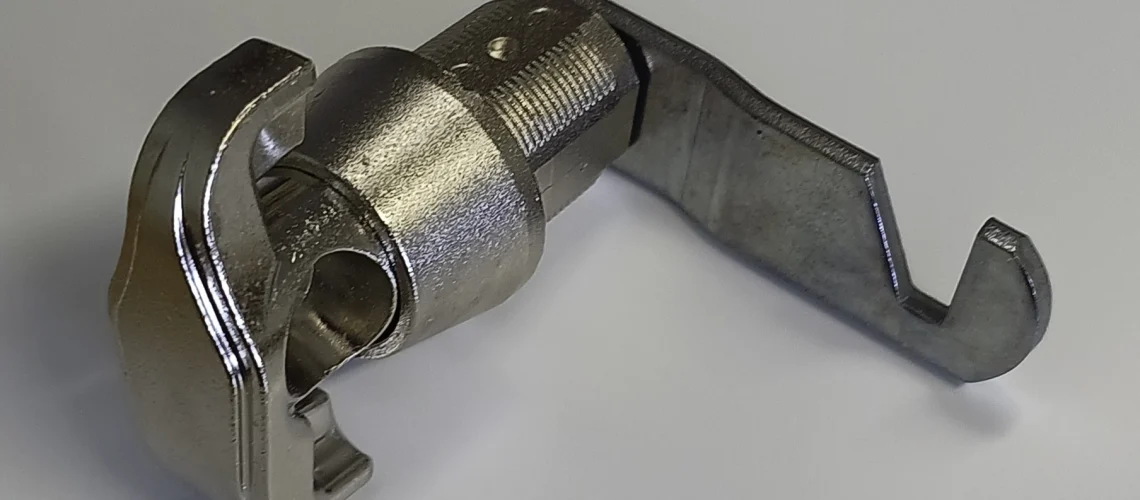
To identify the size of an existing locker cam lock, measure the actual lock rather than choosing a size from the locker type or application. The most useful dimensions are the lock body or barrel length, door thickness, cam length, cam offset and the way the cam is fixed and rotates.
This guide owns one narrow task: how to measure an existing keyed cam lock accurately enough to describe its size and configuration. It does not prove that a different replacement lock will fit every aspect of the locker. For that, use the Locker Lock Compatibility Guide UK.
Cam Lock Sizing = measure what is fitted. Compatibility = prove the proposed replacement will fit.
Quick Answer: What Size Cam Lock Do I Need?
Measure the lock already fitted to the locker. Record the barrel or lock-body length, the locker door thickness, the cam length from the centre of its fixing to the working end, whether the cam is straight or cranked, the amount and direction of any offset, the cam fixing and the direction of rotation.
- Open the locker door.
- Photograph the lock from the front and rear.
- Record the lock manufacturer and key number where visible.
- Measure the door thickness.
- Measure the lock barrel or body length.
- Measure the cam from its fixing centre to the working tip.
- Record whether the cam is straight, offset or cranked.
- Record the direction of the offset.
- Record how the cam is fixed to the lock.
- Record the locked and unlocked positions.
Use millimetres throughout and avoid estimating dimensions from a photograph when the lock can be measured safely.
What This Page Owns, and What It Hands Off
- How to measure the existing keyed cam lock: this page
- What lock is actually fitted: Locker Lock Identification Guide UK
- Will the proposed replacement physically fit: Locker Lock Compatibility Guide UK
- How to remove and fit a replacement lock: Locker Lock Replacement Guide UK
- How to modify the locker for a physically different lock: Retrofit Locker Locks UK
- Changing from keyed access to another access method: Locker Lock Upgrade Guide UK
- Replacement keys: Locker Keys
- Replacement locker locks: Locker Locks
Understand the Main Parts Before Measuring
| Part | What it does |
|---|---|
| Lock face | Visible front of the lock containing the keyway |
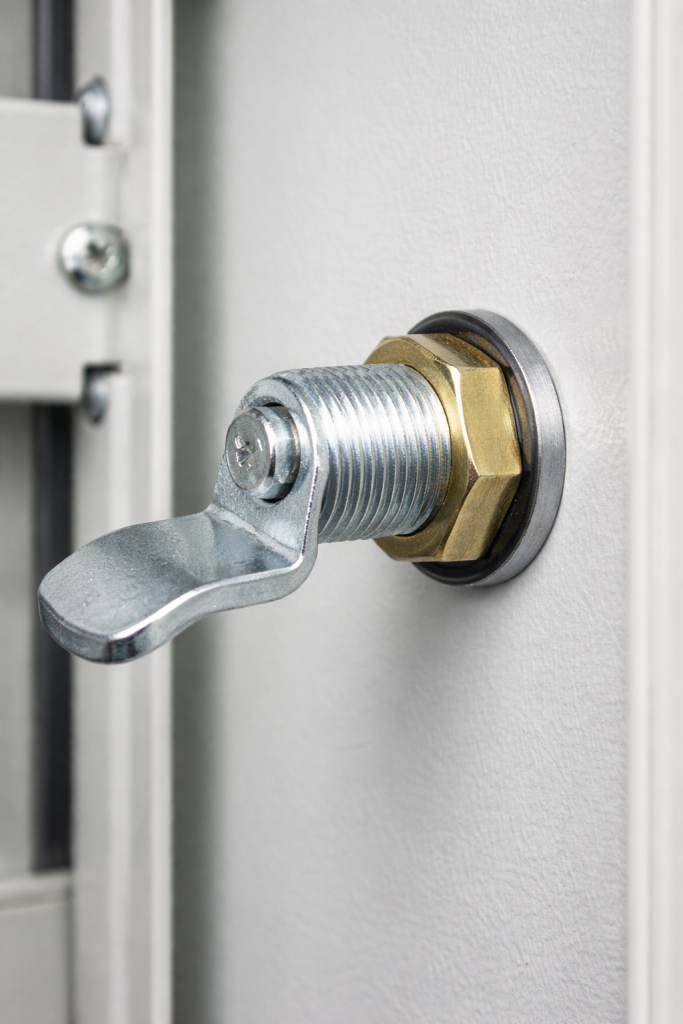
| Barrel / lock body | Passes through or sits within the locker door preparation |
| Retaining nut or clip | Secures the lock to the locker door |
| Cam | Rotates behind the door and engages with the frame or locking point |
| Cam fixing | Secures the cam to the rear of the lock |
| Anti-rotation feature | Helps prevent the lock body turning in the door |
Not every cam lock uses exactly the same construction, so identify the actual lock before relying on a generic description.
Measurement 1: Locker Door Thickness
Measure the complete thickness of the material through which the lock is fitted.
- Measure in millimetres.
- Include any reinforcement plate that forms part of the fixing thickness.
- Do not assume a steel, laminate, timber or plastic locker has a standard door thickness.
- Measure the actual locker being repaired.
Door thickness matters because the lock body and retaining hardware must provide enough usable fixing length to secure the lock correctly.
Measurement 2: Barrel or Lock-Body Length
Manufacturers may describe lock-body and barrel dimensions differently, so the safest approach is to photograph the lock and record exactly what points you measured.
For a common nut-fixed cam lock, record the usable body or threaded length that passes through the locker door and accepts the retaining nut.
- Remove the lock only where authorised and safe to do so.
- Do not include the cam in the barrel-length measurement.
- Record whether part of the body is unthreaded.
- Photograph the ruler or calliper position if the lock type is unusual.
A barrel that is too short may not provide enough fixing length. A longer barrel is not automatically a better solution because rear clearance and the original fixing arrangement still matter.
Do Not Choose Barrel Length From a Generic Locker Type
There is no reliable rule that says a school locker, gym locker or industrial locker automatically requires one particular cam-lock barrel length. Different manufacturers, door materials, generations and replacement histories can all produce different arrangements.
Measure the actual lock and door rather than choosing from an application-based size table.
Measurement 3: Cam Length
Cam length controls how far the working end of the cam reaches towards or behind the locker frame.
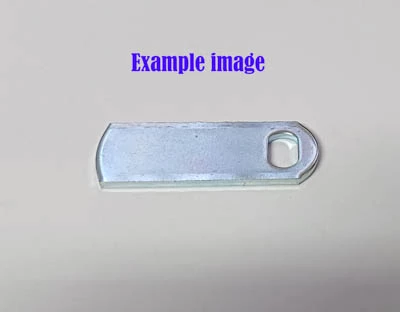
For many flat locker cams, measure from the centre of the cam fixing to the working end of the cam.
- Use a ruler or vernier calliper.
- Measure from the centre of the fixing hole or spindle position.
- Measure to the end that engages with the frame.
- Record the result in millimetres.
- Photograph the cam beside the measuring tool if there is any doubt.
Measurement 4: Straight, Offset or Cranked Cam
Two cams can have the same overall length but engage very differently if one is straight and the other is offset or cranked.
- Straight cam: the working section remains on the same plane.
- Offset or cranked cam: part of the arm is bent forwards or backwards relative to the fixing.
- Stepped or shaped cam: the working end may have additional bends or features.
Record the shape and photograph it from the side. A front-facing photograph alone can hide an offset.
Measurement 5: Cam Offset
If the cam is offset, record both the amount and the direction of the offset.
- Place the cam on a flat surface where practical.
- Identify the plane of the fixing section.
- Measure how far the working section sits forward or behind that plane.
- Record which direction the offset faces when the cam is fitted to the locker.
A cam with the correct length but the wrong offset can miss the intended locking point or place unnecessary pressure on the door.
Measurement 6: Cam Fixing
Record how the cam is attached to the rear of the lock.
- Central screw
- Nut
- Square spindle
- Shaped spindle
- Clip
- Manufacturer-specific fixing
Take a clear photograph before removing the cam. A replacement cam with the correct length and shape is still unusable if it cannot attach to the lock correctly.
Measurement 7: Rotation and Locked Position
Record how the cam moves from unlocked to locked.
- Photograph the cam in the unlocked position.
- Photograph it again in the locked position.
- Record whether the key turns clockwise or anticlockwise to lock.
- Record whether the cam moves approximately a quarter-turn, half-turn or another amount.
- Record whether the door is left- or right-hand hung where that affects the mechanism.
This is particularly useful when otherwise similar locks are available with different rotation arrangements.
Measurement 8: Lock Face and Body Diameter
Where the existing lock has a round barrel or round front face, record its diameter separately from barrel length.
- Measure across the widest point.
- Record whether you are measuring the visible front face or the body that passes through the door.
- Do not assume the front face diameter and body diameter are the same.
Detailed cut-out fit still belongs in the Compatibility Guide, but these measurements help describe the lock accurately.
Record the Key Number and Manufacturer While Measuring
Size alone may not identify the correct lock. Record any key number, manufacturer, model or series marking at the same time.
- Key number or code
- Manufacturer logo
- Model or series
- Master-key marking where known
- Locker manufacturer
If the lock itself is unknown, use Locker Lock Identification Guide UK before deciding what replacement is required.
Mastered and Non-Mastered Cam Locks
Master-key capability is not a physical size measurement, but it is an important part of describing the existing lock correctly.
- Record whether a management or master key currently operates the lock.
- Record the master group or reference where known.
- Do not assume a visually and dimensionally similar lock belongs to the same master-key system.
If the existing lock works and only the user key is missing, a replacement locker key may solve the problem without changing the lock.
Photographs to Take Before Ordering
- Complete locker door
- Front of the lock
- Key number or visible markings
- Rear of the lock
- Retaining nut or clip
- Cam from directly behind
- Cam from the side
- Cam in the locked position
- Cam in the unlocked position
- Measurement of barrel or body length
- Measurement of cam length
Keep the camera square to the part where possible. Angled photographs can make the apparent length or offset misleading.
Cam Lock Measurement Record
| Item | Record |
|---|---|
| Locker manufacturer / range | Where known |
| Lock manufacturer | Name or logo |
| Key number / series | Where visible |
| Door thickness | mm |
| Lock body / barrel length | mm, with measurement points noted |
| Lock body diameter | mm where relevant |
| Cam length | Centre of fixing to working end, mm |
| Cam shape | Straight, offset, cranked or shaped |
| Cam offset | mm and direction |
| Cam fixing | Screw, nut, spindle, clip or other |
| Rotation | Clockwise / anticlockwise and locked position |
| Master-key system | Yes / no / unknown |
Common Cam Lock Measuring Mistakes
- Choosing a size because the locker is in a school, gym or factory.
- Measuring the total lock including the cam and calling it barrel length.
- Measuring cam length from the edge of the fixing rather than its centre.
- Recording cam length but ignoring the offset.
- Ignoring the direction of a cranked cam.
- Ignoring the cam fixing.
- Ignoring clockwise or anticlockwise rotation.
- Guessing door thickness from the locker material.
- Assuming a visually similar lock is the same size.
- Assuming matching physical dimensions automatically mean full compatibility.
- Ordering a large quantity without checking the proposed replacement against the actual locker.
Why There Is No Useful “Standard Locker Cam Lock Size” Table
Locker applications do not map reliably to one barrel length or one cam length. A school, workplace or leisure site can contain several locker manufacturers, door materials and generations of replacement locks.
A generic table may look convenient, but it can encourage the wrong assumption that locker sector predicts lock size. The safer process is to measure the actual lock and use the existing configuration as evidence.
When Measuring Is Not Enough
Knowing the barrel and cam dimensions does not by itself prove that another lock is fully compatible.
- Door cut-out shape
- Anti-rotation features
- Front footprint
- Rear clearance
- Fixing positions
- Door handing
- Master-key or management compatibility
- Environmental suitability
Those checks belong in Locker Lock Compatibility Guide UK.
When the Job Is Actually an Upgrade or Retrofit
If the intention is to change from a keyed cam lock to combination, PIN, RFID or another access method, the project is no longer simply “what size cam lock do I need?”
- Changing access method: Locker Lock Upgrade Guide UK
- Cutting, drilling or adapting the door: Retrofit Locker Locks UK
- Removing and fitting a compatible replacement: Locker Lock Replacement Guide UK
Cam Lock Measuring Checklist
- Locker door open before inspection
- Front and rear photographs taken
- Manufacturer recorded
- Key number recorded
- Door thickness measured
- Barrel or lock-body length measured
- Lock-body diameter recorded where relevant
- Cam length measured centre-to-tip
- Cam shape recorded
- Cam offset measured
- Offset direction recorded
- Cam fixing recorded
- Locked and unlocked positions photographed
- Rotation direction recorded
- Master-key requirement recorded
Where Cam Lock Questions Go Next
| Question | Next page |
|---|---|
| What lock is currently fitted? | Locker Lock Identification Guide UK |
| Will a proposed replacement fit? | Locker Lock Compatibility Guide UK |
| How do I remove and replace the lock? | Locker Lock Replacement Guide UK |
| Does the locker need cutting or adapting? | Retrofit Locker Locks UK |
| Are we changing from keyed access to another system? | Locker Lock Upgrade Guide UK |
| I only need another key | Replacement Locker Keys |
| I need replacement locker locks | Locker Locks |
Cam Lock Size FAQs
How do I measure a locker cam lock?
Record the locker door thickness, lock body or barrel length, cam length, cam shape, cam offset, cam fixing and locked and unlocked rotation. Use millimetres and photograph the original arrangement.
How is cam length measured?
For many locker cams, measure from the centre of the cam fixing to the working end of the cam arm. Record any bend or offset separately.
Is there a standard cam lock size for school lockers?
No single size can be assumed from the application. Locker manufacturers, door materials and replacement histories vary, so the actual lock and door should be measured.
Does cam length alone determine whether a replacement lock will fit?
No. Cam length is only one factor. Door cut-out, body size, fixing method, cam offset, rotation, rear clearance and management-key requirements can also affect compatibility.
Why does cam offset matter?
The offset changes where the working end of the cam sits relative to the lock. A cam with the correct length but the wrong offset may miss the frame or place pressure on the door.
Should I measure the locker door thickness?
Yes. Door thickness affects the usable fixing length of the lock body and should be measured on the actual locker rather than assumed from the material or sector.
What if I want to replace a keyed cam lock with a combination or RFID lock?
That is an upgrade rather than a simple cam-lock sizing question. Use the Locker Lock Upgrade Guide and, where physical adaptation is required, the Retrofit Locker Locks guide.
Summary
To determine cam lock size, measure the actual lock and locker rather than relying on a generic application table.
Record the door thickness, barrel or lock-body length, cam length, cam shape, offset, fixing and rotation. Photograph the lock before dismantling it and record the manufacturer and key number at the same time.
Once those measurements are recorded, use the Compatibility Guide to decide whether a proposed replacement will actually fit.
Discover more from Blog Total Locker Service
Subscribe to get the latest posts sent to your email.