Fire Safe vs Fire-Resistant Filing Cabinet: UK Business Guide
October 2, 2025
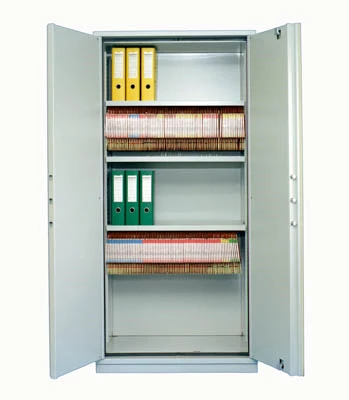
A fire safe and a fire-resistant filing cabinet both protect important records, but they are designed around different storage needs. A fire safe suits compact, high-importance documents and selected valuables, while a fire-resistant filing cabinet is usually more practical for larger volumes of active paper files that staff need to organise and access regularly.
This UK business guide compares a fire safe vs fire-resistant filing cabinet by storage format, document capacity, access frequency, fire protection, theft resistance, installation and day-to-day use. It deliberately keeps fire-rating selection, data-media protection and detailed safe sizing on their own specialist guides so the comparison stays clear.
Quick Answer: Fire Safe or Fire-Resistant Filing Cabinet?
Choose a fire-resistant filing cabinet when you have a large volume of paper records that need organised drawer storage and frequent access. Choose a fire safe when the protected contents are more compact, access is more controlled, or you need a model that combines document fire protection with a specified security rating.
| Requirement | Fire safe | Fire-resistant filing cabinet |
|---|---|---|
| Small volume of critical paper documents | Usually well suited | Usually more capacity than needed |
| Large active paper filing system | Can become awkward | Usually the stronger fit |
| Frequent staff access | Suitable where access remains controlled | Drawer format is designed for regular filing |
| Cash or valuables | Use a model with the required security or cash rating | Do not assume burglary protection |
| USB drives, hard drives or backup media | Only if specifically rated for the media | Paper-rated cabinets are not automatically suitable |
| Organised suspension-file storage | Depends on internal fittings | Strong use case |
If digital media is part of the requirement, compare data safes vs fire safes. If you already know you need a safe but are unsure about dimensions, use the fire safe size guide.
What Is a Fire Safe Best For?
A fire safe is designed to limit heat transfer to its contents for a stated period under defined test conditions. For business use, document fire safes are commonly chosen for contracts, certificates, deeds, insurance documents, licences, business-continuity papers and other records that are important but do not need to sit in a large active filing system.
The important distinction is that fire resistance and theft resistance are separate specifications. A fire safe should not automatically be treated as a burglary safe. If cash, valuables or higher-risk items are being stored, check the model’s security or cash rating as well as its fire rating.
- Compact quantities of important paper records
- Original certificates, contracts and legal documents
- Items requiring controlled rather than open departmental access
- Documents that need fire protection without a full drawer-based filing system
- Cash or valuables only where the selected safe has an appropriate security rating
For a separate explanation of theft protection, see fire safe vs standard safe. For fire duration and certification questions, use the dedicated fire safe ratings UK guide.
What Is a Fire-Resistant Filing Cabinet Best For?
A fire-resistant filing cabinet is built around paper-file organisation and repeat access. Instead of using one main safe compartment, the cabinet provides filing drawers so records can stay in a practical working structure.
This makes fire-resistant cabinets particularly useful for HR records, accounts files, client documents, legal paperwork, administrative records and other paper files that staff need to retrieve and return regularly.
- High-volume paper records
- Daily or weekly document access
- Suspension-file and drawer-based organisation
- Departmental records that must remain structured
- Workplaces where a conventional safe would make filing inconvenient
Total Locker Service also supplies a 4-drawer fire-resistant filing cabinet for paper files. Always check the current product specification, dimensions, weight, fire rating and delivery requirements before ordering.
If the question is whether the extra protection is justified for your records, see are fire-resistant filing cabinets worth it?
Fire Safe vs Fire-Resistant Filing Cabinet: Main Differences
1. Document Capacity
Capacity should be judged by usable protected storage, not external size alone. A safe may have thick insulated walls and a relatively compact interior, while a filing cabinet is designed to use drawer space efficiently for organised paper records.
If you have a few folders, certificates or original documents, a safe may be simpler. If you have many active files, a cabinet normally provides a more workable filing format.
2. Access Frequency and Workflow
Access frequency is one of the strongest practical separators. A safe can work well for occasional or controlled access, but repeatedly moving folders in and out of shelves may become inefficient when several staff use the same records.
A filing cabinet keeps records in drawers, making retrieval and return more natural for active document systems. If staff need files throughout the working day, workflow may matter as much as nominal capacity.
3. Fire Protection
Both product types can provide tested fire protection, but the relevant rating must match the specific product and the contents being protected. Do not assume that every fire safe or fire-resistant cabinet offers the same duration, certification or internal-temperature performance.
For that reason, this comparison does not prescribe one universal number of minutes. Check the manufacturer’s declared test standard and rating, then compare it with the value and replacement difficulty of the records. The fire safe ratings guide covers 30, 60, 90 and 120-minute options in more detail.
4. Theft Resistance and Access Control
A lock on a cabinet controls normal access, but that does not make the cabinet a burglary-rated safe. Equally, a product sold for fire protection should not be assumed to provide a particular level of theft resistance unless a recognised security specification is stated.
If theft is a material risk, compare the security rating, lock type, construction and any insurer requirements separately from the fire rating. This is especially important for cash, jewellery, payment devices and other high-value contents.
5. Digital Media
USB drives, hard drives, backup tapes and other digital media can require lower internal-temperature protection than paper. A document fire safe or paper-rated filing cabinet is therefore not automatically suitable for digital media.
If physical backups are part of the storage plan, use a product rated for that media type. Total Locker Service has a dedicated data safes range and a detailed data safe vs fire safe comparison.
6. Installation, Weight and Site Access
Fire-resistant storage can be substantial. Before ordering either option, check the full delivery route, including external access, door widths, corridors, steps, lifts, floor loading and the final position.
For a filing cabinet, also allow enough room for drawers to open fully without blocking a walkway. For a safe, check door swing, anchoring requirements where applicable and practical access for authorised users.
7. Cost and Long-Term Value
There is no reliable rule that one category is always cheaper. Price varies with fire rating, size, manufacturer, lock type, construction, security rating and delivery requirements.
Compare cost against the actual storage job. A low-priced safe that is too small for active records is poor value. A large filing cabinet is also unnecessary if you only need to protect a handful of documents. The more useful comparison is cost per usable protected storage requirement, including how easily staff can use the unit every day.
Detailed Comparison Table
| Factor | Fire safe | Fire-resistant filing cabinet |
|---|---|---|
| Primary role | Protected storage for compact important contents | Protected storage for organised paper files |
| Typical access pattern | Occasional to controlled regular access | Regular filing access |
| Storage format | Shelves, trays or internal compartments depending on model | Drawers for paper filing |
| Paper capacity | Low to high depending on model | Well suited to high-volume active files |
| Security | Varies; check burglary or cash rating separately | Locking provides access control; burglary resistance depends on specification |
| Digital media | Only where specifically media/data rated | Not automatically suitable if rated for paper |
| Typical users | Small businesses, offices, finance teams, management, home offices | HR, legal, accounts, healthcare administration, schools, public sector and records teams |
| Planning issue | Internal dimensions, door swing, weight, delivery and security rating | Drawer clearance, file format, floor space, weight and delivery access |
Which Option Fits Different Business Scenarios?
Small Office With Contracts and Certificates
A compact or medium document fire safe may be appropriate where the protected records are important but limited in volume. Check the internal dimensions before ordering so A4 documents, folders or binders fit as intended.
HR Department With Active Personnel Files
A fire-resistant filing cabinet is often easier to use when staff need organised access to many paper files. Drawer-based filing reduces the need to stack and move folders every time one record is required.
Legal or Accounts Team
A mixed approach may work best. Active paper records can remain in fire-resistant filing cabinets, while original documents that need tighter access control can be kept in a suitable safe. Physical backup media should be considered separately.
Retail Site Storing Cash and Documents
Cash introduces a theft-protection requirement that a document filing cabinet may not meet. Look for a safe with an appropriate security or cash rating and confirm whether the same model also provides the fire protection required for the documents.
Organisation With Large Paper Record Volumes
Where paper files are extensive and remain actively used, a bank of fire-resistant filing cabinets may be more practical than trying to reproduce a filing system inside conventional safes. Capacity, drawer format, floor loading and delivery access should be checked as part of the specification.
Fire Safe vs Filing Cabinet Decision Checklist
- List the contents: separate paper documents, cash, valuables and digital media.
- Measure the storage requirement: count files and measure the largest folders, binders or document formats.
- Define access frequency: occasional controlled access and daily departmental filing are different workflows.
- Check the correct fire specification: match the product’s declared rating to the contents.
- Separate fire and theft requirements: confirm security ratings rather than assuming them.
- Keep data media separate where necessary: paper protection does not automatically protect digital storage.
- Check the delivery route: measure doors, corridors and lifts and consider stairs and floor loading.
- Allow for practical use: include drawer clearance, safe-door swing and space for authorised users.
- Allow sensible future capacity: avoid buying a unit that is already full on installation.
If your requirement extends beyond safes and filing cabinets, the types of storage systems UK guide compares lockers, cabinets, safes, key storage and other workplace storage categories.
Common Specification Mistakes
- Assuming all fire safes are burglary safes: fire and security ratings are separate.
- Assuming a locked filing cabinet is high-security storage: check the declared security specification.
- Putting digital backups in paper-rated storage: media can require lower internal-temperature protection.
- Choosing by external dimensions: insulated construction reduces usable internal space.
- Ignoring filing workflow: a product that is awkward to use can lead to records being left outside protected storage.
- Buying on minutes alone: check the test standard, content type and complete product specification.
- Forgetting delivery access: large safes and cabinets may be difficult to move through restricted routes.
Frequently Asked Questions
Is a fire safe better than a fire-resistant filing cabinet?
Neither is universally better. A fire safe is usually more suitable for compact important documents and controlled access. A fire-resistant filing cabinet is usually more practical for larger volumes of active paper files that need organised drawer storage.
What is the main difference between a fire safe and a fire-resistant filing cabinet?
The main practical difference is storage format. A fire safe normally uses shelves, trays or compartments, while a fire-resistant filing cabinet uses drawers designed for organised paper filing and frequent record access.
Do fire safes automatically provide better theft protection?
No. Fire resistance and burglary resistance are separate specifications. If theft protection matters, check the safe’s stated security or cash rating rather than relying on the fire rating alone.
Can a fire-resistant filing cabinet protect digital media?
Only if the specific cabinet is rated for the relevant media. Paper-rated fire protection does not automatically provide the lower internal-temperature protection required by some digital media such as hard drives, USB devices or backup tapes.
Which is better for HR and personnel files?
A fire-resistant filing cabinet is often more practical where there are many active personnel files and authorised staff need regular drawer-based access. A safe can still suit a smaller number of critical or original documents.
Can I use a fire safe and a fire-resistant filing cabinet together?
Yes. Many organisations can separate storage by use: active paper files in a fire-resistant cabinet, critical documents or suitably rated valuables in a safe, and heat-sensitive digital media in a data safe where required.
What should I check before ordering either product?
Check the type and volume of contents, fire rating, any required security rating, internal dimensions, external dimensions, weight, delivery route, floor loading, lock type and the space needed to open the safe door or filing drawers.
Should I choose a fire safe by size or by fire rating first?
Start with the contents and protection requirement, then choose a product type and rating that suit those contents. After that, check usable internal capacity and site access. A larger unit is not a substitute for the correct protection type.
Conclusion: Match the Storage Format to the Records
The useful distinction is not simply safe versus cabinet. It is whether your organisation needs compact protected storage or a working paper-file system with fire resistance.
Choose a fire safe where important contents are relatively compact and access can remain controlled. Choose a fire-resistant filing cabinet where large volumes of paper records need practical drawer organisation and regular authorised access. If the contents include digital media, cash or valuables, check their specialist protection requirements separately rather than assuming one product covers every risk.
Related Guides
Discover more from Blog Total Locker Service
Subscribe to get the latest posts sent to your email.