Anti-Vandal Locker Locks UK: Guide for Schools & Public Facilities (2026)
March 3, 2026
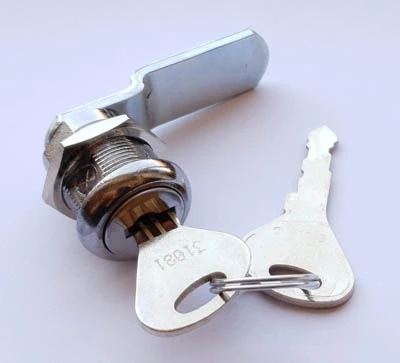
Anti-vandal locker locks are intended for locations where ordinary locker hardware is exposed to heavy use, deliberate misuse or repeated attempts at forced access. Schools, leisure centres, transport workplaces, factories and public buildings can all present these risks, but the correct specification depends on the actual locker, users, environment and incident history.
A stronger lock can reduce a known vulnerability, but it cannot compensate for a weak door, damaged frame, exposed hinge or poor management procedure. Effective locker security depends on the complete installation.
Quick answer: Choose a lock with documented construction and durability appropriate to the identified risk. Check the external profile, housing, cylinder or controls, internal fixing, cam or latch, override method and compatibility with the locker door. Where the risk is uncertain, assess previous damage and test a proposed lock on a representative locker before ordering in quantity.
What Is an Anti-Vandal Locker Lock?
An anti-vandal locker lock is a lock selected or designed to reduce opportunities for tampering, forced rotation, pulling, impact damage or misuse. The term describes an intended level of resistance rather than one universal construction.
Depending on the product and application, useful features may include:
- A flush or low-profile external face with fewer grip points
- A robust lock body or protected operating mechanism
- Fixings accessible only from inside the locker
- A strong cam, latch or locking point correctly engaged with the frame
- A design suited to frequent operation and the expected users
- Controlled master, reset or administrator access
These features must be confirmed from the specification of the particular lock. Similar-looking products can differ considerably in materials, construction, operating life and resistance to misuse.
Are There UK Security Grades for Locker Locks?
There is no single universal UK security grade that allows every locker lock to be placed on one reliable scale. Locker locks should not be treated as though they automatically carry the same classifications used for building-door locks, padlocks or safes.
Manufacturers may provide product-specific evidence such as cycle testing, material specifications, environmental suitability or tests against particular forms of attack. Procurement teams should ask what was tested, how it was tested and whether the evidence applies to the exact model being proposed.
Terms such as “anti-vandal”, “heavy-duty”, “high-security”, “anti-pick” and “anti-drill” are not substitutes for product evidence.
Evidence worth requesting
- Manufacturer and exact model reference
- Lock-body, face and fixing materials
- Tested operating-cycle information
- Details of any forced-rotation, pull, impact or manipulation testing
- Environmental and corrosion-suitability information
- Warranty terms and stated exclusions
- Availability of replacement parts, keys, cams and override tools
Start with the Risk, Not the Label
Anti-vandal performance should be matched to a defined problem. Review how the existing locks fail and where incidents occur before selecting a replacement.
| Observed problem | What to inspect | Possible specification response |
|---|---|---|
| Lock faces are pulled or twisted | External projection, face shape, housing and internal fixing | Lower-profile design, protected body and secure internal fixing |
| Keys or tools are forced into cylinders | Cylinder condition, key control and location of incidents | More suitable cylinder construction, protected access or a different operating method |
| Dials or buttons are damaged | Control projection, user behaviour and impact exposure | Protected or lower-profile controls and a model intended for demanding shared use |
| Cams bend or disengage | Cam material, length, offset, rotation and frame engagement | Correctly specified cam or latch with reliable engagement |
| Door metal distorts around the lock | Door construction, cut-out and previous modifications | Door reinforcement, repair or replacement as well as a suitable lock |
| Damage repeats in one area | Visibility, supervision, lighting and layout | Address the surrounding environment as well as the hardware |
| Locks fail without obvious attack | Wear, alignment, cleaning, corrosion and usage frequency | Correct maintenance, environmental specification or higher-cycle product |
The Lock Is Only One Part of Locker Security
A robust lock fitted to an unsuitable or damaged locker can create the appearance of security without correcting the actual weakness. Assess the complete locking path from the external control through to the door, frame and cabinet.
- Door: Check material, thickness, stiffness, deformation and the condition around the cut-out.
- Frame: Confirm that the cam or latch engages correctly and cannot pass a distorted edge.
- Hinges: Inspect for loose fixings, wear, damage and avoidable external exposure.
- Fixing: Make sure the lock cannot rotate, loosen or be removed easily from outside.
- Alignment: A badly aligned door can overload the mechanism and encourage users to force it.
- Installation: Locker banks must be stable and installed in accordance with the manufacturer’s requirements.
For the broader relationship between construction, placement, procedures and user behaviour, read the locker security guide.
Anti-Vandal Locker Lock Options
No access method is automatically vandal resistant. Keyed, hasp, mechanical combination and electronic locks can each be suitable when the exact product, locker and operating procedure match the risk.
Robust keyed locker locks
Key-operated locks provide familiar operation and can support master-key access where compatible. Check cylinder projection, fixing security, key control, body construction and cam engagement. A master-key system improves authorised access but also creates a credential requiring strict control.
Hasp locks and padlock fittings
A hasp fitting lets the user or site supply a compatible padlock. It can simplify replacement of the user-operated lock, but the result is only as strong as the hasp, padlock, locker door and their connection. Projecting parts and abandoned padlocks also require consideration.
Mechanical combination locks
Mechanical combination locks remove the ordinary user key and may suit assigned or shared operation, depending on the model. For demanding locations, check the protection of the dial or buttons, reset procedure, override control, fixing method and evidence for expected usage frequency.
Electronic keypad and RFID locks
Electronic locks can support changing users, administrator access and compatible credentials. Features vary by product. Confirm housing construction, operating mode, rear clearance, battery access, emergency procedure, credential compatibility and the degree to which external controls are protected.
The choice between mechanical and electronic access should be based on the operating requirement as well as physical resistance. See the mechanical versus electronic locker locks guide for the wider comparison.
Selecting Locks for Different Environments
| Environment | Typical risk | Points to check |
|---|---|---|
| School corridors and changing rooms | Frequent use, impact, misuse and concentrated changeover periods | Simple operation, protected controls, manageable override, robust door and prompt repairs |
| Leisure centres and public changing areas | High user turnover, temporary use, moisture and limited user accountability | Public-use mode, wet-area suitability, controlled override and frequent inspection |
| Factories and warehouses | Heavy use, gloves, dirt, impact and shift-change peaks | Usability with workwear, contamination, lock projection, cam strength and spare availability |
| Workplaces | Personal belongings, staff changes and assigned or shared use | Allocation model, key or credential control, leaver procedure and incident history |
| Transport workplaces and other controlled facilities | High footfall, mixed users and operational pressure | Actual public access, supervision, contents, user turnover and maintenance response |
| Wet or chlorinated areas | Corrosion and deterioration as well as misuse | Explicit product suitability for the conditions, not merely an anti-vandal description |
| Outdoor or semi-exposed lockers | Weather, moisture, contamination and unauthorised access | Complete environmental specification for the locker, lock, hinges and fixings |
Do not assume that a lock described as robust for a dry school corridor is suitable beside a swimming pool or in an exposed external location. Resistance to misuse and resistance to corrosion are separate requirements.
Assigned and Shared Lockers Create Different Risks
Assigned lockers usually have one regular user, making responsibility and access records easier to define. Shared lockers have changing users and can experience higher operating cycles, code problems, abandoned belongings and less personal responsibility for reporting damage.
- Use private-use locks only where a regular user retains the locker.
- Use an appropriate public-use mode for lockers released between users.
- Define how occupied or abandoned lockers may be opened.
- Control master keys, reset tools and administrator credentials.
- Provide clear operating instructions to reduce accidental damage.
- Inspect high-turnover locker banks at a frequency based on usage and faults.
Retrofit and Installation Checks
Locker locks are not universal. A proposed anti-vandal replacement must fit the existing door and operate the locking point correctly.
- Door material and thickness
- Existing lock cut-out and fixing positions
- Lock-body dimensions and external projection
- Cam length, offset, rotation and engagement
- Door handing where relevant
- Rear clearance and possible contact with stored items
- Battery access for electronic models
- Condition of the door, frame and hinges
For a substantial replacement project, fit one proposed lock to an actual locker and test normal use, authorised override and attempted movement of the lock body before approving the full quantity. The locker lock replacement guide explains the wider replacement process.
Inspection and Maintenance
Anti-vandal hardware still requires inspection. The appropriate frequency depends on usage, environment, manufacturer guidance and the site’s history of faults or deliberate damage.
Warning signs
- Movement or rotation of the lock body
- Fresh scratches, dents or distortion around the opening
- A bent, loose or poorly engaging cam
- Cracked laminate or plastic around the lock
- Damaged dials, buttons, keyways or readers
- A door that needs excessive force to close or unlock
- Loose hinges or a distorted frame
- Repeated faults affecting the same bank or location
Investigate the cause rather than repeatedly replacing the visible broken part. A stiff door may overload locks, while a damaged frame can make a stronger lock ineffective.
What to Do After Suspected Tampering
- Remove the affected locker from normal use where appropriate.
- Record the location, locker number, time and reported circumstances.
- Photograph the lock, door, frame, hinges and surrounding damage before repair.
- Follow the organisation’s incident, safeguarding or security procedure.
- Inspect nearby lockers for similar marks or faults.
- Determine whether the lock, door, frame, hinge or management process failed.
- Repair the complete weakness and record the parts fitted.
- Review repeated incidents by location, time and method.
Whole-Life Cost
A more robust lock may cost more initially, but purchase price alone does not establish value. Compare the expected operating life and the cost of failures across the complete installation.
- Replacement locks, cams, keys and credentials
- Damaged locker doors and frames
- Labour and site visits
- Locker downtime
- Staff time handling faults and user enquiries
- Batteries, programming tools or software where applicable
- Consequences of repeated damage or unauthorised access
A higher-cost product is not automatically more suitable. The best value comes from correcting the identified failure mode with a supportable system that staff and users can operate properly.
Common Specification Mistakes
- Treating “anti-vandal” as a recognised universal grade
- Accepting unsupported security or durability claims
- Replacing the lock while ignoring a weak or damaged door
- Assuming one lock type suits every area of a site
- Confusing corrosion resistance with vandal resistance
- Choosing electronic access without planning batteries and administrator control
- Choosing combination access without a secure reset procedure
- Ignoring external projection and opportunities to grip the lock
- Ordering a retrofit without checking the cut-out, fixings and cam
- Converting a complete locker estate without first testing a sample
- Failing to record recurring damage and identify patterns
Anti-Vandal Locker Lock Specification Checklist
- Record the location, users and locker allocation method.
- Identify what is stored and the consequences of unauthorised access.
- Review previous damage, faults and attempted-entry methods.
- Inspect the locker door, frame, hinges, cut-out, fixing and cam.
- Decide whether the lock is for assigned, shared or temporary use.
- Define user access and authorised management override.
- Confirm the operating environment, including moisture, dust and impact.
- Request evidence for relevant durability and resistance claims.
- Check dimensions, fit, rear clearance and replacement-part availability.
- Test the proposed lock on a representative locker.
- Document inspection, maintenance and incident procedures.
- Approve the full quantity only after the sample performs correctly.
Help Choosing or Identifying Locker Locks
Total Locker Service supplies keyed, hasp, coin, mechanical combination, keypad and RFID locker locks for suitable new and existing installations. Product suitability depends on the locker, environment and operating requirement.
If you cannot identify an existing lock, send clear photographs of the front, rear mechanism, cam, locker door and visible markings through our locker lock and part identification service. Include door thickness, cut-out dimensions and details of the current failure where possible.
Call 01284 749211 or email sales@totallocker.co.uk for product identification, replacement-lock compatibility or project advice.
Anti-Vandal Locker Lock FAQs
What is an anti-vandal locker lock?
An anti-vandal locker lock is selected or designed to reduce opportunities for tampering, forced rotation, pulling, impact damage or misuse. Suitability depends on the exact product, locker construction, users, environment and identified risk.
Do locker locks have official UK security grades?
There is no single universal UK security grade covering every locker lock. Manufacturers may provide product-specific test evidence, so buyers should check what was tested and whether the evidence applies to the exact model proposed.
Are anti-vandal locker locks necessary in every school?
No. The appropriate lock should reflect the actual usage, location and incident history. Locker banks exposed to repeated misuse or damage may justify more robust hardware, while well-controlled areas may not need the same specification.
Which type of locker lock is most vandal resistant?
No access method is automatically the most vandal resistant. Keyed, hasp, combination and electronic locks can each be suitable when their construction, external profile, fixing, cam or latch and supporting locker door match the identified risk.
Can combination locker locks be used in schools?
Yes, where the particular model is suitable for the users and expected level of use. The school must also plan forgotten-code recovery, reset control, authorised override and repair procedures.
Are electronic locker locks suitable for high-risk public areas?
Selected electronic locks may be suitable, but this cannot be assumed from the access technology alone. Check the housing, external controls, fixing, administrator access, power arrangements, environmental suitability and manufacturer evidence for the exact model.
Do anti-vandal locks prevent locker break-ins?
No lock can guarantee that forced access will never occur. Suitable hardware can increase resistance and reduce particular vulnerabilities, but the locker door, frame, hinges, installation, location and management procedures also affect security.
Can an anti-vandal lock be retrofitted to an existing locker?
Often, but compatibility must be checked. Inspect the door material and thickness, existing cut-out, fixing positions, lock-body dimensions, cam or latch, rotation, handing and rear clearance. Test one locker before a larger conversion.
Are anti-vandal locker locks suitable for wet areas?
Only where the exact lock is specified for the actual wet or corrosive conditions. Resistance to physical misuse does not automatically provide resistance to moisture, chlorinated environments or outdoor exposure.
What photographs help identify a replacement locker lock?
Provide clear photographs of the lock face, rear mechanism, cam, complete locker door and any manufacturer, key or model markings. Door thickness, cut-out dimensions, handing and a description of the fault are also useful.
Discover more from Blog Total Locker Service
Subscribe to get the latest posts sent to your email.