Workplace Locker Planning Systems UK: Hybrid Working, Occupancy and Flexible Storage Planning
May 13, 2026
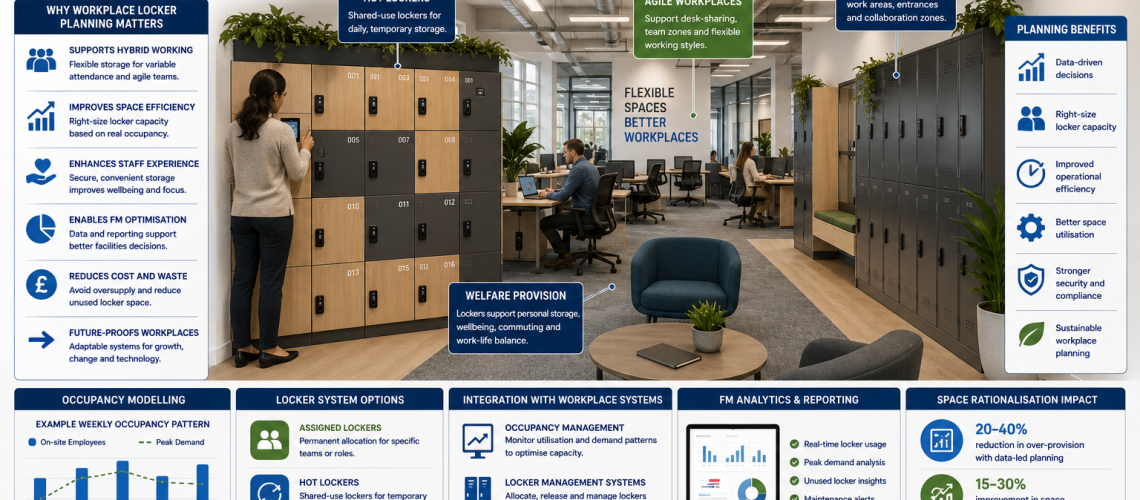
Workplace locker planning systems help businesses manage storage, occupancy, hybrid working and staff welfare in modern offices, commercial buildings and flexible workplaces.
Modern locker planning is no longer just about providing staff lockers. Businesses now use locker systems to support desk-sharing, agile working, hot desking, flexible attendance patterns and workplace efficiency.
This guide explains how UK workplaces can plan locker systems around occupancy modelling, staff movement, flexible office design, welfare provision and facilities management operations.
For wider planning guidance, see our Locker Planning UK guide. For operational control, use the Locker Management Systems UK guide.
Quick Answer: What Is a Workplace Locker Planning System?
A workplace locker planning system combines locker allocation, occupancy forecasting, access management and workplace layout planning to support modern office operations.
Instead of assigning one locker to every employee permanently, many workplaces now use shared-use lockers, hot lockers and occupancy-based planning models that reflect how staff actually use the building.
| Planning area | What it covers | Operational benefit |
|---|---|---|
| Occupancy modelling | Peak attendance and workspace usage | Reduces wasted space |
| Hot locker systems | Temporary shared-use lockers | Supports hybrid working |
| Desk-sharing support | Storage for flexible workers | Improves workspace agility |
| Access management | Keys, RFID or smart credentials | Improves control and auditing |
| Facilities analytics | Usage reporting and occupancy trends | Supports FM decisions |
| Welfare provision | Personal storage and wellbeing support | Improves staff experience |
Why Workplace Locker Planning Has Changed
Traditional offices often assigned one desk and one locker to each employee. Hybrid working has changed this model. Many workplaces now operate with variable attendance, rotating teams and shared spaces.
This means locker systems must support flexibility rather than fixed allocation. Storage planning now forms part of wider workplace strategy involving occupancy management, employee experience and space optimisation.
Hybrid Working and Flexible Offices
Hybrid working reduces the number of staff in the office on some days while increasing peak demand on others. Locker planning should reflect actual attendance patterns rather than total employee headcount.
Some businesses only need lockers for peak attendance days. Others need additional storage because staff move between floors, meeting rooms or touchdown workspaces during the day.
- Analyse attendance trends.
- Identify peak office days.
- Separate permanent staff from visitors and contractors.
- Allow storage for mobile workers.
- Keep reserve lockers for expansion.
For occupancy forecasting, link to Locker Capacity Planning UK.
Desk-Sharing and Agile Workplace Planning
Desk-sharing systems reduce the number of permanent desks in the workplace. Staff need secure storage for bags, laptops, personal items and equipment when moving between workstations.
Locker systems support agile workplaces by providing flexible storage near collaboration zones, touchdown spaces and shared desks.
Good planning should consider:
- Locker location relative to work areas.
- Peak arrival and departure times.
- Charging requirements for devices.
- Temporary visitor storage.
- Access speed during busy periods.
- Cleaning and maintenance access.
Hot Locker Systems
Hot lockers are temporary lockers used for short-term daily storage rather than permanent allocation. They are common in hybrid workplaces and flexible office environments.
Hot locker systems reduce wasted locker space while supporting flexible attendance patterns.
| Hot locker feature | Purpose | Operational value |
|---|---|---|
| Temporary allocation | Locker released after use | Improves locker turnover |
| RFID or smart access | Quick user access | Reduces administration |
| Occupancy reporting | Tracks usage trends | Supports FM planning |
| Automated release rules | Removes abandoned allocations | Improves availability |
| Flexible zoning | Supports departments or floors | Improves workplace flow |
For technology integration, see Smart Locker Systems UK.
Occupancy Modelling and Forecasting
Occupancy modelling helps workplaces decide how many lockers are actually needed. This avoids over-installation while maintaining enough storage during peak periods.
Workplaces should measure:
- Peak attendance levels.
- Department attendance patterns.
- Visitor frequency.
- Contractor access.
- Shift overlap.
- Meeting and event demand.
- Storage usage trends.
For wider occupancy forecasting, link to Locker Occupancy Management Systems UK.
Facilities Management Analytics
Modern locker systems increasingly support FM analytics and reporting. Smart locker platforms can show occupancy levels, unused lockers, peak demand and maintenance issues.
This helps facilities managers:
- Identify underused areas.
- Improve space allocation.
- Reduce wasted capacity.
- Plan future expansion.
- Track locker faults and maintenance.
- Improve workplace efficiency.
Analytics can also support wider workplace rationalisation projects.
Space Rationalisation and Office Optimisation
Locker planning now forms part of office space rationalisation strategies. Businesses may reduce desk numbers while increasing collaboration areas, touchdown spaces and shared facilities.
Well-planned locker systems help maintain personal storage while reducing the amount of permanently assigned workspace.
Space optimisation planning should consider:
- Traffic flow through the office.
- Locker location near entrances.
- Storage demand by department.
- Quiet zones and collaboration areas.
- Accessibility and circulation space.
- Future workforce growth.
Workplace Welfare Provision
Locker systems also support workplace welfare. Staff need secure storage for personal belongings, clothing, devices and commuting equipment.
Some workplaces may also require lockers for:
- Cycle commuters.
- PPE and uniforms.
- Clean and dirty separation.
- Shift workers.
- Personal technology storage.
- Temporary contractors and visitors.
Welfare-focused locker planning improves employee experience and supports operational compliance.
Access Systems and Workplace Governance
Access systems should align with wider workplace security and operational policies. Keyed systems may suit smaller offices, while RFID or smart access may support larger hybrid estates.
Modern workplace locker governance may include:
- Temporary access permissions.
- Automated locker release.
- Occupancy reporting.
- Credential integration.
- Audit trails.
- Remote administration.
For governance planning, link to Locker Access Control Systems UK.
Workplace Locker Planning Checklist
- Measure peak workplace occupancy.
- Assess hybrid attendance patterns.
- Plan for desk-sharing and agile working.
- Decide between assigned and hot lockers.
- Allow storage for visitors and contractors.
- Check circulation and locker positioning.
- Choose suitable access systems.
- Allow reserve capacity for growth.
- Plan maintenance and cleaning access.
- Review reporting and analytics requirements.
- Integrate locker systems into FM planning.
Common Workplace Locker Planning Mistakes
- Installing one locker per employee without occupancy analysis.
- Ignoring peak attendance days.
- Placing lockers too far from work areas.
- Using hot lockers without management rules.
- Failing to allow for visitors and contractors.
- Ignoring cleaning and maintenance access.
- Overlooking accessibility requirements.
- Not planning for future workforce changes.
Best Internal Links for This Page
| Link target | Suggested anchor text | Best placement |
|---|---|---|
| /blog/locker-capacity-planning-uk/ | Locker Capacity Planning UK | Hybrid working and occupancy sections |
| /blog/locker-management-systems-uk/ | Locker Management Systems UK | Introduction and governance sections |
| /blog/locker-occupancy-management-systems-uk/ | Locker Occupancy Management Systems UK | Occupancy modelling section |
| /blog/smart-locker-systems-uk/ | Smart Locker Systems UK | Hot locker and analytics sections |
| /blog/locker-access-control-systems-uk/ | Locker Access Control Systems UK | Access governance section |
| /blog/workplace-locker-layout-guide-uk/ | Workplace Locker Layout Guide UK | Space rationalisation section |
| /Lockers.php | workplace lockers | Final CTA |
Conclusion
Workplace locker planning systems now form part of wider workplace operations, occupancy management and facilities strategy. Modern offices need flexible storage systems that support hybrid working, desk-sharing and efficient space use.
The strongest workplace locker systems combine occupancy forecasting, operational governance, smart access and staff welfare planning. This creates a more adaptable and efficient workplace environment.
For workplace locker planning support, visit our workplace lockers page or contact Total Locker Service for help planning flexible locker systems for your organisation.
FAQ: Workplace Locker Planning Systems UK
What is a workplace locker planning system?
A workplace locker planning system combines locker allocation, occupancy modelling, access management and layout planning to support modern office operations.
What are hot lockers?
Hot lockers are shared temporary lockers used by different staff members rather than permanently assigned to one employee.
Why are lockers important in hybrid workplaces?
Hybrid workplaces often use desk-sharing and flexible attendance patterns, so staff need secure storage for personal belongings, laptops and equipment.
How do workplaces calculate locker requirements?
Locker capacity should be based on peak occupancy, attendance trends, visitor demand and whether lockers are assigned or shared.
What are workplace locker analytics?
Locker analytics track usage, occupancy, maintenance issues and allocation trends to help facilities managers optimise workplace space.
Should workplace lockers use smart access systems?
Smart access systems may improve management, occupancy reporting and operational control in larger hybrid workplaces and flexible office environments.
Discover more from Blog Total Locker Service
Subscribe to get the latest posts sent to your email.