Under-Counter Cash Safes UK: Till Drops, Note Deposit and Retail Cash Security
September 24, 2026
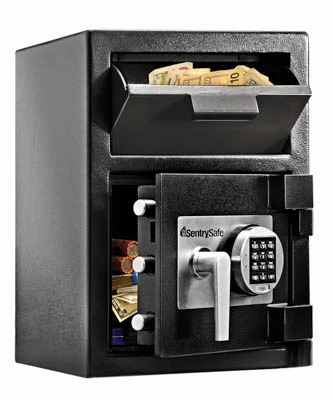
Under-counter cash safes give shops, hospitality businesses, reception areas and other cash-handling sites a practical way to move banknotes away from the till without giving front-line staff access to accumulated takings. Installed beneath or close to a counter, they support frequent cash drops during the working day while restricting retrieval to authorised personnel.
This guide explains how under-counter cash safes work, when they are preferable to a conventional safe, how note-deposit systems support retail cash handling, what anti-fishing protection means, how the safe should be positioned and fixed, and what to check before choosing one for a UK business.
Quick Answer: What Is an Under-Counter Cash Safe?
An under-counter cash safe is a compact secure unit installed beneath a till, checkout, desk or service counter. It allows staff to move excess banknotes out of the working till without opening the safe’s main storage compartment. This reduces the amount of accessible cash at the point of sale while keeping retrieval restricted to authorised personnel.
| Cash-handling requirement | Solution to consider |
|---|---|
| Remove excess notes from a till quickly | Under-counter note-deposit safe |
| Several staff need to make cash drops | Deposit safe with restricted retrieval access |
| Deposit envelopes or larger items | Larger cashier or day-deposit safe |
| Store larger overnight cash holdings | Appropriately rated cash or high-security safe |
| Store a complete till drawer | Safe sized for the complete till drawer or cash cassette |
Why Use an Under-Counter Cash Safe?
The main benefit of an under-counter cash safe is proximity to the point where money is received. A shop, café, bar, reception desk or ticket counter may collect cash continuously during the day, and leaving every payment in the till until closing can create an unnecessarily large accessible cash holding.
An under-counter note safe provides a nearby secure destination for excess banknotes. Staff can periodically remove notes from the till and place them into secure storage without gaining access to previously deposited money.
Reducing till exposure
The till still needs enough notes and coins for normal transactions, but it does not need to contain the entire day’s takings. A controlled cash-drop procedure can keep only the required working amount in the drawer.
The safe should support an agreed cash-handling procedure. Staff need to know when deposits are made, what can be deposited, who can retrieve the contents and how the money is subsequently reconciled.
How Does an Under-Counter Note Safe Work?
An under-counter deposit safe separates the ability to put cash into secure storage from the ability to remove it.
Front-line staff place banknotes through a dedicated deposit facility. Once the notes enter the secure compartment, retrieval requires the correct safe key or other authorised access method.
- Deposit access: staff can put cash into the safe.
- Retrieval access: authorised personnel can open the secure compartment and remove the contents.
Separating these permissions is one of the main reasons deposit safes are useful in retail and other staffed cash-handling environments.
Example: Phoenix SS0991KD
The Phoenix SS0991KD Under Counter Note Deposit Safe is designed for banknote deposits beneath a counter. It uses a separate deposit facility and secure storage compartment and is supplied with an under-counter mounting arrangement.
The unit can be released by an authorised user and moved to a secure cash area for controlled emptying. Its deposit facility is intended for banknotes rather than coins, which highlights the importance of matching the deposit mechanism to the actual contents.
Under-Counter Cash Safes for Retail Shops
Retail is one of the clearest applications because money can build up steadily during trading hours. A checkout operator requires enough cash to make change, but does not need unrestricted access to all of the store’s accumulated takings.
An under-counter safe allows surplus banknotes to be moved away from the till while normal customer transactions continue.
Example retail cash-drop process
- The till starts with an agreed working float.
- Customer payments are received normally.
- Cash accumulates during trading.
- Excess notes are removed according to the business’s cash-handling procedure.
- The cashier deposits the notes into the under-counter safe.
- The cashier cannot retrieve earlier deposits.
- An authorised manager or cash handler later empties the safe.
- The money is reconciled and transferred to overnight storage, banking or collection.
Stores with several tills
A small shop may use one under-counter note safe at its main checkout. A larger site may use several local deposit points or transfer takings from multiple tills into a central cashier deposit safe.
For higher-volume or centralised deposits, see our Deposit Safes UK guide.
Under-Counter Cash Safes for Hospitality
Bars, cafés, restaurants, hotels and takeaway counters may combine frequent cash transactions with long opening hours and multiple staff shifts.
A secure deposit point close to the till allows surplus banknotes to be removed from the working drawer without staff having to carry accumulated cash through customer areas whenever a drop is required.
Where several shifts use the same deposit point, the business should define how individual drops are recorded and reconciled when responsibility passes between staff.
Reception Desks, Ticket Counters and Service Points
Under-counter note storage is not limited to traditional retail checkouts. Reception and service areas may also collect cash for:
- memberships;
- bookings;
- admissions;
- tickets;
- fees;
- deposits;
- refreshments;
- merchandise.
Where meaningful amounts of cash accumulate, a secure deposit point can reduce the amount retained at the public-facing desk.
What Is Anti-Fishing Protection?
A deposit opening must allow cash to enter while making it difficult for somebody to retrieve stored contents through the same opening.
Manufacturers may use internal baffles, barriers, drawers or other mechanisms intended to prevent items being pulled back through the deposit opening. This is commonly described as anti-fishing protection.
When comparing deposit safes, examine the deposit mechanism as well as the lock fitted to the main safe door.
When a larger deposit safe is needed
A compact note slot may not be suitable if staff need to deposit envelopes, cash bags or larger bundles. A larger day-deposit safe may be more appropriate.
The Phoenix SS0992 Cashier Day Deposit Safe, for example, uses a larger front-loading deposit arrangement and is intended for broader cash-management applications.
Can You Put Coins in an Under-Counter Cash Safe?
Not necessarily. Some compact under-counter units are specifically designed for banknotes.
The Phoenix SS0991KD is a note-deposit safe and should not be treated as a general-purpose coin deposit unit. Coins are heavier and bulkier than notes and may not suit a narrow deposit mechanism.
If staff need to deposit coin bags, envelopes, cash bags or other bulky items, choose a safe whose deposit opening and internal mechanism are designed for them.
Check deposit dimensions
Do not select a safe using overall cabinet dimensions alone. The deposit opening can be much smaller than the internal storage compartment.
Measure the largest item that will actually pass through the deposit facility before ordering.
Fixed Safe or Removable Under-Counter Unit?
Some under-counter safes remain permanently fixed in position. Others combine a secured mounting plate with a removable safe body.
The Phoenix SS0991KD uses a removable arrangement. An authorised user can release the unit from its under-counter mounting point and transfer it to a secure cash area for emptying.
This approach can reduce the need to open or count accumulated cash at the customer-facing counter.
Plan the transfer route
- Who is authorised to release the safe?
- When will it be moved?
- Is the route visible to customers?
- Where will the safe be opened?
- How will the empty unit be returned and secured?
Where Should an Under-Counter Safe Be Installed?
The safe should be convenient enough for staff to use while remaining discreet and securely mounted.
- Keep it close enough to the till for practical cash drops.
- Avoid making deposits unnecessarily visible to customers.
- Check the available space beneath the counter.
- Confirm that drawers, cables and equipment will not obstruct the safe.
- Check the strength of the mounting surface.
- Allow sufficient room for authorised removal or opening.
- Avoid obstructing staff legroom or normal working positions.
Counter construction matters
A secure safe attached to a weak decorative panel does not create a secure installation. The counter or supporting structure must be suitable for the manufacturer’s fixing method.
Fixing an Under-Counter Cash Safe
Correct fixing is part of safe security. The mounting arrangement should both position the safe correctly and help prevent unauthorised removal.
Always follow the installation instructions supplied with the selected safe.
- Check the construction of the mounting surface.
- Check for electrical cables and pipework before drilling.
- Use the specified fixing locations.
- Make sure the deposit facility remains accessible.
- Make sure any authorised release mechanism remains usable.
Who Should Be Able to Open the Safe?
The benefit of a deposit safe is reduced if every employee who can deposit cash is also given unrestricted retrieval access.
A typical business may allow several staff members to make deposits while restricting safe opening to:
- store managers;
- shift supervisors;
- cash-office staff;
- business owners;
- other nominated personnel.
Control safe keys
Where a key-operated safe is used, decide who holds the keys, where spare keys are kept and what happens if a key is lost.
Retrieval keys should not be stored beside the till or in an unsecured drawer accessible to the same staff whose access is intended to be restricted.
Does an Under-Counter Safe Need a Cash Rating?
The required security level depends on how much cash is stored, how long it remains in the safe and whether an insurer specifies a particular level of protection.
A till-drop safe used for temporary daytime deposits solves a different problem from a high-security safe holding substantial amounts of cash overnight.
Do not assume that every compact deposit safe is suitable for high-value overnight storage.
Where insurance cover is involved, confirm the required safe rating and installation conditions with the insurer or broker.
For the broader selection process, see Cash Safes UK: Security Ratings, Insurance Grades and Business Cash Protection.
Under-Counter Safe vs Day-Deposit Safe
| Feature | Under-counter note safe | Day-deposit safe |
|---|---|---|
| Primary use | Rapid note drops close to a till | Larger or repeated cash deposits |
| Typical location | Beneath a till or service counter | Counter area, back office or cash room |
| Deposit format | Usually banknotes | Notes, envelopes or other permitted items depending on model |
| Capacity | Compact | Generally larger |
| Best application | Local till-drop point | Central or higher-volume deposit point |
Under-Counter Deposit Safe vs Till-Drawer Safe
An under-counter deposit safe and a till-drawer safe solve different problems.
An under-counter note safe accepts cash during trading while the main compartment remains locked. A till-drawer safe is sized to hold the complete till drawer or cash cassette after it has been removed from the point of sale.
Total Locker Service also supplies compact safes such as the Mini Vault 3, which can be suitable where the requirement is to store a whole till drawer rather than make individual note drops.
How Much Capacity Does an Under-Counter Safe Need?
Capacity should reflect the maximum amount of cash expected to accumulate between authorised emptying cycles.
- How many note deposits are made per shift?
- How busy are peak trading periods?
- How often will the safe be emptied?
- Will more than one till use the same unit?
- Will staff ever need to deposit envelopes?
- Is additional capacity needed for weekends or seasonal peaks?
Size the safe for the busiest realistic operating period rather than an average quiet day.
Creating an Under-Counter Cash-Drop Procedure
1. Define the working till float
Decide how much cash should normally remain available for customer transactions.
2. Define when deposits are made
This may be at set times, when the till reaches an internal threshold, at shift change or when instructed by a supervisor.
3. Define what can be deposited
If the safe is designed for notes only, staff should not attempt to force coins or unsuitable objects through the deposit facility.
4. Record deposits where required
Use the organisation’s existing till records, deposit slips or reconciliation process.
5. Restrict retrieval access
Only nominated personnel should hold the keys or credentials needed to remove deposited cash.
6. Empty the safe on a defined schedule
Do not allow the unit to become overfilled. Establish who empties it and when.
7. Reconcile the contents
Compare the physical cash with the organisation’s till and deposit records.
Common Under-Counter Cash Safe Mistakes
- Buying a note-only safe when coins or bags need to be deposited: check the exact deposit facility.
- Positioning the safe too far from the till: the cash-drop point must be practical for staff.
- Mounting it to a weak panel: the surrounding structure is part of the installation.
- Giving every cashier the retrieval key: this removes the separation between deposit and withdrawal access.
- Ignoring the deposit mechanism: assess anti-fishing protection as well as the main safe lock.
- Allowing the safe to overfill: plan capacity around peak trading periods.
- Using a compact till-drop safe for unsuitable overnight holdings: match security to the maximum value stored.
- Failing to control spare keys: the key-management process is part of safe security.
- Choosing by external size alone: check internal capacity and deposit-opening dimensions.
- Not defining a cash-drop procedure: establish who deposits, who retrieves and how cash is reconciled.
Under-Counter Cash Safe Selection Checklist
- Will the safe be used for banknotes only?
- Do you also need to deposit coins, envelopes or cash bags?
- How close must the safe be to the till?
- How many staff need deposit access?
- Who should be allowed to retrieve cash?
- How frequently will deposits be made?
- How often will the unit be emptied?
- What is the maximum expected cash accumulation?
- Does an insurer specify a particular security level?
- Is the deposit mechanism suitable for the intended contents?
- Can the safe be securely mounted beneath the counter?
- Is the counter construction strong enough?
- Will the safe interfere with drawers, cables or staff legroom?
- Would a fixed or removable unit work better?
- Where will the cash go after the under-counter safe is emptied?
Frequently Asked Questions
What is an under-counter cash safe?
An under-counter cash safe is a compact secure unit installed beneath a till, desk or service counter so staff can move cash out of the working till during the day.
Can staff deposit cash without opening the safe?
Yes, where the safe has a dedicated deposit facility. Staff can insert permitted deposits while retrieval of stored contents remains restricted.
Can you put coins in an under-counter note safe?
Not always. Some units are designed specifically for banknotes. Check the deposit specification of the exact safe before ordering.
What does anti-fishing mean?
Anti-fishing refers to a deposit design intended to make it difficult to reach back through the deposit opening and retrieve items already inside the safe.
Are under-counter safes only for shops?
No. They can also suit bars, cafés, restaurants, reception desks, ticket counters and other staffed locations where banknotes need to be moved away from a public-facing cash point.
Should an under-counter cash safe be fixed securely?
Yes. Follow the manufacturer’s installation instructions and use the intended mounting arrangement so the safe cannot be easily removed.
Can an under-counter safe be removed for emptying?
Some models can. Certain designs use a mounting plate that allows an authorised user to release the safe and transfer it to a secure cash area for emptying.
What is the difference between an under-counter safe and a deposit safe?
An under-counter cash safe is a type of deposit safe designed specifically for installation close to a till or counter. Larger deposit safes may provide greater capacity and accept envelopes or other deposit formats.
What is the difference between an under-counter safe and a till-drawer safe?
An under-counter deposit safe accepts cash through a deposit facility while the secure compartment stays locked. A till-drawer safe is sized to hold the whole till drawer or cash cassette after it has been removed from the checkout.
Can an under-counter cash safe be used overnight?
That depends on the security specification of the safe, the amount stored and any insurer requirements. Do not assume every compact till-drop safe is suitable for substantial overnight holdings.
Choosing an Under-Counter Cash Safe
An under-counter cash safe is most useful where a business wants to reduce the amount of money retained in a till without giving front-line staff access to accumulated takings.
For simple banknote drops beside a checkout, a compact under-counter note-deposit safe can provide a convenient solution. Businesses depositing envelopes, larger cash bundles or higher volumes may require a larger day-deposit or cashier safe.
Match the deposit opening to the contents, position the unit where staff can use it properly, secure it to a suitable structure, restrict retrieval access and define how deposited cash moves onwards to counting, overnight storage, banking or collection.
Related Cash Safe Guides and Products
- Cash Safes UK: Security Ratings, Insurance Grades and Business Cash Protection
- Deposit Safes UK: Cash Handling, Till Drops and Staff Deposit Security
- Under-Counter Note Deposit Safe
- Cashier Day Deposit Safe
- Cashier Deposit Safes
- Deposit Safes
- Mini Vault 3 Till Drawer Safe
- High-Security Safes
- Safes UK
Discover more from Blog Total Locker Service
Subscribe to get the latest posts sent to your email.