Stainless Steel Locker Key Pins UK: Leisure, Swimming Pool, Gym & Laundry Uses
September 29, 2026
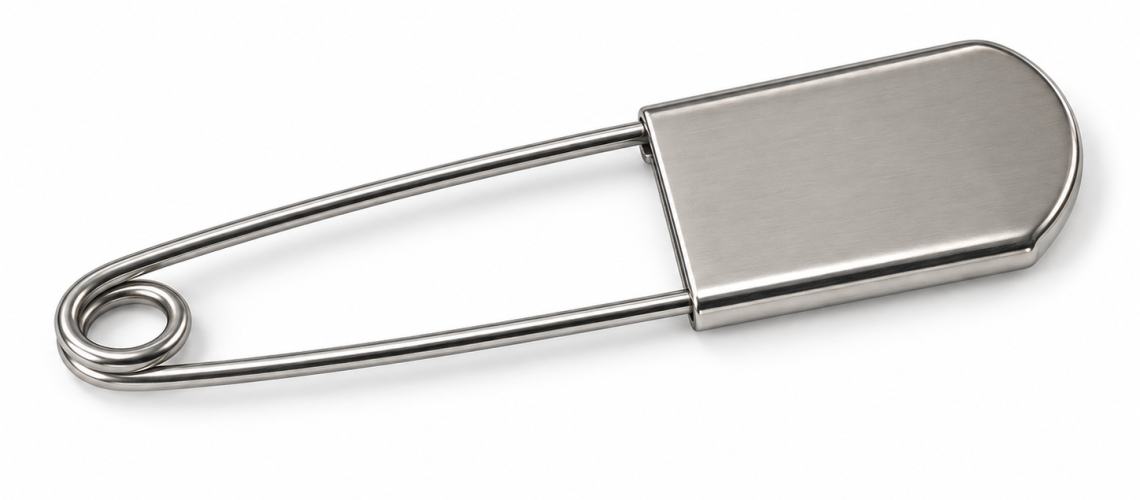
Locker key pins are a simple accessory, but in a busy swimming pool, gym, leisure centre or changing room they can solve an important practical problem: how does a user keep a removable locker key with them while they are away from the locker?
A stainless steel safety pin can form part of a complete locker-key set by connecting a locker key, split ring and numbered identification disc to a towel, suitable garment, kit bag or other appropriate item. This makes a small key easier to identify, carry and manage during swimming, exercise, sport or changing-room use.
The same type of stainless steel pin also has an established second role in commercial laundry and garment identification. Laundry operators, hotels, healthcare facilities, care environments, sports organisations and workplaces can use reusable stainless steel pins to attach identification tags, department markers and garment labels during sorting and handling.
This guide explains how locker key pins and stainless steel laundry pins are used, why they remain relevant in modern leisure facilities, how pins work with split rings, locker number discs and wristbands, and when another locker access system may be more appropriate.
For the product itself, see our stainless steel locker key pins and laundry pins.
Quick Answer: What Are Locker Key Pins Used For?
Locker key pins are reusable stainless steel safety pins used as part of a physical locker-key or identification system. Their job is not to lock the locker itself. Instead, they provide a practical attachment point so a removable locker key and its identification accessories can stay together and be secured to an appropriate item while the locker is in use.
- Swimming pool locker keys
- Gym and leisure-centre locker keys
- Locker number discs
- Split rings and key fobs
- Changing-room key sets
- Sports-centre lockers
- Laundry identification tags
- Uniform markers
- Linen identification
- Garment sorting systems
- Hotel and hospitality laundry
- Healthcare and care-home laundry handling
A common leisure arrangement is:
locker key → split ring → numbered disc or fob → stainless steel pin
The numbered component identifies the locker, the split ring holds the components together and the pin gives the user a practical attachment point.
If you also need missing or additional keys, visit our replacement locker keys page.
Why Physical Locker-Key Management Still Matters
Locker access has changed significantly. Modern facilities can choose keyed locks, coin locks, mechanical combination locks, electronic PIN locks, RFID systems and centrally managed smart locker systems.
However, the existence of newer technology does not make every physical-key installation obsolete. Thousands of lockers continue to operate successfully with removable keys, particularly where the existing lockers and locks remain serviceable and users understand the system.
The practical weakness of a removable-key system is obvious: once the locker has been locked, the user has to look after the key.
That can be straightforward in an office where somebody has pockets, a handbag or their own bunch of keys. It becomes more difficult in a swimming pool or changing room because many of those personal items have just been placed inside the locked locker.
A small key without an identification tag or carrying method can easily be:
- left on a bench;
- dropped on the floor;
- wrapped accidentally inside a towel;
- placed in a shoe and forgotten;
- mixed with another user’s key;
- taken home accidentally;
- lost among sports equipment;
- handed back without an obvious locker reference.
A key pin does not eliminate human error, but it can make a physical key set larger, more visible and easier to attach to something the user already has with them.
Swimming Pool Locker Key Pins
Swimming pools are one of the strongest applications for locker key accessories because the usual methods of carrying a key disappear once somebody changes into swimwear.
A pool user may place their trousers, coat, handbag, wallet, phone and everyday key ring inside the locker. They are then left with a single removable locker key that has to remain with them until they return.
This is why traditional leisure locker installations often combine the key with a larger identification component and some form of carrying or attachment system.
A stainless steel pin can be used with a split ring and numbered disc to produce a simple key set that can be attached to a suitable towel, garment, bag or other appropriate item.
Why the Locker Number Matters
The number disc is often as important operationally as the key itself.
Large swimming pools may contain many banks of visually similar lockers. A visitor who locks their belongings away and then spends an hour swimming can easily forget which door they used.
A visible number attached to the key provides an immediate reminder. It can also help staff identify the correct locker if the user requires assistance.
The principle is simple:
- the key operates the lock;
- the number disc or fob identifies the locker;
- the split ring connects the components;
- the pin provides the attachment point.
For the connecting component, see our stainless steel split rings for locker keys.
Locker Key Pins for Leisure Centres
A leisure centre can contain far more than a swimming pool. One building may include swimming facilities, a sports hall, fitness suite, gym, exercise studios, squash courts, health facilities, family changing rooms and staff areas.
Different users may also have very different patterns of locker use.
- A swimmer may need a locker for 60 minutes.
- A gym member may use one several times each week.
- A parent may be managing both their own belongings and a child’s.
- A sports team may arrive together and occupy an entire bank of lockers.
- A casual visitor may never have used the facility before.
- A member of staff may have an assigned locker used every working day.
Locker access therefore needs to match the operating model rather than simply the appearance of the locker.
For a wider comparison of keyed, coin, mechanical combination, electronic and RFID approaches, see our guide to leisure locker access systems.
Where removable keys are already the chosen system, key pins, number discs, split rings and wristbands should then be considered as part of the everyday operating arrangement rather than as unrelated accessories.
Gym Locker Key Pins
Many new gyms favour combination or electronic locks because they remove the need to issue physical keys. However, keyed lockers remain in use in independent gyms, sports clubs, hotel fitness suites, workplace gyms and existing leisure facilities.
For those installations, the principle is much the same as in a swimming pool.
A small loose key is easy to misplace. Adding an identification disc and a practical means of attachment makes the key set easier to recognise and manage.
Gym environments are generally drier than pool changing rooms, but users still move between lockers, exercise areas, studios, showers and other parts of the building. Keys can easily end up buried in towels or sports kit.
A pin can help keep the locker key associated with an item the user intends to retain throughout the visit.
If you are specifying the lockers themselves rather than just their key accessories, start with our guide to lockers for gyms and leisure centres.
Sports Centres and Sports Clubs
Sports facilities create another strong use case because participants frequently arrive with several pieces of kit but may have no convenient pocket once they begin an activity.
Applications can include:
- football clubs;
- rugby clubs;
- tennis centres;
- athletics facilities;
- badminton centres;
- martial arts clubs;
- climbing centres;
- cycling facilities;
- community sports centres;
- school sports departments;
- university sports centres;
- golf and country clubs.
In these environments, a physical-key set may be attached to a suitable towel, bag or piece of kit rather than carried as a loose item.
The identification disc is particularly helpful where an entire team or group receives lockers at roughly the same time. Consistent numbering makes keys easier to issue, return and sort.
Changing Rooms and Temporary Locker Use
Changing rooms create a specific key-management problem that is easy to overlook during locker specification.
Once a person has changed, most of the things they would ordinarily use to carry a key are likely to be inside the locker:
- coat;
- trousers;
- handbag;
- backpack;
- wallet;
- phone;
- normal key ring.
That is one reason changing-room locker access deserves its own consideration rather than being treated exactly like office or school storage.
If you are planning the room itself, see our changing room layout guide and our guide to wet-area changing room design.
Locker Key Pin or Wristband?
A pin and a wristband can both help users retain a removable locker key, but they solve the problem differently.
Locker Key Pins
A locker key pin provides a fastening point so the key assembly can be attached to an appropriate item.
- Simple mechanical design
- No battery or programming
- Can work with split rings and number discs
- Suitable for existing physical-key installations
- Can be replaced individually
- Useful for towels, suitable garments, kit and bags
- Stainless steel construction suits damp environments
Locker Key Wristbands
A wristband keeps the key directly with the user rather than attaching it to another item. This can be particularly practical for swimming pools where the user may want to keep the key with them in the water.
Total Locker Service supplies locker key wristbands for swimming pools and gyms for removable-key systems.
Neither approach is universally correct. A swimming pool may favour wristbands, while another sports or changing facility may find pins easier to integrate with its existing key and number-disc arrangement.
The useful question is not “Which accessory is more modern?” It is “Which method lets our users retain the key reliably during the activity they are actually doing?”
Using Locker Key Pins with Split Rings
A split ring is normally used to connect the components of a locker key set. This provides a much more practical arrangement than trying to connect every item directly.
A typical assembly may be:
locker key → stainless steel split ring → number disc → locker key pin
Individual components can then be changed if they become worn or damaged.
For example, a serviceable locker key and number disc do not necessarily need replacing simply because the original connecting ring has been lost.
Likewise, if the pin becomes damaged, the remainder of the key assembly can often remain in service.
Our stainless steel split rings are designed for locker keys, key fobs and identification tags and provide a useful complementary component when assembling or repairing locker key sets.
Using Number Discs and Identification Fobs
A removable key tells the lock what to do. It does not necessarily tell the customer which locker they used.
That distinction matters more as the installation becomes larger.
Imagine a changing room containing several banks of visually identical doors. The customer locks their belongings away, goes swimming, returns an hour later and remembers only that the locker was somewhere near the middle of the room.
A visible numbered disc removes much of that uncertainty.
Identification can also help facility staff:
- sort returned locker keys;
- identify missing key sets;
- match keys to lockers;
- replace damaged components;
- investigate a reported problem;
- maintain a consistent numbering system.
This illustrates why locker-key management should be treated as a small system rather than a collection of unrelated accessories.
Why Use Stainless Steel?
Locker key accessories in leisure facilities can be exposed to conditions that ordinary household accessories rarely encounter.
- Wet towels
- Condensation
- Humid changing rooms
- Repeated handling
- Frequent cleaning
- Poolside environments
- Laundry processes
- Detergents
- Repeated washing and drying
Stainless steel is therefore a sensible material for reusable locker key pins and laundry identification pins because it offers better corrosion resistance than an ordinary unprotected steel component.
This is particularly important where an accessory may come into contact with damp fabric. Rust or surface deterioration is undesirable on both the accessory and the material to which it is attached.
For commercial applications, durability also matters because key accessories may be issued, returned and handled repeatedly over a long period.
High-Turnover Leisure Centres
Small inefficiencies become much more important when they happen hundreds of times.
A leisure centre serving a high volume of visitors may issue large numbers of locker keys every day. Even a relatively low lost-key rate can therefore create recurring work for reception and facilities staff.
A lost locker key can lead to several tasks:
- identify the locker;
- confirm that the claimant should have access;
- locate a management or master key;
- open the locker;
- search for the missing key;
- issue a spare key where available;
- cut a replacement key;
- replace the lock if security is uncertain;
- update internal records;
- deal with a lost-key charge where applicable.
A stainless steel pin cannot prevent every lost key, but it can make the key set easier to attach and less likely to disappear unnoticed among clothing, towels or sports equipment.
When hundreds of users pass through a facility each week, small improvements in physical key handling can be operationally worthwhile.
Family and Accessible Changing Facilities
Family changing areas can make key management even more demanding because one adult may be responsible for several people and many separate items at the same time.
- Adult clothing
- Children’s clothing
- Footwear
- Towels
- Swimwear
- Swimming aids
- Changing bags
- Personal possessions
- The locker key
Clear locker numbering and a visible key set can make the system easier to understand, especially for visitors unfamiliar with the building.
The same principle applies in accessible changing areas: the access method and key arrangement should be simple to understand and suitable for the people expected to use it.
A physical key pin is only one option. Depending on user needs, a wristband, combination lock, RFID credential or other system may be more appropriate. The important point is to consider usability rather than treating the lock as an isolated hardware decision.
Schools and Education Sports Facilities
Schools, colleges and universities can also use removable keys in sports halls, swimming facilities and changing rooms.
Where keys are temporarily issued to pupils, students, staff or visiting teams, visible identification can simplify both issue and return.
A consistent arrangement can help staff determine:
- which locker a key belongs to;
- whether a key has been returned;
- which accessories are missing;
- which key needs replacing;
- whether a whole key set or only one component requires attention.
Permanent pupil locker-key management is a wider subject involving allocation, spare keys, lost-key procedures and master-key control. For general replacement requirements, see our locker keys cut to code.
Workplace Changing Rooms
Locker key pins are not restricted to public leisure facilities. Workplaces with changing rooms can encounter similar requirements, particularly where staff change into uniforms, protective clothing or specialist workwear.
Examples include:
- manufacturing;
- food production;
- warehousing;
- engineering;
- utilities;
- transport;
- maintenance operations;
- cleaning teams;
- hospitality;
- sites with showers or cycle facilities.
Where employees use removable locker keys, the same basic issue applies: once their ordinary clothes and personal possessions are secured inside the locker, the key must remain somewhere else.
A numbered key assembly can also help facilities teams keep replacement keys and locker references organised.
Locker Key Pins and Commercial Laundries
The second major use for stainless steel safety pins is commercial laundry identification.
Large laundry operations need to know where garments and linen belong. Items may need to be associated with an individual, department, customer, room, organisation or processing batch.
A reusable stainless steel pin can provide a physical fastening method for suitable identification tags and markers during sorting and handling.
Applications can include:
- commercial laundry companies;
- hotel linen operations;
- care-home laundry rooms;
- healthcare laundry handling;
- sports-kit management;
- workplace uniforms;
- hospitality workwear;
- departmental garment sorting;
- linen identification;
- personal clothing identification.
Hotels and Hospitality
Hotels and hospitality businesses can handle substantial quantities of linen and staff workwear.
Depending on the organisation’s laundry process, identification may be required for:
- staff uniforms;
- department-specific clothing;
- housekeeping items;
- linen batches;
- spa garments;
- leisure-facility towels;
- items sent to external laundry contractors.
Stainless steel laundry pins can provide a reusable physical fastening method where a pinned identification system is appropriate.
Hotels with gyms, swimming pools or spas may therefore encounter both sides of the product’s use: locker key management in the leisure area and garment or linen identification behind the scenes.
Healthcare and Care Environments
Healthcare and care environments may manage both staff lockers and significant quantities of garments or linen.
Stainless steel pins can form part of an identification process for suitable garments, uniforms or laundry items where a reusable pinned tag system is used.
Any laundry identification system in a healthcare or care environment should, however, follow the organisation’s own infection-control, laundry-processing and textile-handling procedures. The pin is simply a fastening component and does not replace those policies.
Uniform and Workwear Identification
Uniformed organisations often need to distinguish similar garments belonging to different people, teams or departments.
Possible identification references include:
- employee number;
- department;
- garment size;
- work area;
- processing batch;
- site;
- team;
- customer reference.
A stainless steel laundry pin can be useful where those identifiers are applied using a suitable removable tag rather than being permanently marked onto the garment.
Physical Keyed Lockers Versus Keyless Systems
Locker key pins are relevant only when the locker uses a removable physical key. It is therefore reasonable to ask whether facilities should simply move to keyless access instead.
Sometimes that is the right answer. Sometimes it is not.
Keyed Locker Locks
Advantages can include:
- familiar operation;
- no user code to remember;
- no batteries in a standard mechanical key lock;
- straightforward replacement on many commercial locker ranges;
- compatibility with established master-key systems;
- continued use of an existing locker estate.
The principal operational disadvantage is the need to manage the keys.
Mechanical Combination Locks
Combination locks can remove physical user keys but require users to operate and remember a code. Staff also need an appropriate management procedure for forgotten combinations and overrides.
Coin Locks
Coin-operated locker locks can be particularly suitable for temporary-use leisure lockers, but the facility must decide whether it wants coin return, coin retain or another operating arrangement.
See our guide to coin operated locker locks for the distinction between return and retain systems.
Electronic and RFID Locker Access
Electronic PIN and RFID systems can remove the conventional removable key entirely. They may be appropriate where a site wants shared day-use lockers, electronic credentials, integration or more sophisticated administration.
They also introduce different requirements such as batteries, electronic components, programming, credentials or system administration depending on the technology selected.
For the broader comparison, read Locker Locking Systems: Keys, Codes and Smart Access.
When Retaining a Keyed Locker System Makes Sense
Facilities do not necessarily need to replace serviceable keyed lockers simply because newer technologies are available.
Retaining the existing system may be reasonable where:
- the lockers remain structurally sound;
- the locks are serviceable;
- replacement keys remain available;
- replacement locks remain available;
- users understand the system;
- staff already have an effective management process;
- master or override keys are controlled appropriately;
- the cost of wholesale conversion is not justified;
- the existing system continues to meet the site’s operational needs.
In that situation, replacing worn pins, split rings, number discs, wristbands or individual keys can be a much smaller intervention than replacing every lock.
Building a Consistent Locker Key Set
Consistency becomes increasingly important as the number of lockers grows.
A well-organised removable-key system might standardise:
- locker numbering;
- key identification;
- number-disc format;
- split-ring type;
- pin type;
- wristband colours where used;
- spare key storage;
- master-key control;
- lost-key procedures;
- replacement-key ordering.
This simplifies maintenance because facilities teams know which components belong together and what to order when something is lost or damaged.
For new pins and existing key assemblies, see our locker key pins, split rings and locker key wristbands.
Replacing Missing Locker Key Pins
One advantage of a component-based key set is that losing one accessory does not necessarily require replacement of everything else.
Before replacing a pin, inspect the complete assembly:
- Check that the key is still serviceable.
- Check the split ring for distortion, corrosion or excessive wear.
- Check that the identification disc remains legible.
- Confirm that the locker number and key still correspond.
- Replace any damaged attachment component.
- Test the complete assembly before returning it to use.
If the key itself is missing, the lock or key number may allow a replacement to be supplied without changing the entire lock. See replacement locker keys cut to code for more information.
Managing Spare and Replacement Locker Keys
Pins make the user-facing key easier to carry, but a commercial keyed-locker installation should also have a process for managing spare and replacement keys.
Facilities teams should know:
- which locker manufacturer is installed;
- which lock type is fitted;
- where the key number is recorded;
- whether spare keys exist;
- who may access spare or master keys;
- what happens when a user reports a lost key;
- whether a lost key creates a security concern;
- how replacement keys are ordered.
This wider control process should not be confused with the role of the pin itself. The pin helps the current user retain the key. Spare-key and master-key governance remains a separate facilities-management responsibility.
Safety and Practical Use
A safety pin is a pointed fastening component, so facilities should consider where and how it will be used rather than treating every possible attachment method as automatically appropriate.
The pin should be securely closed and attached only to a suitable item. Users should avoid arrangements where the pin could cause discomfort, interfere with sporting activity, damage delicate material or create an avoidable snagging risk.
For activities where wearing or carrying a pinned item is unsuitable, a locker key wristband, combination system or another access method may be more appropriate.
Facilities should make that decision around their actual users, environment and activities.
Ordering Locker Key Pins for an Existing Installation
Before ordering replacement accessories, establish what parts of the existing system actually need attention.
- Are only the pins missing?
- Are split rings also worn or absent?
- Are the number discs still readable?
- Are wristbands damaged?
- Are some physical keys missing?
- Are lock barrels themselves worn?
- Does the numbering still correspond correctly with the lockers?
Replacing the exact failed component can be more economical than rebuilding complete key sets unnecessarily.
Where several parts have deteriorated over many years, however, standardising the key sets across the entire locker bank can make future management easier.
Bulk Locker Key Pins for Commercial Sites
Commercial sites may need anything from a handful of replacement pins to enough accessories for a complete leisure-centre or changing-room locker installation.
Typical bulk users include:
- swimming pools;
- local-authority leisure centres;
- private health clubs;
- gyms;
- schools and universities;
- sports centres;
- hotels and spas;
- commercial laundries;
- hospitals and healthcare facilities;
- care homes;
- workplaces managing uniforms;
- facilities-management organisations.
For individual replacements or larger quantities, see our stainless steel locker key and laundry pins.
A Small Component in a Larger Locker System
A locker key pin costs very little compared with a locker cabinet, lock or complete changing-room installation, but its function should not be dismissed simply because the component is small.
A functioning keyed locker system depends on a chain of practical details:
- The locker must be suitable for the environment.
- The lock must operate reliably.
- The correct key must be available.
- The user must be able to identify the locker.
- The user needs a practical way to retain the key.
- Staff need an appropriate lost-key and override procedure.
- Replacement keys and components need to remain obtainable.
The stainless steel locker key pin primarily addresses point five, while also helping connect the identification components involved in point four.
That narrow function is precisely why it is useful. It solves a simple physical problem without batteries, software or programming.
Related Leisure Locker and Key Guides
- Gym Lockers: Choosing Lockers for Gyms and Leisure Centres
- Leisure Locker Access Systems UK
- Coin Operated Locker Locks UK
- Changing Room Layout Guide UK
- Wet Area Changing Room Design
- Locker Locking Systems: Keys, Codes and Smart Access
- Replacement Locker Keys UK
- Replacement Locker Locks
- Locker Key Wristbands
- Stainless Steel Split Rings
Locker Key Pins and Laundry Pins from Total Locker Service
Total Locker Service supplies stainless steel safety pins for use with locker keys, split rings, locker number discs and suitable laundry identification systems.
They are particularly relevant to swimming pools, gyms, leisure centres, sports facilities and changing rooms that continue to use removable locker keys, while their stainless steel construction also makes them useful for commercial garment and laundry identification applications.
We can also supply related components including locker keys, replacement locks, split rings and leisure locker wristbands, allowing worn or missing parts of an existing keyed locker system to be replaced without automatically replacing the complete locker installation.
Locker Key Pin FAQs
What are locker key pins used for?
Locker key pins are stainless steel safety pins used with locker keys, split rings, locker number discs and key fobs. They provide a practical way to attach a removable locker key assembly to a suitable towel, garment, bag or other item while a user is away from the locker.
Are locker key pins suitable for swimming pools?
Yes. Stainless steel locker key pins are particularly useful in swimming pools, leisure centres and changing rooms because they can form part of a removable-key system using a split ring and numbered identification disc. Where users need to keep the key directly on their wrist, a locker key wristband may be preferable.
Can locker key pins be used in gyms?
Yes. Gyms that operate lockers with removable physical keys can use pins as part of a key, split-ring and number-disc assembly. They are particularly useful where users need an easy way to keep the locker key associated with a towel, kit bag or suitable garment.
What is the difference between a locker key pin and a locker wristband?
A locker key pin allows the key assembly to be attached to another suitable item, whereas a locker key wristband allows the key to be worn on the user’s wrist. The best option depends on the activity, changing-room environment and existing locker-key system.
Why use a split ring with a locker key pin?
A split ring provides a convenient connection between a locker key, number disc, identification fob and other key accessories. Using replaceable components also means that a damaged ring or pin can often be changed without replacing the complete key set.
Why use stainless steel locker key pins?
Stainless steel provides good corrosion resistance for accessories used in damp changing rooms, swimming facilities and laundry environments. This makes it better suited to repeated wet use and handling than an ordinary unprotected steel pin.
What are stainless steel laundry pins used for?
Stainless steel laundry pins can be used to fasten suitable identification tags or markers to garments, uniforms, linen and other laundry items. Applications include commercial laundries, hospitality, healthcare, care environments, sports kit and workplace uniform handling.
Can I replace only the pin on an existing locker key set?
Often, yes. If the key, split ring and identification disc remain serviceable, a missing or damaged pin can normally be replaced as an individual component. The complete assembly should be checked for wear before being returned to use.
Can replacement locker keys be supplied if the original key is lost?
Many commercial locker keys can be supplied from the manufacturer or key number without replacing the complete lock. The available options depend on the lock and key series, so check the lock or existing key for identification before ordering.
Do modern leisure centres still need physical locker keys?
Not necessarily. Leisure facilities can choose keyed, coin, combination, electronic PIN, RFID and other locker access systems. Physical keys remain practical for many existing installations, particularly where the lockers and locks are serviceable and the site’s established key-management system works well.
Discover more from Blog Total Locker Service
Subscribe to get the latest posts sent to your email.